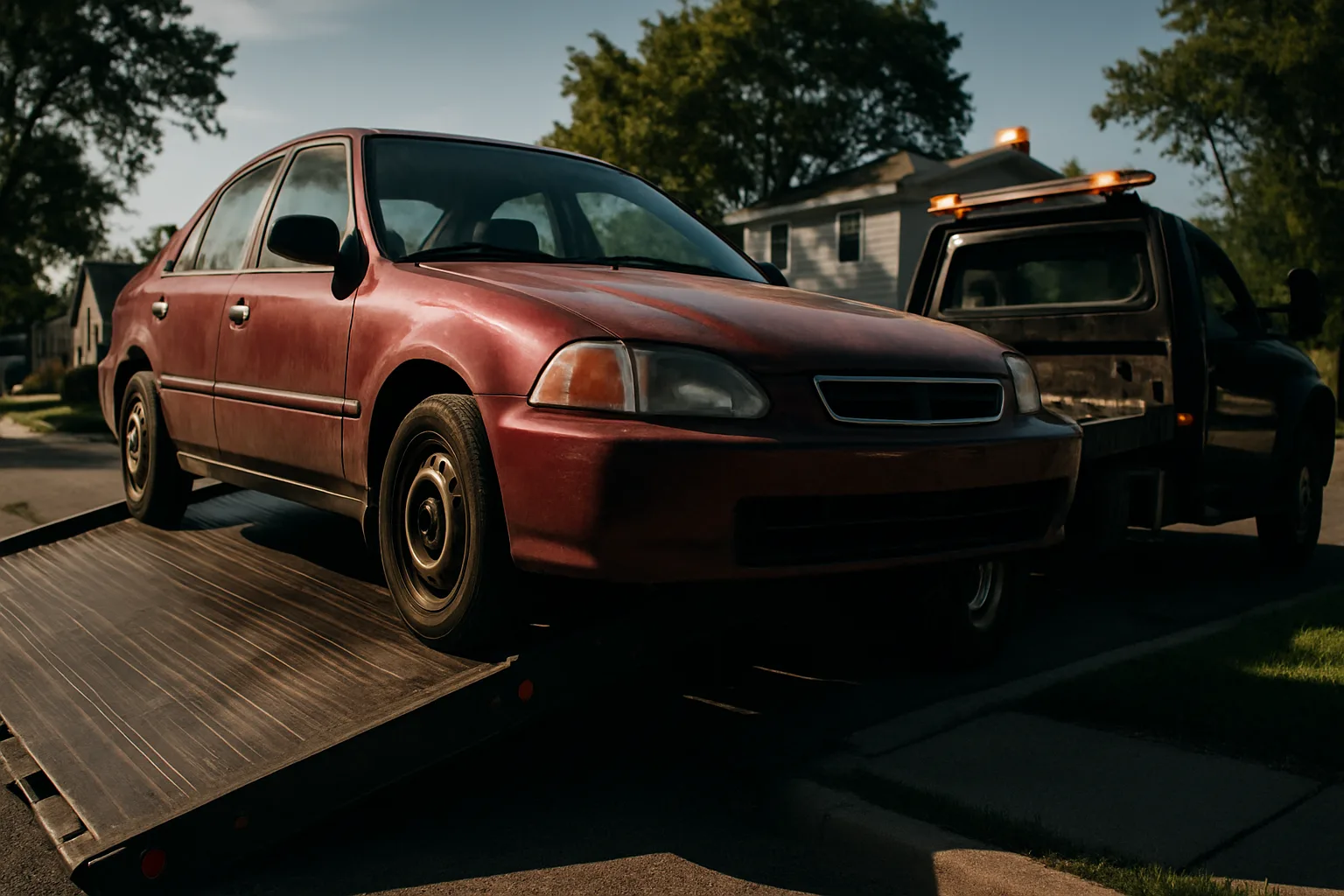
You've got a dead car sitting in the driveway. It hasn't moved in two years. You want it gone — and you want cash for it. Then someone tells you that you need the title. Problem is, you have no idea where that document is. Sound familiar? Junk car removal in Sherbrooke — and across Quebec — comes with paperwork questions that trip up a lot of first-timers. Here's what actually matters, what you can work around, and how to get your car scrapped without losing money in the process.
---What Is a Vehicle Title and Why Do Scrappers Ask for It?
In Canada, a vehicle title is the official proof of ownership. In Quebec, this is tied to the Société de l'assurance automobile du Québec (SAAQ) registration system. When you sell or scrap a car, you're transferring ownership — and that transfer requires documentation. Scrap yards and junk car buyers ask for it because they need to prove the vehicle wasn't stolen before they crush it, part it out, or resell components like the catalytic converter.
Without a title, the transaction gets complicated fast. A scrap yard that takes a stolen vehicle — even unknowingly — can face serious legal consequences. That's why most legitimate buyers won't touch a car without ownership paperwork. But "no title" doesn't always mean "no deal." It depends on your situation, your province, and how you approach it.
- Registration documents — In Quebec, your SAAQ registration certificate can sometimes substitute for or support an ownership claim
- Bill of sale — If you bought the car privately and never received a title, a signed bill of sale carries weight
- Deceased estate vehicles — These require probate documentation or a letter from the estate executor
- Lost title — You can apply for a replacement through the SAAQ; it takes time but it's the cleanest path
The bottom line: the more documentation you have, the better your position. Even if you can't produce the original title today, showing a paper trail helps a buyer assess risk and move forward.
---Scrapping a Car Without a Title in Quebec: What the Rules Actually Say
Quebec has specific rules around vehicle transfers, and the SAAQ enforces them. If you're doing Sherbrooke scrap metal services or working with any buyer in the province, you need to understand what's required on your end before you make the call.
Legally, you cannot complete a standard ownership transfer in Quebec without the vehicle registration documents. However, there are legitimate paths forward for vehicles where the paperwork is missing:
- Request a duplicate registration — Visit or contact the SAAQ to apply for a replacement registration certificate if yours is lost or damaged
- Statutory declaration — A signed declaration in front of a commissioner of oaths can support your claim of ownership in some circumstances
- Long-term registered ownership — If the car has been registered in your name continuously through the SAAQ, that history supports your claim even without the physical certificate in hand
- Inherited vehicles — Estate transfers require probate documentation or executor authorization; these take longer but are absolutely doable
The key takeaway: don't assume you're stuck. Quebec's system has processes for exactly these situations. A reputable junk car buyer won't make you jump through unnecessary hoops — but they do need something on paper. If a buyer tells you no documentation is needed at all, that's a red flag worth taking seriously.
---How Scrap Car Value Today Is Affected by Missing Documentation
Here's the part most people don't expect: missing paperwork doesn't just create a legal hurdle — it can directly reduce your scrap car value today. A buyer taking on documentation risk needs to factor that into their offer. They might discount the price to cover the added complexity, or they might pass entirely.
Think about it from the buyer's side. A car with clean title and a clear ownership history is easy to process, easy to resell for parts, and easy to document at the yard level. A car with no paperwork requires more due diligence, more liability exposure, and more internal processing time. That cost gets passed back to you in the form of a lower offer.
Some components — especially catalytic converters — have tightened documentation requirements across North America in recent years. If you're looking to sell catalytic converters online or as part of a whole-vehicle transaction, buyers increasingly want serial numbers, VINs, and proof of origin. Platforms like Canada's B2B scrap recycling marketplace SMASH have built serial tracking and photo documentation directly into the transaction process — which means sellers who come prepared get better responses from vetted buyers.
Bottom line: sorting your paperwork before you reach out isn't bureaucratic box-checking. It's a direct path to a better offer.
---What Junk Car Buyers in Sherbrooke and Across Quebec Actually Need From You
Whether you're dealing with cash for cars in Quebec or reaching out to a national buyer, the documentation checklist is fairly consistent. Here's what a legitimate junk car buyer will typically ask for:
- Proof of identity — Government-issued ID in the name of the registered owner
- Vehicle registration — SAAQ registration certificate (current or recent) showing your name on the vehicle
- Vehicle details — Year, make, model, VIN, current mileage, and condition notes
- Photos — Exterior condition, interior, any visible damage, engine bay if accessible
- Keys — Having a working key adds value; missing keys reduces the offer slightly
- Catalytic converter present or not — Buyers will ask; being upfront saves time
In Sherbrooke, local buyers work within Quebec's SAAQ framework, so the registration documentation is the primary ownership document they'll reference. If you've misplaced yours, the SAAQ online portal lets you request a replacement — the process is straightforward and usually resolves within a few business days.
For a fast, no-guesswork approach to getting your vehicle valued, get a free car valuation before you start making calls. Knowing what your car is worth before you talk to a buyer puts you in a much stronger position — title or no title.
---SMASH and the Transparent Way to Sell Scrap Vehicles
One of the biggest frustrations in the junk car space is the single-buyer model. You call one yard, they give you a number, and you have no idea if it's fair. No competition. No transparency. Just a voice on the phone quoting you a price and hoping you say yes without asking questions.
That's the old way. SMASH — a North American B2B scrap auction platform — operates differently. Instead of one buyer making a take-it-or-leave-it offer, SMASH puts your vehicle in front of vetted buyers and lets competition do the work. More buyers means better price discovery. Documented inventory — photos, VIN lookups, serial tracking — gives buyers more confidence to bid aggressively.
For sellers who want to get cash for your car in Canada, that difference matters. A platform that demands documentation upfront isn't making your life harder — it's creating the conditions for buyers to trust what they're bidding on. That trust translates into better offers. If you want to understand how the professional scrap market thinks about vehicle documentation, read car selling tips from people who work in it every day.
---Weekly Market Recap: What's Moving in the Scrap Car Market Right Now
As of the week of August 9, 2026, the scrap and junk vehicle market across Quebec and the broader Canadian market continues to see steady demand for non-ferrous metals, with catalytic converters remaining a high-attention category due to ongoing precious metal value tied to platinum group metals (PGMs). Buyers are active. Yards are processing inventory. But documentation requirements have tightened noticeably — especially for cats and cores.
If you've been sitting on an unwanted vehicle in Quebec, this is not a bad time to move it. Commodity demand is consistent, and buyers are competing for quality loads. That said, scrap car value today fluctuates with metal markets — don't lock into expectations from three months ago. Get a fresh quote. What a car was worth in spring isn't necessarily what it's worth today.
A few things worth knowing this week:
- Catalytic converter documentation requirements remain strict — have your VIN ready
- Complete vehicles with cats intact tend to attract stronger offers than stripped hulks
- Quebec yards are active buyers through August — summer inventory tends to move faster than fall
- Missing paperwork continues to be the #1 reason deals fall through — sort it before you call
Disclaimer: Scrap metal and vehicle prices fluctuate based on market conditions. Always check current rates with a buyer before making decisions based on price expectations.
---Frequently Asked Questions
Q: Can I scrap a car without a title in Quebec?
Technically, a complete title transfer in Quebec requires SAAQ registration documentation. However, if your registration certificate is lost, you can apply for a duplicate through the SAAQ. Long-term registered ownership in your name also supports your claim. Speak to a reputable buyer — most will work with you if you have some form of documentation.
Q: How does junk car removal in Sherbrooke work?
Junk car removal in Sherbrooke typically involves getting a quote, confirming your documentation (SAAQ registration and ID), scheduling a pickup, and receiving payment at the time of collection. Most buyers offer free towing for vehicles that don't run. The whole process can often be completed within 24 to 48 hours once paperwork is sorted.
Q: What affects scrap car value today?
Scrap car value depends on the vehicle's weight, the current price of steel and non-ferrous metals, whether the catalytic converter is present, the condition of sellable parts, and your location. Prices fluctuate with commodity markets, so a quote from last month may not reflect today's value. Always get a current quote before committing.
Q: Do I need the original title to sell catalytic converters from a junk car?
Many buyers now require a VIN and proof of vehicle ownership before purchasing catalytic converters separately. This is to comply with anti-theft regulations that have tightened across North America. Selling the entire vehicle — with documentation — is often the cleanest approach and typically yields a stronger combined offer.
Q: Is SMASH available for individual car sellers in Quebec?
SMASH operates as a B2B platform primarily serving scrap yards and commercial buyers across North America. If you're an individual car owner, your best path is through a service like cash-forcars.ca, which connects you with buyers in your area. SMASH powers the buyer-side marketplace that makes competitive pricing possible for sellers across the supply chain.
---If you've got a car sitting in your driveway in Sherbrooke — running or not, paperwork sorted or not — the first step is simply finding out what it's worth. Get cash for your car in Canada with a free, no-obligation quote at cash-forcars.ca. No pressure. No guessing. Just a straight number from buyers who are actively looking for vehicles like yours.
Stay current on scrap metal market trends and industry insights — follow SMASH on LinkedIn for weekly updates straight from the North American scrap marketplace.