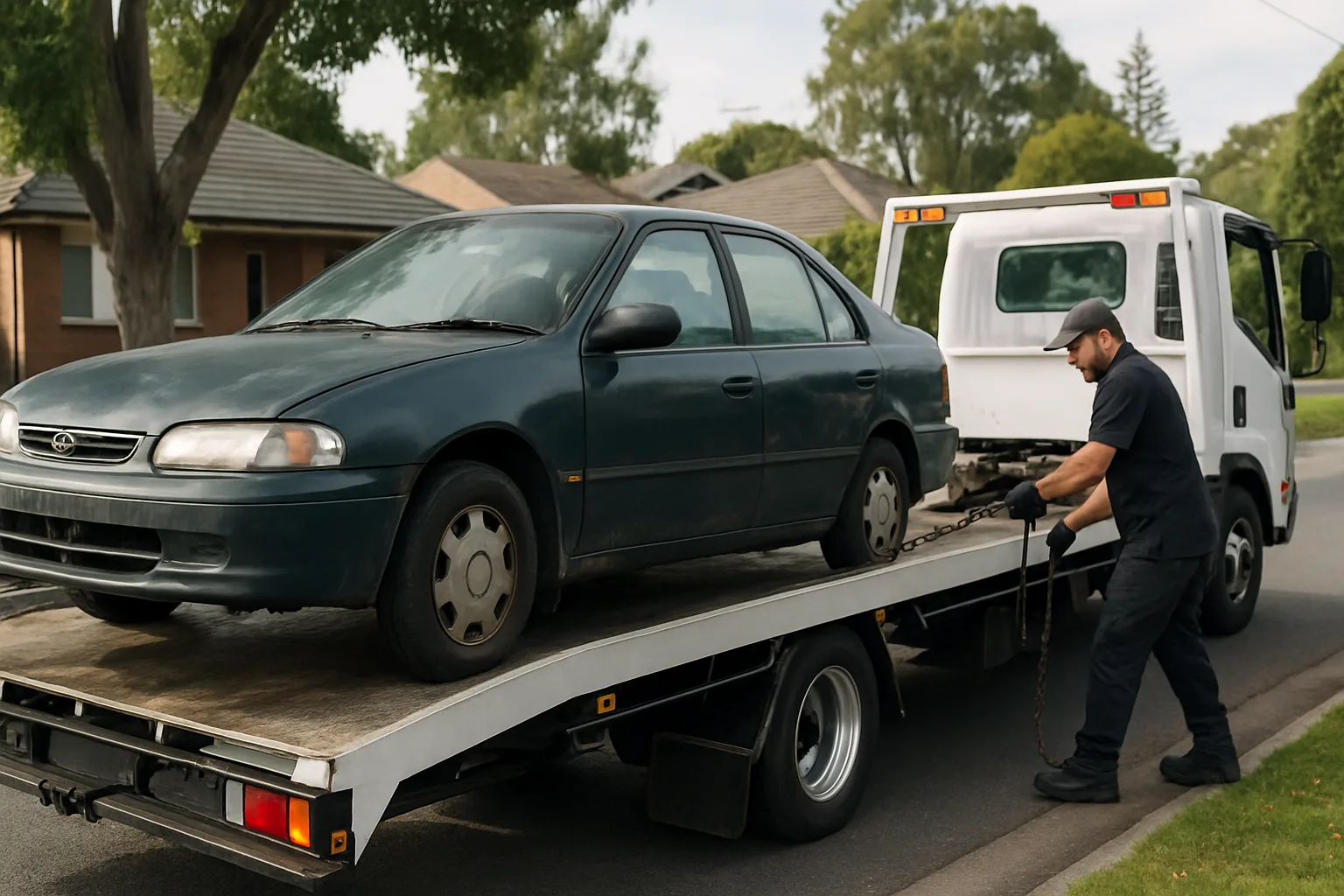
Junkyard, Salvage Yard, or Auto Recycler — What's the Difference When You're Trying to Sell My Junk Car in Sydney?
Most car owners in Sydney have no idea there's a difference. You've got an old beater sitting in the driveway, you want it gone, and you want cash. So you Google "sell my junk car Sydney" and suddenly you're staring at three different types of businesses — junkyards, salvage yards, and auto recyclers — all claiming to buy your car. They're not the same thing. And knowing the difference could mean more money in your pocket, a faster pickup, and a lot less frustration.
This isn't just semantics. Each type of facility operates differently, values your vehicle differently, and pays you differently. Whether you're dealing with a 2009 Civic that's seen better days or a rusted-out half-ton that hasn't moved since 2022, understanding who you're selling to matters. Let's break it down.
What Is a Junkyard — and Why It Might Not Be Your Best Option
The word "junkyard" is old-school. It conjures up images of stacked cars, guard dogs, and a guy behind a chain-link fence who offers you $75 for a vehicle that weighs two tonnes. That image isn't entirely wrong. Traditional junkyards are primarily storage and parts-pulling operations. They buy vehicles cheap, strip what sells fast — doors, engines, hoods — and crush the rest.
The pricing model at a junkyard is built around minimizing what they pay you. They're speculating on which parts will sell. If your car model isn't popular locally, you're likely getting a low-ball offer based on scrap weight alone. In a city like Sydney, Nova Scotia, where the market for used parts can be smaller than in Toronto or Calgary, that low-ball offer hits even harder.
Here's what a typical junkyard transaction looks like:
- They eyeball your car or ask a few questions over the phone
- They quote you a flat number — often based on weight and nothing else
- You take it or leave it
- No competition, no transparency, no second opinion
If you want to get cash for your car in Canada without leaving money on the table, a traditional junkyard is rarely the best starting point.
What Is a Salvage Yard — and When Does It Work in Your Favour?
A salvage yard is a step up from a junkyard in terms of how they value your vehicle. These operations focus on reselling usable parts — sometimes nationally, sometimes through online marketplaces. They tend to be more organized, more systematic, and in some cases, more willing to pay for the right car.
The key word there is "right." Salvage yards want vehicles that have high-demand parts still intact. A newer model with a repairable engine? They're interested. A rusted-out shell with a stripped interior and a blown head gasket? Not so much. If your car qualifies, a salvage yard might offer more than a junkyard — but the process is still largely one buyer, one offer, with zero competition pushing the price up.
There's also the paperwork issue. Some salvage yards in Nova Scotia require a clear title. If you're holding a car without one, they may decline entirely — or offer you even less as a "problem vehicle." That's a wall a lot of sellers hit when they're trying to sell my car fast Sydney without having the full documentation sorted.
The bottom line on salvage yards: they work if your vehicle fits their inventory needs. If it doesn't, you're back to square one. And even when it does fit, you're still negotiating against a single buyer who controls the information.
What Is an Auto Recycler — and Why the Industry Is Shifting
Auto recyclers are the evolved version of the junkyard. They're regulated, often certified, and focused on environmentally responsible vehicle disposal. In Canada, provincial regulations have tightened significantly around how end-of-life vehicles are handled — fluids, batteries, mercury switches, airbag modules. A licensed auto recycler follows those protocols.
But here's what really separates a modern auto recycler from the other two: data. They use VIN-based lookups, track parts inventory digitally, and have a better sense of actual market value. They're more likely to give you a fair number based on what your specific vehicle is worth — not just a generic weight-based estimate.
In Nova Scotia, the auto recycling sector has grown more professional over the past decade. If you're in Sydney and you want to sell scrap car in Nova Scotia the right way — legally, cleanly, and for a fair price — a licensed auto recycler is a better choice than a backyard junkyard operation.
Still, even with a good auto recycler, you're still dealing with one buyer. One offer. No auction. No competing bids. That's where the model starts to show its limits — and where platforms like smashrecycling.ca change the equation entirely.
The Real Problem: One Buyer, No Competition, No Transparency
Whether you're walking into a junkyard, a salvage yard, or an auto recycler, the structural problem is the same: you get one offer from one buyer who has more information than you do. They know what your vehicle is worth. You're guessing. That information gap is where money gets left on the table — every single time.
Think about it this way. If you were selling a house and only one real estate agent showed up to bid, you'd be nervous. You'd want competition. You'd want multiple offers. Car selling shouldn't be any different — especially when the vehicle has real scrap value, usable parts, or is in demand for its metal content.
This is exactly why SMASH exists. SMASH is a scrap metal auction platform that brings vetted buyers to compete for your vehicle or load. Instead of calling one yard and hoping their offer is fair, the auction format creates real price discovery. More buyers mean better information. Better information means you're not guessing what your car is worth — the market tells you.
For car owners in Sydney trying to sell my junk car for cash, that difference can be significant. Not guaranteed — every vehicle is different — but the competitive format consistently outperforms the "call one guy, take his number" approach that's been the default for decades.
Want to understand what your car might fetch before you call anyone? Get a free car valuation and see where you stand before committing to anything.
What Should Sydney Car Owners Actually Do in 2026?
Here's the practical breakdown for anyone in Cape Breton trying to get rid of a vehicle:
- Know what you have. Is the car drivable? Does it have usable parts? Is it mostly scrap metal? This determines who wants it most.
- Don't call just one buyer. Get at least two or three quotes before committing. This is the minimum. A competitive auction does this automatically.
- Check your paperwork. In Nova Scotia, having a title or proof of ownership speeds up every transaction. If you don't have a title, be upfront about it — not every buyer requires one, but it affects price.
- Understand the weight factor. Scrap metal prices fluctuate. A vehicle's baseline value is tied to current commodity prices. If you're selling primarily for metal, timing matters.
- Use a platform that creates competition. SMASH connects sellers to vetted buyers across North America. That reach matters — even if you're in Sydney, you're not limited to what one local yard will offer.
The car-selling process in 2026 doesn't have to look like 1995. You don't have to drive to a yard, get lowballed, and take it because you have no other options. Read car selling tips to understand the full process before you commit to any buyer — especially if this is your first time selling a scrap or unwanted vehicle.
And when you're ready to move, make it easy on yourself. Get cash for your car in Canada — get a free quote at cash-forcars.ca and let real buyers compete for your vehicle instead of leaving it up to one yard's gut feeling.
Frequently Asked Questions
Q: What's the fastest way to sell my junk car in Sydney, Nova Scotia?
The fastest route is to have your paperwork ready — ownership documents, keys, and a basic description of the vehicle's condition — and reach out to multiple buyers at once. Platforms like SMASH allow vetted buyers to bid competitively, which speeds up both the offer process and the pickup timeline. Same-day or next-day pickup is common for straightforward scrap vehicles.
Q: Do I need a title to sell my scrap car in Nova Scotia?
Having a title or proof of ownership makes the transaction cleaner and often gets you a better offer. That said, not every buyer requires a clean title — especially for vehicles going straight to scrap. Be honest about your documentation situation upfront so buyers can give you an accurate quote.
Q: How is a salvage yard different from an auto recycler when it comes to what they pay?
Salvage yards focus on parting out vehicles and tend to pay more for cars with high-demand usable components in good condition. Auto recyclers are more focused on compliant, end-of-life processing and often use better data to set pricing. Both are single-buyer scenarios — which is why using an auction platform creates better price discovery regardless of which type of facility ends up buying your car.
Q: Can I sell my car fast in Sydney if it doesn't run?
Yes. Non-running vehicles are sold every day. Most scrap buyers and recyclers have tow trucks and handle pickup for free. The vehicle's value is based on weight, metal content, and any salvageable parts — not whether it can be driven to the lot. Make sure you describe the condition accurately when getting quotes.
Q: What affects the price I get when I sell my junk car for cash?
The main factors are the vehicle's weight (more metal = more value), current scrap metal commodity prices, whether usable parts are still intact, the year, make and model, and your location relative to the buyer. Scrap prices fluctuate based on market conditions — always check current rates before accepting an offer. Disclaimer: prices change frequently and no specific price is guaranteed.
Stay current on scrap metal prices, market trends, and industry news by following SMASH on LinkedIn — it's where yard operators and buyers track what's moving in the market.