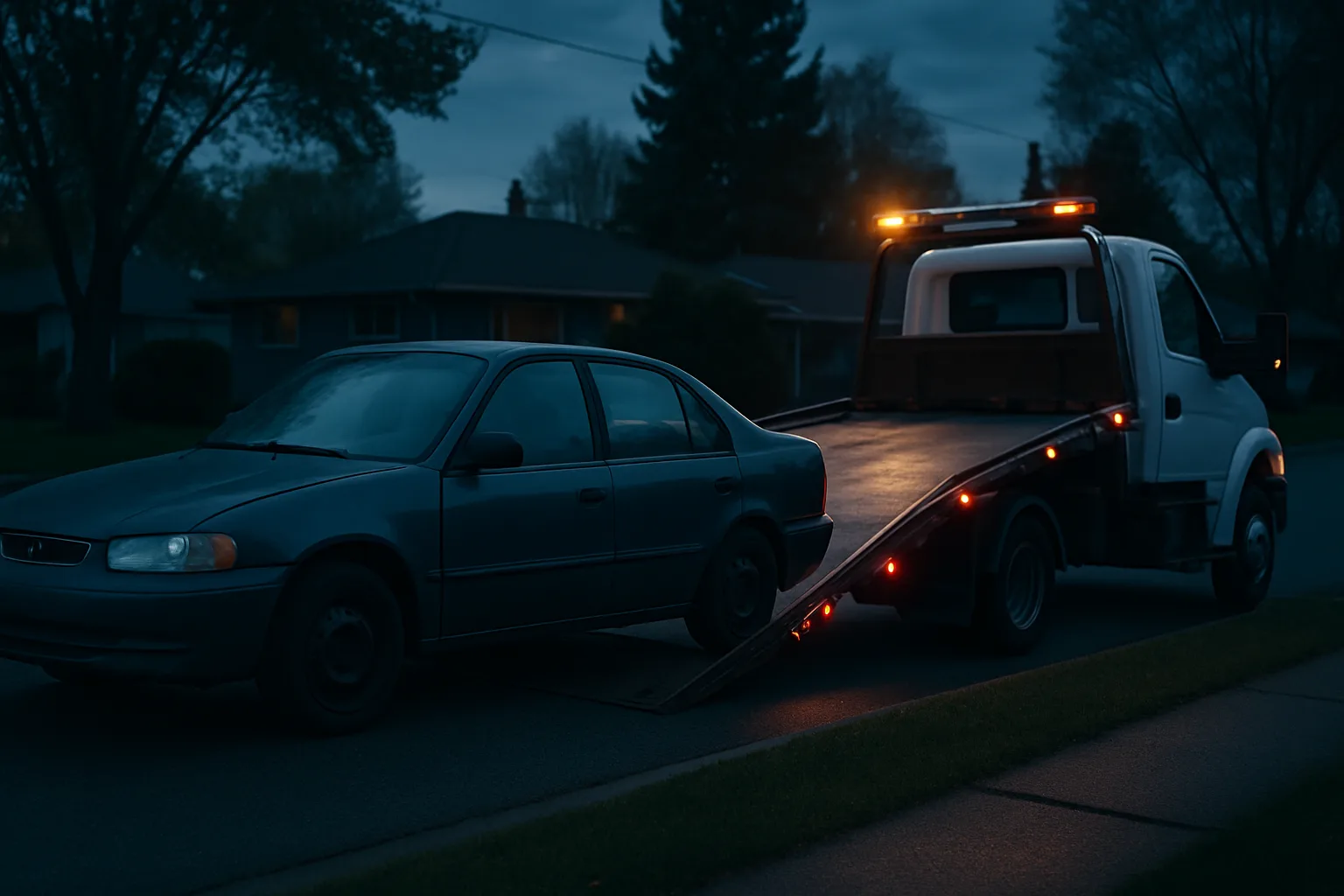
What Actually Happens to Your Car After Free Scrap Car Pickup in Kamloops
Most people hand over their keys, get their cash, and never think about it again. That's fair — you got paid, the car is gone, problem solved. But if you've ever wondered what happens to your junk car after it leaves your driveway, the answer is more interesting than you'd expect. The auto recycling process is a serious industrial operation, and understanding it helps you make smarter decisions when you get cash for your car in Canada.
Every scrap car that gets picked up — whether it's a rusted-out pickup in a Kamloops driveway or a flood-damaged sedan sitting in a field somewhere in British Columbia — goes through a predictable sequence of steps. Each step extracts value. And the more value that gets extracted, the better the economics for everyone in the chain, including you.
Step One: Arrival at the Yard and Initial Assessment
When your vehicle arrives at an auto recycler, the first thing that happens is a check-in. The car gets logged — VIN recorded, weight noted, condition documented. This isn't paperwork for the sake of paperwork. It's the foundation for every financial decision that follows.
Yards use the VIN to pull the vehicle's history: make, model, trim level, engine size, and what parts were originally installed. A 2018 F-150 with a 5.0L V8 is a completely different asset than a base-model 2.7L version, even if they look identical sitting on a trailer. That data determines where the car goes next on the lot — parts inventory or straight to the crusher.
- VIN lookup confirms the vehicle's specs and parts compatibility
- Condition assessment determines if the car is a parts candidate or scrap-only
- Weight ticket establishes the baseline scrap metal value before anything is removed
- Photo documentation creates a record of the vehicle's state at intake
Platforms like SMASH have pushed yards to document inventory more rigorously than ever. When you're listing catalytic converters, engines, or non-ferrous materials to vetted buyers through an auction format, accuracy matters. Sloppy intake means disputes down the line.
Step Two: Depollution — The Part Nobody Talks About
Before anything gets stripped or crushed, the car has to be depolluted. This is a regulated process, and in British Columbia it's taken seriously. Every vehicle is drained of fluids that can't go to landfill or be released into the environment.
Here's what comes out of a typical end-of-life vehicle:
- Engine oil — collected and sent for re-refining
- Transmission fluid and power steering fluid
- Brake fluid
- Engine coolant (antifreeze)
- Air conditioning refrigerant — must be captured by a certified technician, not just vented
- Fuel — drained and either reused or disposed of properly
- Mercury switches — older vehicles often contain mercury in hood and trunk switches
This step is non-negotiable. A recycler who skips depollution isn't running a legitimate operation. Properly certified yards in Kamloops and across British Columbia follow provincial environmental standards, and that matters to you as the seller — it means your car isn't becoming a liability down the road.
Step Three: Parts Harvesting and Resale — Where the Real Money Hides
Once the car is depolluted, the decision tree splits. If the vehicle has salvageable parts — good body panels, a functioning engine, intact electronics, quality seats — those come off first. A running engine on a popular model can be worth many times the scrap metal value of the entire vehicle. Yards aren't leaving that money on the table.
Parts are catalogued, photographed, and listed for resale. Used auto parts are in strong demand across Canada, particularly for vehicles that are still common on the road. Mechanics, body shops, and private owners all buy from salvage yards. Some parts go fast. Others sit in inventory for months waiting for the right buyer.
The most valuable single component on most modern vehicles? The catalytic converter. Cats contain platinum, palladium, and rhodium — all precious metals that trade on global commodity markets. A single catalytic converter from the right vehicle can be worth hundreds of dollars in scrap value alone. Recyclers track serial numbers and VINs carefully here, partly because cat theft is a serious problem across North America, and legitimate yards need to document their supply chain.
This is exactly where compare scrap metal bids from Canadian buyers becomes valuable — when you have a load of cats or cores to move, getting multiple competitive bids through an auction platform like SMASH beats calling one buyer and hoping they're fair.
Step Four: Scrap Metal Prices Today and the Shredder Economy
After usable parts are removed, what's left is the hulk — the shell of the vehicle. Steel body panels, the frame, suspension components. This goes to the shredder.
Auto shredders are industrial machines that reduce a vehicle carcass to fist-sized chunks of metal in minutes. The output gets magnetically sorted: ferrous (iron and steel) gets separated from non-ferrous metals like aluminum, copper wiring, and zinc. Everything has a destination and a price.
Scrap metal prices today fluctuate based on global steel demand, commodity markets, and regional supply. The price a Kamloops yard receives for shredded steel in August 2026 is different from what they received six months ago, and different again from what buyers in Vancouver or Calgary are paying. Markets move. That's why price discovery matters — and why relying on a single buyer quote means you may be leaving real money on the table.
Disclaimer: Scrap metal prices fluctuate daily based on commodity markets, regional demand, and material grade. Always check current rates before finalizing any sale. The prices referenced in this article reflect general market conditions in 2026 and are not guaranteed.
For yard operators handling bulk non-ferrous material — copper wiring harnesses, aluminum wheels, radiators — the difference between one buyer's offer and a competitive auction can be significant. That's the problem SMASH was built to solve. Not subscriptions, not guesswork. Competition.
Step Five: What You Should Know Before You Call for Junk Car Removal in Kamloops
Here's the practical part. If you're sitting on an unwanted vehicle in Kamloops, understanding this process helps you ask better questions and get a fairer deal.
A few things that affect your offer:
- Vehicle age and model popularity — parts demand drives value as much as steel weight
- Completeness — a car missing its catalytic converter is worth less, sometimes significantly less
- Condition of the drivetrain — a running engine adds real value
- Location and accessibility — a car in a tight spot or on soft ground costs more to pick up
- Current scrap metal prices — market timing matters
When you call for junk car removal in Kamloops, ask what's included in the quote. Does it cover towing? Is the offer firm or subject to inspection? What happens if the catalytic converter is missing or damaged? A reputable buyer answers these questions clearly without pressure.
If you want to know more about the full process of turning your vehicle into cash, read car selling tips from people who work in this industry every day.
Getting the Best Value: Why Multiple Buyers Beat One Phone Call
The old way of selling a scrap car in Kamloops or anywhere else in British Columbia was simple: call the one yard you knew, take whatever they offered, and be done with it. Sometimes that worked out fine. Often it didn't.
The problem isn't that buyers are dishonest. The problem is that without competition, there's no pressure to offer market value. A single quote is just one data point. It might be fair. It might not be. You have no way to know.
That's the core argument for transparency in this market. When multiple vetted buyers compete for your vehicle — whether it's a private sale, a parts-rich salvage unit, or a straight scrap load — the price reflects actual demand. That's how markets are supposed to work.
For individual car sellers, the same logic applies. Getting more than one offer before you sign anything is basic due diligence. Use services that show you what your car is actually worth before you commit. Get a free car valuation and see what the market will pay — not just what one yard decides to tell you.
Exploring Kamloops scrap metal services through a platform that connects you with multiple buyers is a smarter first step than cold-calling a single yard and hoping for the best.
If you're ready to move your unwanted vehicle and want real market value, not a guessed number from one phone call, the answer is straightforward: get cash for your car in Canada through a process that puts competition to work for you. Cash-forcars.ca connects sellers with buyers across Canada — including right here in Kamloops — so you get a real quote based on what your car is actually worth today.
Frequently Asked Questions
Q: How does free scrap car pickup work in Kamloops?
A licensed buyer comes to your location, verifies the vehicle, and hauls it away at no cost to you. The towing fee is built into the buyer's offer, so you pay nothing out of pocket. The best process gets you a firm quote before anyone shows up at your door.
Q: How long does junk car removal in Kamloops take from quote to pickup?
Most reputable services complete pickup within one to three business days of accepting an offer. Some same-day services exist depending on location and scheduling. Always confirm the pickup timeline when you accept the quote.
Q: What documents do I need to sell my junk car in British Columbia?
You'll need the vehicle registration and a valid government-issued ID. If you no longer have the registration, contact ICBC to get a replacement or confirm what documentation the buyer requires. Having the title clear makes the process faster.
Q: Does it matter if my car is missing parts like the catalytic converter?
Yes, it affects your offer. Catalytic converters contain valuable precious metals, and a missing cat lowers the vehicle's overall scrap and parts value. Be upfront about missing components when you request a quote — you'll get a more accurate number upfront rather than a revised lower offer at pickup.
Q: How are scrap metal prices determined for my vehicle in Kamloops?
Scrap metal prices fluctuate based on global steel and non-ferrous commodity markets, regional demand, and the specific metals in your vehicle. Buyers factor in the vehicle's weight, completeness, and current market prices at the time of pickup. Always get more than one quote to confirm you're getting a fair market rate.
Stay current on scrap metal market trends and industry insights — follow SMASH on LinkedIn at linkedin.com/company/scrap-metal-auction-sales-hub.