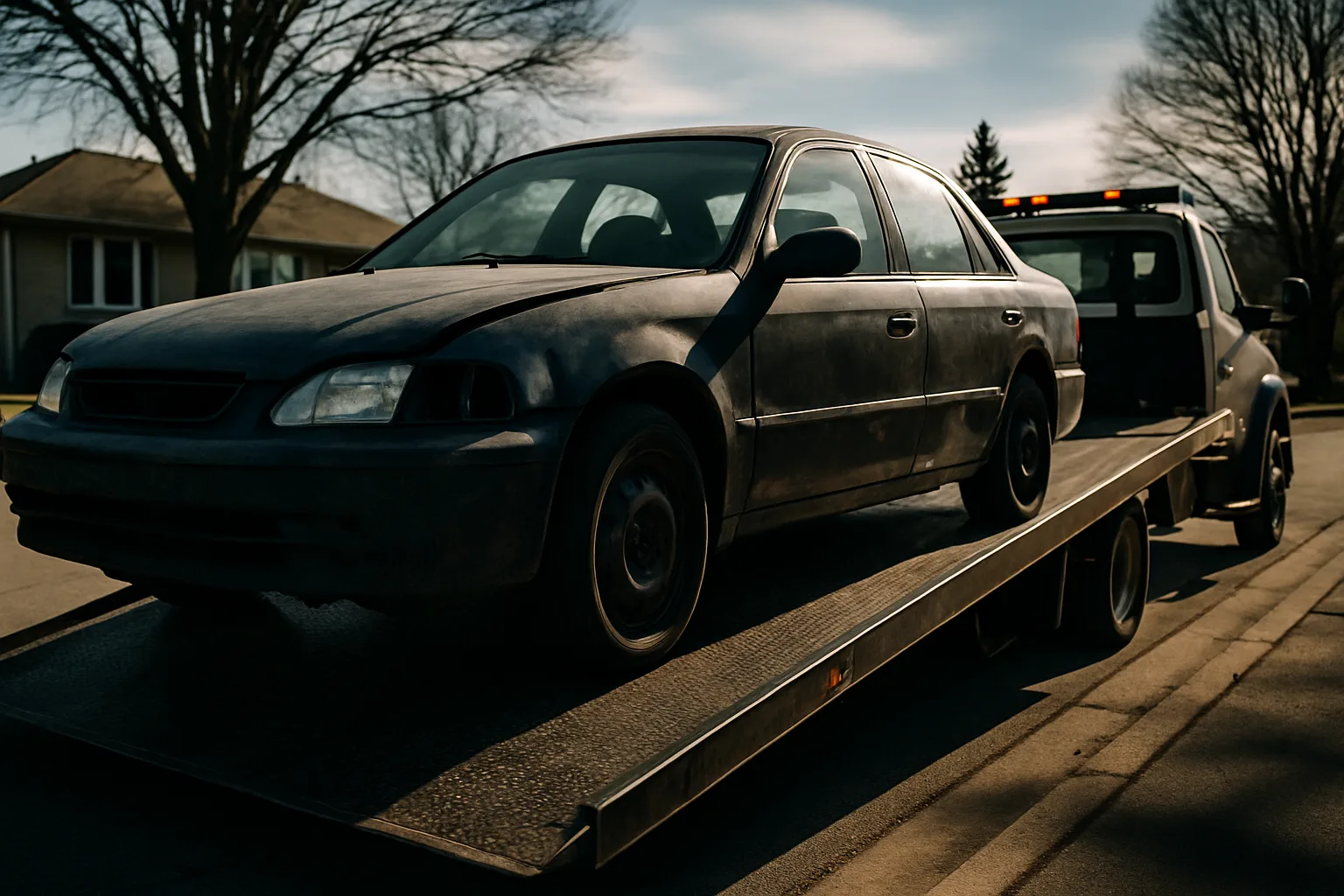
Most Toronto car owners remember to call the wrecker. Almost nobody remembers to call their insurance company — and that mistake can cost you real money.
If you've decided to sell my car for cash Toronto or hand your vehicle over to a scrap yard, your insurance obligation doesn't automatically disappear the moment the tow truck leaves your driveway. In Ontario, the rules around cancelling auto insurance after scrapping a vehicle are specific, and getting the steps wrong means you're either paying for coverage on a car you no longer own — or worse, leaving yourself exposed to a liability gap.
This guide walks you through exactly what to do, in the right order, so you protect your money and your record.
Why Cancelling Insurance After Scrapping Your Car Actually Matters
Here's the part most people skip over: in Ontario, auto insurance follows the vehicle and the driver. If your scrapped car hasn't been properly deregistered and your policy hasn't been formally cancelled, your insurer may continue charging you premiums. Some insurers require written notice. Others charge a short-rate cancellation penalty if you don't give enough lead time.
Beyond the billing issue, there's a paper trail problem. If the car gets moved under power before it's fully deregistered — even by a tow operator — and something happens, the liability question gets complicated fast. You want a clean, documented exit from that vehicle before anything else.
The bottom line: cancelling your insurance is not optional housekeeping. It's a financial and legal step that protects your premium history and your wallet.
Step One — Sell or Scrap the Vehicle First, Then Cancel
The order of operations matters here. You cancel insurance after you've sold or scrapped the vehicle — not before. Driving an uninsured vehicle in Ontario is illegal, full stop. Even a short gap in coverage while moving the car to a scrap yard puts you offside with the Highway Traffic Act.
If you're trying to get cash for your car in Canada, confirm the sale or pickup is locked in before you pick up the phone to your broker. Once the car is gone — plates surrendered, title transferred, tow truck dispatched — then you make the call.
Here's the sequence that works:
- Get a quote and confirm the sale with your buyer or scrap service.
- Remove your licence plates (in Ontario, plates belong to the owner, not the vehicle).
- Complete and sign over the vehicle ownership (the pink slip).
- Notify ServiceOntario to cancel the vehicle registration.
- Contact your insurance broker or company to cancel the policy or remove the vehicle.
- Request a refund for any unused premium.
Don't skip step four. Cancelling your registration with ServiceOntario is what officially removes the vehicle from your name in the provincial system. Your insurer will want confirmation of this in many cases.
How to Cancel Your Auto Insurance Policy in Ontario
Ontario insurers are regulated under the Insurance Act, which gives you the right to cancel your policy at any time — but the process has rules. Here's what to expect.
If you're cancelling entirely (you have no other vehicles on the policy), you'll need to submit written notice to your insurer. Most brokers accept a signed cancellation request by email or through their portal. Give at least 5 business days of lead time where possible — some insurers require it, and it helps avoid short-rate penalties.
If you're removing one vehicle from a multi-vehicle policy, a phone call or email to your broker usually handles it. They'll adjust your premium and issue a revised policy document. This is the simpler scenario for most Toronto households that own more than one car.
Either way, ask for written confirmation of the cancellation date and any refund amount. Keep that document. If a billing dispute comes up later, that confirmation is your proof.
What about the refund? If you've prepaid your annual premium, you're entitled to a pro-rated refund for the unused portion. The catch: if you cancel mid-term and the insurer uses short-rate calculation (rather than pro-rata), you'll get slightly less back. Ask your broker upfront which method applies to your policy.
What Happens to Your Licence Plates in Toronto
This is one of the most misunderstood parts of scrapping a car in Ontario. Your licence plates do not go with the vehicle. You remove them before the car leaves your driveway.
From there, you have two options:
- Transfer the plates to a new vehicle you're buying or already own (if the vehicle class matches).
- Return the plates to a ServiceOntario location and cancel the registration. You may receive a partial registration refund depending on how much time is left in your sticker year.
If you're not buying a replacement vehicle, return the plates. It closes the loop on your Ontario registration and gives you documentation that you've surrendered the vehicle officially. Some Toronto-area ServiceOntario locations allow you to do this without an appointment — check current hours before you go.
For anyone using Toronto scrap metal services, the pickup crew will typically remind you to pull your plates before they load the vehicle. If they don't, do it anyway. That's your responsibility, not theirs.
How Much Can You Expect When You Sell Your Junk Car in Toronto?
Once the paperwork is sorted, the real question comes up: what is the car actually worth? When you sell my junk car Toronto, the number depends on a few factors — vehicle weight, make and model, current scrap metal prices, and condition of recoverable parts like the catalytic converter, battery, and radiator.
Scrap car values in Canada are largely driven by steel and non-ferrous metal markets, which shift constantly. A full-size pickup or SUV will yield more than a compact — purely by weight. Vehicles with intact cats or sellable cores add value on top of the base scrap price.
The problem most sellers run into: they call one buyer, get one number, and take it. That's the old way. A single phone call to a single buyer isn't price discovery — it's guessing. Canada's B2B scrap recycling marketplace, SMASH, exists specifically to solve this problem for recyclers and buyers who deal in volume. Competition reveals the market. One call doesn't.
For consumer sellers, getting multiple quotes before you commit is the equivalent of the same principle. Get a free car valuation before you sign anything — know what your vehicle is worth before you hand over the keys.
Disclaimer: Scrap metal prices fluctuate based on market conditions. All valuations should be confirmed at the time of sale. Current rates vary by region and vehicle condition.
Common Mistakes Toronto Sellers Make When Scrapping a Car
This comes up more than it should. Here are the errors that cost people time, money, or both:
- Cancelling insurance before the car is gone. Even one day of driving an uninsured vehicle is a legal problem in Ontario. Don't do it.
- Leaving plates on the vehicle. The buyer now has your plate number. That's your liability until you return or transfer them.
- Not signing over the ownership properly. An incomplete transfer means the vehicle may still be registered in your name. If it gets crushed and the VIN resurfaces in a compliance check, that's your problem.
- Forgetting to notify ServiceOntario. Cancelling your insurance doesn't automatically cancel your registration. These are two separate steps with two separate organizations.
- Not requesting a premium refund. Insurers don't always volunteer this. Ask for it explicitly.
- Accepting the first offer without comparison. Especially in the Toronto market, where multiple buyers operate, the first number you hear is rarely the best one.
Platforms like SMASH are changing how the recycling industry prices scrap — by bringing competition and transparency to transactions that used to happen in the dark. If you read car selling tips before you start the process, you'll walk in knowing what questions to ask and what red flags to avoid.
Ready to Scrap Your Car in Toronto? Here's Your Next Move
Scrapping a vehicle in Toronto is a straightforward process when you do it in the right order. Get your quote, confirm the pickup, pull your plates, sign over the ownership, notify ServiceOntario, then call your insurer. Each step closes a door behind you and protects you from liability or billing surprises down the road.
If you're ready to move forward, the fastest way to find out what your car is worth — without committing to anything — is to get a quote now. Whether your vehicle runs, rolls, or just sits in the driveway collecting rust, you may be sitting on more value than you think. Get cash for your car in Canada by starting with a free, no-obligation quote at cash-forcars.ca — it takes minutes, and you'll know exactly where you stand before you make a single phone call.
Frequently Asked Questions
Q: When should I cancel my car insurance after scrapping my vehicle in Toronto?
Cancel your insurance after the vehicle has been picked up, the ownership has been signed over, and your plates have been removed. In Ontario, you must maintain valid insurance any time the vehicle is operated on a public road — including during the tow if it's driven under power. Once the car is gone and the registration cancelled with ServiceOntario, contact your insurer to cancel or adjust your policy.
Q: Will I get a refund on my car insurance after I scrap my car?
Yes, in most cases. If you've prepaid your annual premium, you're entitled to a refund for the unused portion. The amount depends on whether your insurer calculates on a pro-rata or short-rate basis. Ask your broker upfront — and request written confirmation of the refund amount and cancellation date.
Q: Do I need to return my licence plates when I scrap my car in Ontario?
Your licence plates belong to you, not the vehicle. Remove them before the car is picked up. You can either transfer them to a replacement vehicle or return them to a ServiceOntario location to cancel the registration. Leaving plates on a scrapped vehicle creates a liability risk — that plate number is still tied to your name until properly surrendered.
Q: How do I know if my sell my car for cash Toronto quote is fair?
The best way to know is to get more than one quote. Scrap car values in Toronto depend on vehicle weight, metal prices, and recoverable components like the catalytic converter. A single offer from a single buyer isn't a market price — it's one buyer's number. Compare quotes, know your vehicle's approximate weight and condition, and don't sign anything until you're confident in the offer.
Q: What documents do I need to scrap a car in Toronto?
You'll need the vehicle ownership (pink slip) to sign over the title to the buyer. You'll also need government-issued photo ID. Remove your licence plates before the vehicle leaves. After the transaction, use the signed ownership and your vehicle identification to cancel the registration at ServiceOntario. Keep copies of everything — the signed transfer, the registration cancellation, and your insurance cancellation confirmation.
Stay ahead of scrap metal market shifts and industry news — follow SMASH on LinkedIn for regular updates and insights from across the North American recycling industry.
```