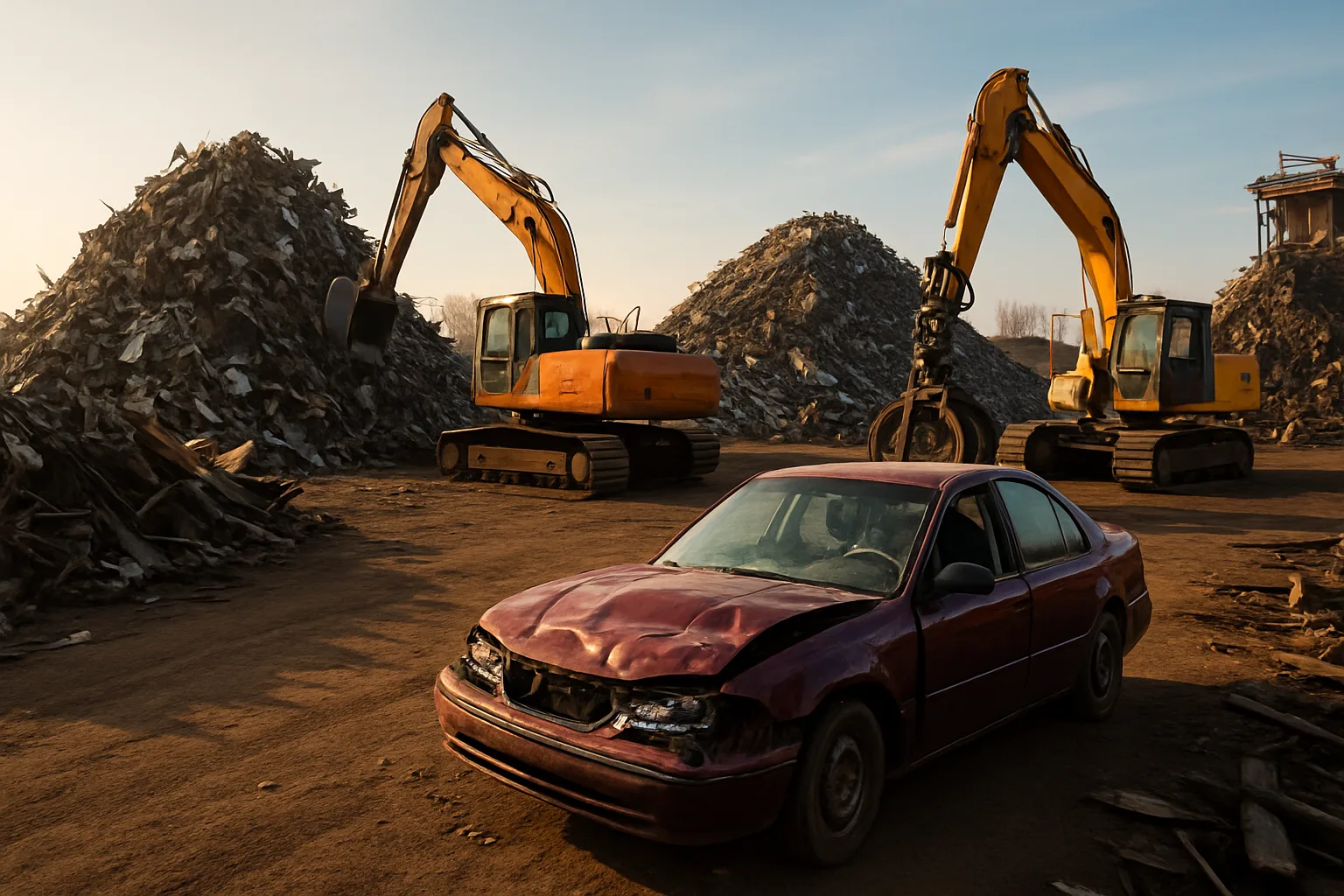
Your car got hit. Maybe it was a rear-ender on the highway, a side-swipe in a parking lot, or something worse. Now the insurance company has called it a total loss — or repair costs are higher than the car is worth. Either way, you're sitting on a damaged vehicle and wondering what to do next. Here's what most people don't know: an accident-damaged car still has real value, and knowing how to unlock that value is the difference between getting a fair payout and leaving money on the table.
If you're in Langley or anywhere across British Columbia, this guide walks you through exactly what to do — step by step — when you need to scrap a car that's been in an accident.
---What Happens to a Car's Value After an Accident?
First, let's be direct about something. "Total loss" doesn't mean worthless. It means the insurance company has decided repair costs exceed the car's market value — or a specific threshold set by provincial regulations. The vehicle still has metal, still has parts, and in many cases, still has a working engine, transmission, and catalytic converter.
The value left in an accident-damaged car typically comes from three sources:
- Scrap metal weight — A mid-size sedan weighs roughly 1,300 to 1,600 kg. Steel and aluminum in the frame and body still command a price at the yard.
- Salvageable parts — Undamaged doors, seats, glass, electronics, wheels, and suspension components can be pulled and resold.
- The catalytic converter — This is often the most valuable single component on a scrap vehicle. Cats contain platinum, palladium, and rhodium — precious metals that hold significant market value regardless of what the rest of the car looks like.
If you want to get cash for your car in Canada after an accident, understanding what's still valuable on that vehicle puts you in a stronger position when talking to buyers.
---Step 1 — Sort Out the Insurance and Title Before You Do Anything Else
This is where most people waste weeks of time. Before you call a single scrap car removal Langley service or junk car buyer, get your paperwork in order. Insurance settlements need to be finalized, and you need clear title (or a salvage title) in your name before any legitimate buyer will complete the transaction.
Here's what to confirm before reaching out to buyers:
- Has the insurance claim been closed? If the insurer is keeping the vehicle, you don't own it anymore — they do. If you're buying it back from them as a salvage, get that paperwork completed first.
- Do you have the vehicle registration and title? In British Columbia, ICBC handles total loss claims. Make sure you know whether the title has been transferred or branded as salvage.
- Is there a lien on the vehicle? If you financed the car, your lender may still have a stake in the settlement. Clear this up before selling.
- Do you have a copy of the accident report? Buyers may ask for it. Having it ready speeds up the process.
Once that's clean, you're ready to move fast. Buyers who deal with we buy junk cars Langley transactions are used to salvage titles — don't assume that's a dealbreaker. It's not.
---Step 2 — Know What You Have Before You Accept the First Offer
Junk car prices today vary based on several factors: the vehicle's make, model, year, weight, the extent of damage, which components are still intact, and current metal market conditions. Getting the first offer and accepting it is the most common mistake accident vehicle owners make.
Before you commit, do a quick assessment of what's on the vehicle:
- Catalytic converter — is it still there? This is critical. Check underneath before you call anyone. If your cat is intact, mention it. Better yet, platforms that let you find the best price for your scrap in Canada can help you understand how competition between buyers affects your final number.
- Engine and transmission condition — Even a smashed car with a running drivetrain is worth more than a dead one.
- Non-ferrous metals — Copper wiring, aluminum wheels, and other non-ferrous components add up.
- Interior components — Undamaged airbag modules (pre-deployment), infotainment systems, and leather seats all have aftermarket value.
You don't need to become a parts expert overnight. But a five-minute walk around the car — and knowing what's missing versus what's still there — gives you real leverage when buyers come to you with offers. If you want a head start, get a free car valuation before you commit to anything.
---Step 3 — Choose the Right Type of Buyer for Your Situation
Not all buyers are the same, and this matters a lot when the vehicle is accident-damaged. Your main options in Langley and across the Lower Mainland break down like this:
Scrap Yards (Metal Recyclers)
They'll buy the whole car by weight. Fast transaction, low friction, but you're getting the metal value only. If the car is fully written off and stripped of anything valuable, this is often the most efficient route.
Auto Wreckers / Salvage Yards
They pull parts and resell them. They'll often pay more than a straight scrap yard because they're buying the parts potential, not just the metal. Good option if your vehicle has a lot of undamaged components despite the accident damage.
Private Buyers
Possible, but slow. A salvage title or total-loss branded vehicle limits your private buyer pool significantly. Most private buyers want clean titles.
Online Auction Platforms
This is where platforms like SMASH change the game. Instead of calling one yard and accepting one number, you put your vehicle in front of multiple vetted buyers. Competition between buyers can reveal the true market price — which is almost always higher than what a single call produces. SMASH documents the inventory, manages the process, and handles auto-invoicing so you're not chasing paperwork.
For sellers in Langley dealing with accident vehicles specifically, the online route is worth understanding. Read car selling tips to learn more about how the process works before you commit to a buyer.
---How to Handle the Catalytic Converter Separately — and Why It Matters
If you're scrapping an accident vehicle, the catalytic converter deserves its own conversation. Cats contain platinum group metals (PGMs) — platinum, palladium, and rhodium — that are priced on the global commodities market. The spread between what a local yard pays and what a buyer who actually processes cats pays can be significant.
The smarter move? Understand your options to sell catalytic converters online through platforms that give you real buyer competition rather than one flat offer from whoever happens to answer the phone. Serial tracking and photo documentation — tools that SMASH uses — also protect you in a market where cat theft and misidentification are real issues.
A few important points:
- Never remove and sell the cat separately without ensuring it complies with provincial and federal regulations around catalytic converter sales. British Columbia has specific requirements around proof of ownership and documentation.
- If you're selling the whole vehicle, make sure the buyer knows the cat is intact and factors it into their offer. Don't let them assume it's missing.
- Keep the VIN-to-cat documentation chain clean. Buyers who take this seriously — the ones SMASH vets — will pay more because they can verify what they're buying.
Note: Catalytic converter and scrap metal prices fluctuate based on commodity markets. Always check current rates before committing to a sale.
---What to Expect on Pickup Day — Scrap Car Removal in Langley
Once you've accepted an offer, the logistics should be simple. Accident-damaged vehicles are often non-drivable, so towing is part of the equation. Here's what a professional scrap car removal Langley transaction looks like when it's done right:
- Confirm the offer in writing — Don't accept verbal offers and assume they'll hold. Get the number confirmed before the tow truck shows up.
- Remove your personal belongings — Sounds obvious, but people forget. Check the glove box, trunk, under seats, and any storage compartments.
- Cancel your insurance — The moment the vehicle changes hands, call ICBC or your insurer. Don't keep paying for a car you no longer own.
- Hand over the keys and paperwork — Title transfer happens at pickup. Make sure you get a receipt confirming the transfer.
- Get paid — Cash, e-transfer, or certified cheque. Confirm the payment method in advance. No legitimate buyer should leave without completing payment at pickup.
The whole process — from accepted offer to cash in hand — should take one to three business days if the paperwork is clean. If a buyer is pushing vague timelines or can't confirm pickup dates, that's a red flag. Junk car buyers near me open now who operate professionally will give you a firm schedule.
---Frequently Asked Questions
Q: Can I scrap a car in Langley if it has a salvage title?
Yes. Salvage titles are common in the scrap and recycling market. Buyers who specialize in accident vehicles deal with salvage titles routinely. Just make sure the title is in your name and the insurance claim is fully settled before you start reaching out to buyers.
Q: How do junk car buyers near me determine prices for accident-damaged vehicles?
Buyers look at the vehicle's weight, make, model, year, the extent of damage, which components are still intact (especially the catalytic converter), and current scrap metal market conditions. Having documentation and photos of the vehicle ready helps buyers make stronger offers faster.
Q: Is scrap car removal in Langley free?
Most reputable buyers in the Langley area include towing as part of the transaction. Confirm this upfront — a buyer who tries to deduct towing costs from your offer after the fact is not operating transparently. Get the net payout confirmed before scheduling pickup.
Q: Should I sell the catalytic converter separately before scrapping the car?
It depends on your situation and local regulations. In British Columbia, there are documentation requirements around cat sales. Selling the whole vehicle with the cat intact to a buyer who values it properly is often simpler and still competitive. Platforms that let you sell catalytic converters online with proper documentation and buyer competition can help you capture fair value either way.
Q: How long does the process take to get cash for cars in British Columbia after an accident?
Once your insurance paperwork is settled and title is clear, the actual sale and pickup can happen within one to three business days. The bottleneck is almost always the insurance process, not the buyer side. Get your documents sorted early to move fast when you're ready.
---Scrapping an accident-damaged car doesn't have to be a stressful process. Get your paperwork straight, know what you have, and don't accept the first number without understanding what the market looks like. Whether you're in Langley or anywhere else across Canada, the right buyer — and the right platform — makes a real difference. Ready to move forward? Get cash for your car in Canada and start with a free quote at cash-forcars.ca. No pressure, no guessing — just a clear number based on what your vehicle is actually worth today.
Stay current on scrap metal markets and industry trends by following SMASH on LinkedIn.