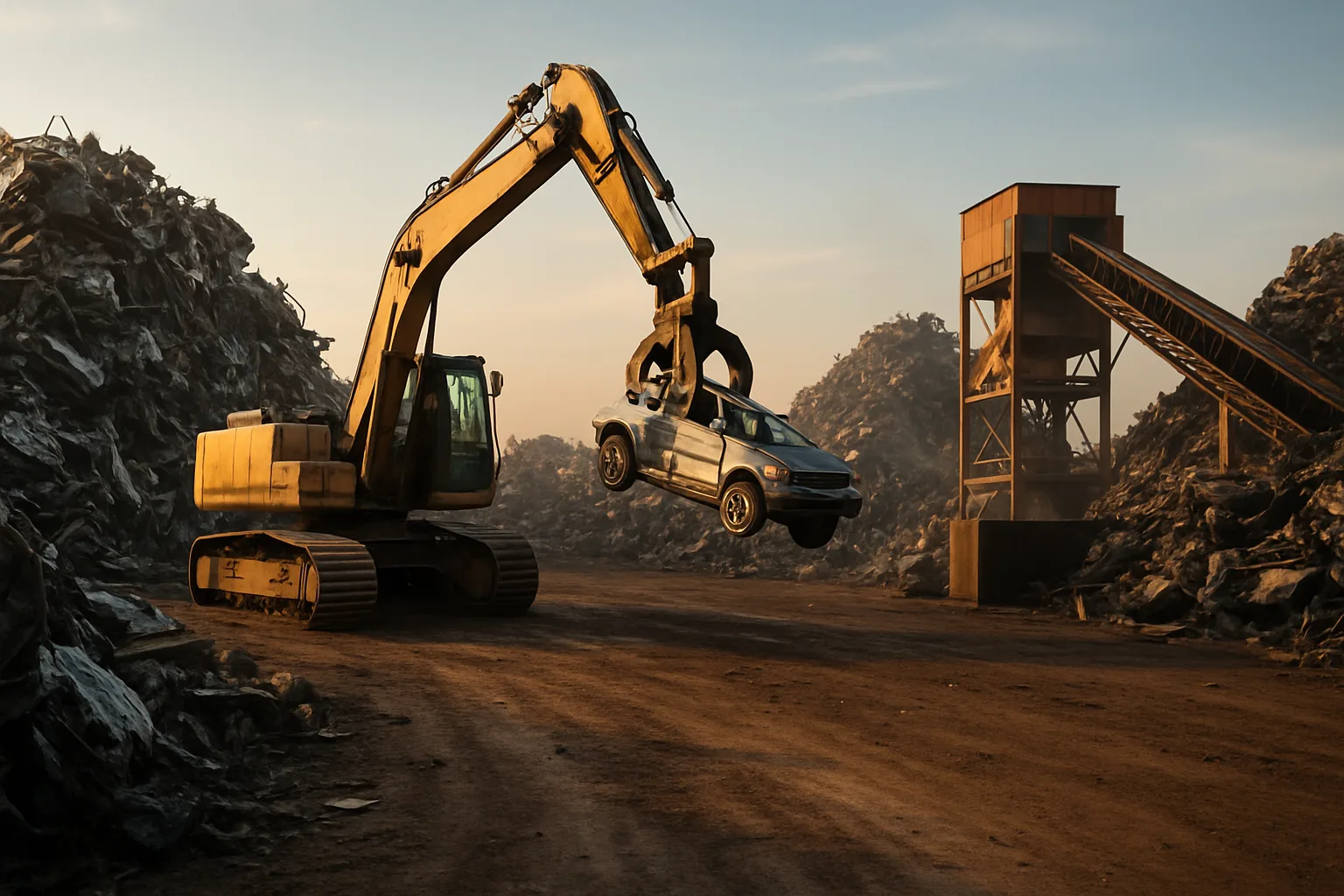
Your car got hit. Maybe it was a fender-bender that totalled the insurance value. Maybe it sat in a ditch all winter and came out looking like a crushed beer can. Either way, you're staring at a vehicle that won't move under its own power — and wondering if it's worth anything at all. The answer is almost always yes. If you're searching for we buy junk cars Regina, you're already on the right track. Accident-damaged vehicles still hold real value, and knowing how to unlock that value makes the difference between leaving money on the table and walking away with cash in hand.
This guide walks you through the entire process — from the moment after the crash to the moment you get paid. No fluff. Just what you need to know.
---Why an Accident-Damaged Car Still Has Real Value
A lot of car owners assume a wrecked vehicle is worthless. That assumption costs them money. Even a car that's been fully written off by insurance still contains hundreds of kilograms of steel, aluminum, copper wiring, and other recoverable metals. The average passenger vehicle weighs between 1,400 and 1,800 kilograms. A meaningful portion of that is recyclable ferrous and non-ferrous metal — material that scrap yards and buyers actively want.
Beyond raw metal, accident-damaged cars often have parts that survived the collision completely intact. The engine may be fine even if the front end is destroyed. The transmission, catalytic converter, doors, glass, wheels, and electronics can all carry standalone value. Buyers — especially those who deal in salvage — price vehicles based on this full picture, not just the damage they can see.
- Steel and iron: The bulk of most vehicles — prices fluctuate with the market but are quoted per tonne
- Aluminum: Found in wheels, engine blocks, and body panels — commands a higher price per kilogram than steel
- Copper: Wiring harnesses throughout modern vehicles contain more copper than most owners realize
- Catalytic converter: One of the highest-value single components — contains platinum, palladium, and rhodium
- Usable parts: Doors, seats, mirrors, and electronics that were untouched by the accident
The takeaway: don't price your car based on what it looks like. Price it based on what it contains. That's how buyers think — and it's how you should negotiate.
---What Happens to Your Title After an Accident — and Why It Matters
One of the first questions people ask after a serious collision is: what does this do to my title? In Saskatchewan, a vehicle that sustains severe structural damage is typically branded as a salvage title by SGI (Saskatchewan Government Insurance). That branded title follows the vehicle for life. It affects insurability, registrability, and resale value on the private market — but it does not prevent you from selling it for scrap or to a salvage buyer.
If you've ever wondered how much is my salvage title car worth in a scrap context, the honest answer is: it depends on the metal content, the condition of recoverable parts, and current commodity prices. A salvage title doesn't dramatically reduce scrap value the way it reduces private resale value. Scrap buyers aren't buying the title — they're buying the material.
Here's what you'll typically need to complete the transaction:
- The vehicle title or registration — even if it's been branded as salvage, you still need proof of ownership
- Valid government-issued ID — required by law for scrap metal transactions in most provinces
- Insurance documentation — if the vehicle was written off, your insurer may need to sign off on the transfer
- Lien clearance — if there's still money owed on the vehicle, the lienholder must be satisfied before you can sell
Get your paperwork sorted before you start getting quotes. Missing documents slow everything down and give buyers a reason to lower their offer.
---Scrap Car Removal Regina: How the Pickup Process Actually Works
Accident-damaged vehicles often can't be driven. That's the reality. So scrap car removal Regina services exist specifically to handle non-running, immobile, or partially demolished vehicles. A reputable buyer will send a flatbed or tow truck to your location — whether that's a private driveway in Regina's north end, a collision repair shop holding your vehicle, or a field property outside city limits.
The process is straightforward when you work with the right buyer:
- Get a quote — provide the year, make, model, approximate weight, and a description of the damage. Photos help significantly. Documented inventory — including any parts you know are intact — gives buyers more confidence in their offer.
- Confirm pickup — most legitimate buyers can schedule removal within 24 to 72 hours in the Regina area
- Hand over the keys and paperwork — the driver handles the loading, and you sign over the title at pickup
- Get paid — cash or e-transfer, depending on the buyer
One thing to watch for: some buyers quote high on the phone and adjust downward when the truck arrives. Lock in your price in writing before anyone shows up. A buyer who won't confirm a price in writing is a buyer worth walking away from.
If you want to get cash for your car in Canada without the runaround, the process should be this clean from the first call to the final handshake.
---How to Get the Best Price for a Wrecked Car — Using Competition, Not Hope
Here's where most car owners leave money behind. They call one buyer, take the first offer, and move on. That's the old way. One call, one price, no leverage. You have no idea if that offer reflects the actual market — because you never created any competition.
The smarter move is to get multiple offers and let buyers compete. That's exactly the model that platforms like smashrecycling.ca are built on. SMASH connects sellers with vetted buyers through an auction format, so the price you see reflects what the market is actually willing to pay — not what a single buyer thinks they can get away with offering. Competition can help reveal the market. More buyers means better price discovery.
For a wrecked car, documented inventory matters even more than usual. If you can photograph the intact components — the undamaged catalytic converter, the working alternator, the solid rear axle — you give buyers more to bid on. Vague descriptions get conservative offers. Specific, documented listings get competitive ones.
SMASH's platform handles photo documentation, serial tracking, and vetted buyer access — the kind of infrastructure that makes sell scrap metal online actually work in your favour instead of the buyer's. No subscription fees. They only win when you win.
If you want to get a free car valuation before you commit to anything, start there. Know your baseline before you pick up the phone.
---Cash for Cars Saskatchewan: What Local Sellers Need to Know
The cash for cars Saskatchewan market has its own rhythms. Rural distances, seasonal access issues, and regional metal pricing all factor into what buyers offer. A car sitting on an acreage outside Moose Jaw isn't as easy to retrieve as one parked two blocks from a Regina scrap yard — and buyers price that in. That doesn't mean rural sellers get shortchanged, but it does mean you need to be specific about location when you're getting quotes.
Saskatchewan's winters also affect timing. Getting a vehicle out of a snow-locked property in January is a different job than a summer pickup. If your accident happened in winter and the vehicle has been sitting, document its condition now — before freeze-thaw cycles cause additional body damage that buyers will factor against you.
A few practical notes for Saskatchewan sellers:
- SGI write-offs require specific paperwork — confirm with your adjuster what documents transfer with the vehicle
- Drain all fluids before pickup if possible — some yards factor in environmental handling costs
- Remove personal belongings and aftermarket accessories you want to keep before the truck arrives
- Know the approximate weight of your vehicle — it directly affects the base metal offer
For more tips on navigating the process as a first-time seller, read car selling tips from people who've been through it. And if you're in the city, Regina scrap metal services can connect you with local pickup options that understand the market here.
---The Case for Selling Fast — and What Waiting Costs You
Every month a wrecked car sits on your property, it loses value. Rust sets in. Rodents nest. Tires go flat and rot. Fluids leak and create liability. Municipalities in Regina and across Saskatchewan can issue fines for derelict vehicles on residential properties. What was worth $800 today might be worth $500 in six months — not because the metal market crashed, but because the vehicle itself degraded.
There's also the opportunity cost. The space your wrecked car is occupying has value. A parking spot, a garage bay, a section of your driveway — that space could be doing something useful. Selling fast isn't just about getting paid. It's about stopping the clock on a depreciating asset.
The fastest path to cash is a clean process: documentation ready, photos taken, multiple buyers contacted, and a confirmed pickup scheduled. If you're ready to move, the right buyers will move with you. Don't let a wrecked car become a months-long project. Get the quote, confirm the price, book the truck.
Prices for scrap metal fluctuate with commodity markets. Always check current rates when getting your quote — what applies today may differ next week.
If you're ready to stop looking at that wrecked car in your driveway, get cash for your car in Canada — get a free quote at cash-forcars.ca and find out what your accident-damaged vehicle is actually worth today.
---Frequently Asked Questions
Q: Can I sell a car for scrap if it's been written off by SGI in Saskatchewan?
Yes. An SGI write-off or salvage-branded title does not prevent you from selling the vehicle to a scrap buyer. You'll need the title documentation and valid ID, and if there's a lien on the vehicle, that needs to be cleared first. Most scrap buyers in Regina deal with write-offs regularly — it's a standard transaction.
Q: Do companies that say "we buy junk cars Regina" actually come to you, or do you have to tow it yourself?
Reputable buyers include free towing or flatbed pickup as part of the service. You should never have to pay to have an accident-damaged vehicle removed. Confirm pickup is included — and free — before you agree to any offer. If a buyer tries to deduct towing costs from your quote, that's a red flag.
Q: How much is my salvage title car worth for scrap?
It depends on the vehicle's weight, the condition of recoverable parts, and current commodity prices. A salvage title affects private resale value significantly but has a much smaller impact on scrap value. Document intact components — especially the catalytic converter, engine, and transmission — and get multiple offers to find out what the market will actually pay.
Q: How long does scrap car removal in Regina typically take?
Most buyers can schedule pickup within 24 to 72 hours once you've confirmed a price and have your paperwork ready. Rural locations outside Regina may take slightly longer depending on distance and road access. Summer pickups are generally faster than winter — plan accordingly if your vehicle is on a property with seasonal access issues.
Q: What paperwork do I need to sell my accident-damaged car for scrap in Saskatchewan?
You'll need your vehicle title or registration (even if it's branded as salvage), valid government-issued photo ID, and any insurance documentation related to the write-off. If money is still owed on the vehicle, you'll need to resolve the lien before transferring ownership. Contact your insurer and SGI if you're unsure what documents are required for your specific situation.
---Stay current on scrap metal markets and industry news by following SMASH on LinkedIn at linkedin.com/company/scrap-metal-auction-sales-hub. If you're selling or buying, reach out directly to jeff@smashscrap.com.