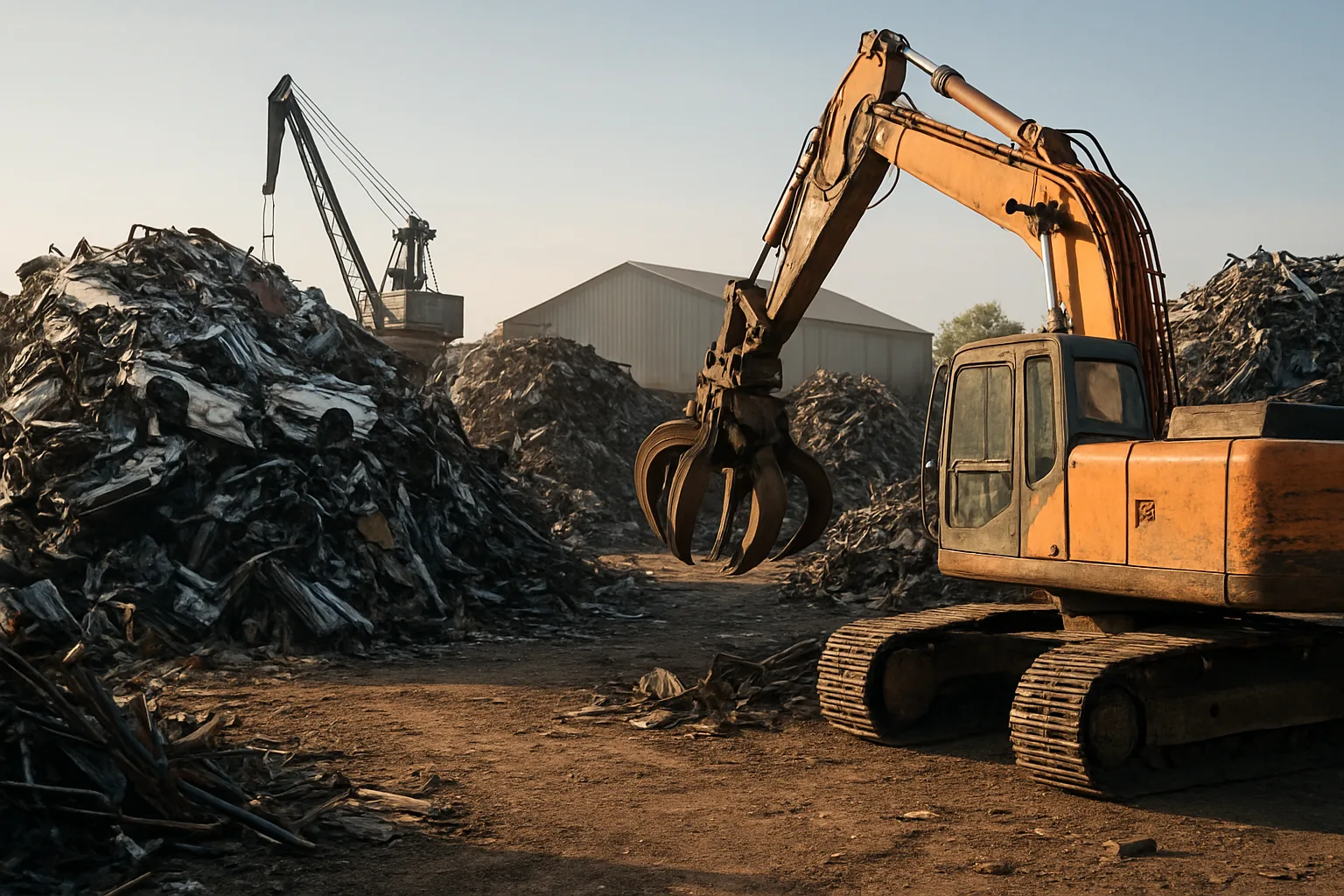
Your car started its life as raw ore pulled from the ground. It ends the same way — back at the yard, stripped for parts and processed into metal. Between those two points, the average vehicle travels hundreds of thousands of kilometres, passes through multiple owners, and quietly depreciates until the repair bill finally beats the trade-in value. If you're sitting on a dead or dying vehicle in Red Deer right now, understanding that full lifecycle helps you make a smarter decision about what to do next.
Here's the full picture — from factory floor to scrap yard — and where scrap car removal Red Deer fits in the story.
Stage 1: Raw Materials and the Factory Floor
Every car starts as commodities — iron ore, bauxite, copper, petroleum-based plastics, rubber, glass. A mid-size sedan weighs roughly 1,400 to 1,800 kg and contains an estimated 900+ kg of steel alone. That steel comes from mines, gets processed into coil or sheet, stamped into body panels, and welded into a unibody structure in a matter of hours on an automated assembly line.
The rest of the vehicle — the engine, transmission, wiring harness, catalytic converter, aluminum wheels, electronics — layers on top of that steel skeleton. By the time the vehicle rolls off the line and onto a transport carrier, it represents an enormous draw on global raw materials. This matters later, because everything put in is eventually reclaimed when that vehicle gets processed at the end of its life.
- Steel: Dominant material by weight — makes up the frame, doors, hood, roof
- Aluminum: Engine blocks, wheels, and increasingly body panels on newer models
- Copper: Wiring, motors, and connectors throughout the vehicle
- Precious metals: Palladium, platinum, and rhodium inside the catalytic converter
- Plastics and rubber: Dashboards, bumpers, seals, and hoses — mostly landfill but increasingly recyclable
Stage 2: Active Life — The Years of Ownership and Depreciation
The average Canadian vehicle stays on the road for roughly 10 to 15 years. In that time, it typically changes hands two to four times. The first owner absorbs the steepest depreciation — a new vehicle can lose 20% of its value in the first year alone. By year five, most vehicles have lost 40–60% of their purchase price, even with low mileage and good maintenance.
Here's where geography matters. In Alberta — and particularly in a city like Red Deer, sitting between Edmonton and Calgary and subject to harsh prairie winters — vehicles face accelerated wear. Road salt, freeze-thaw cycles, and gravel roads eat through undercoatings and attack brake lines, exhaust systems, and rocker panels faster than in milder climates. A vehicle that might get 15 clean years in a coastal city might be mechanically sound but structurally compromised by year 10 in central Alberta.
The typical ownership stages look like this:
- Years 1–4: First owner, under warranty, highest value, regular maintenance
- Years 5–9: Second or third owner, value dropping, out-of-warranty repairs begin
- Years 10–14: Increasing maintenance costs, rust and mechanical wear accumulate
- Years 15+: Repair costs approach or exceed vehicle value — the scrap decision point arrives
Stage 3: The Decision Point — When Repair Cost Beats Scrap Value
This is the moment every vehicle owner eventually reaches. The mechanic hands you an estimate, and the number is bigger than what anyone would pay you for the car. Maybe it's a blown engine. Maybe it's a transmission failure on top of a frame rust issue. Maybe it failed the last safety inspection and the repair list is three pages long. Whatever the trigger, you're now holding a vehicle that costs more to fix than it's worth.
At this point, most owners have three realistic options:
- Private sale as-is — possible, but most buyers won't touch a mechanically failed vehicle without deep discounting
- Part it out yourself — time-intensive, requires space, tools, and knowledge of what's valuable
- Sell to scrap car buyers near me — fastest path to cash, especially when the vehicle is non-running
Option three is where most Red Deer vehicle owners land. The vehicle is done. You need it gone. You want something back for it. That's the moment to get cash for your car in Canada through a service that handles pickup, paperwork, and payment without making you chase anyone down.
Platforms like SMASH change what happens next. Instead of calling one buyer and accepting whatever number they throw at you, SMASH puts your vehicle — or your load of scrap — in front of vetted buyers who compete for it. More competition means better price discovery. You stop guessing and start knowing what the market will actually pay.
Stage 4: Scrap Car Removal and the De-pollution Process
Once a vehicle gets picked up for scrap, it doesn't just get crushed. There's a regulated process that happens first — and it matters for both environmental compliance and maximizing the value of what's recovered.
In Alberta, end-of-life vehicle processors are required to follow de-pollution protocols before shredding. This includes draining all fluids — engine oil, transmission fluid, coolant, brake fluid, power steering fluid, fuel — and disposing of them properly. Airbags get deployed or neutralized. Refrigerants get captured. Mercury switches, which exist in older vehicles, get removed separately.
After de-pollution, the vehicle gets assessed for usable parts. High-demand items come off first:
- Catalytic converters (high precious metal content — often the single most valuable component)
- Engines and transmissions in rebuildable condition
- Aluminum wheels
- Batteries (both 12V lead-acid and, increasingly, EV lithium packs)
- Copper wiring harnesses
- Doors, hoods, and body panels in good condition
What's left goes to the shredder — and that's where the bulk scrap value lives. The shredded output gets sorted magnetically and by density into ferrous (steel/iron) and non-ferrous (aluminum, copper, zinc) fractions. Those get baled, weighed, and sold to mills and foundries.
Managing that inventory accurately is where operations either make or lose money. SMASH addresses this directly — the platform's scrap metal inventory management tools let yards document loads by weight, category, and condition, attach photos, and track serial numbers or VINs. Buyers get better information and bid with more confidence. That's not theory — that's what documented inventory actually does in a live auction.
Stage 5: Back to Raw Material — The Recycling Loop
Here's the part that makes the full lifecycle remarkable. The steel from that shredded vehicle gets melted at an electric arc furnace and poured into new steel. Some of it might become rebar for a building. Some of it might become the body panel of a new truck. The aluminum gets remelted at much lower energy cost than producing virgin aluminum from bauxite. The copper gets refined and re-enters the electrical supply chain.
Steel recycling uses roughly 75% less energy than producing new steel from raw ore. Aluminum recycling saves approximately 95% of the energy required for primary production. These aren't marketing claims — they're established materials science. Every vehicle that ends up properly processed at a recycling yard genuinely reduces the demand for virgin raw materials and the emissions that come with extracting them.
For Alberta specifically, this recycling loop connects directly to the provincial economy. Scrap metal that moves through Red Deer yards feeds processing operations in Edmonton, Calgary, and beyond — and ultimately into steel and aluminum products that support construction, agriculture, and manufacturing across the region.
If you want to learn more about how scrap metal is bought and sold in this ecosystem, visit smashrecycling.ca — it's a useful look at how auction-based pricing works for yards and sellers at every volume level.
How to Get the Most Value at End of Life — A Practical Comparison
Not all scrap car exits are equal. Here's how the main options stack up for Red Deer vehicle owners trying to squeeze the most out of a dead or dying vehicle:
Method Speed Effort Price Discovery Single local buyer (cold call) Fast Low Weak — one offer, no comparison Private sale as-is Slow High Moderate — market exposure, but buyers are scarce Parting out yourself Very slow Very high Good on individual parts, poor on time value Auction platform (SMASH) Fast Low Strong — competitive bids from vetted buyersThe comparison isn't complicated. One phone call to one buyer gives you one number. No competition, no transparency, no way to know if you left money on the table. A competitive auction format puts multiple junk car buyers near me Red Deer and beyond in the room at the same time — and that's where actual market price gets discovered.
For Red Deer owners, local Red Deer scrap metal services connect you to buyers who understand the Alberta market, know current regional scrap prices, and can move quickly on pickup logistics. That's the combination that matters when you need the vehicle gone and you need fair value for it.
Ready to move your vehicle through that final stage? Get a free car valuation and see what your vehicle is worth in today's market. No pressure, no guessing — just a real number based on what buyers are actually paying.
You can also read car selling tips on the blog to understand what factors affect your vehicle's scrap value before you call anyone.
When you're ready, getting cash for your car in Canada starts with one conversation. Head to cash-forcars.ca, get a free quote, and let the market tell you what your vehicle is actually worth. The car had a long life. Make the exit count.
Frequently Asked Questions
Q: How does scrap car removal in Red Deer actually work?
You contact a scrap car removal service, provide basic details about your vehicle (year, make, model, condition, and whether it runs), and get a quote. If you accept, they schedule pickup — usually within one to three business days — tow the vehicle at no charge, and pay you on the spot. No title transfer headaches, no ad listings, no waiting.
Q: What's my junk car worth in Red Deer right now?
Scrap car values depend on the vehicle's weight, the current price of scrap steel, and what usable parts the vehicle carries. Alberta scrap metal prices fluctuate with global commodity markets, so the best number comes from getting a live quote rather than relying on a general estimate. Always check current rates — prices from six months ago may not reflect today's market.
Q: Do I need the title or registration to sell a scrap car in Alberta?
Generally, yes — you need to prove ownership to legally transfer a vehicle. In Alberta, you'll typically need the vehicle registration in your name, or documentation showing you are the legal owner. Some processors will work with you if documentation is incomplete, but it's always smoother with the paperwork in order. Contact the service ahead of time if you're missing documents.
Q: Can I sell a car for scrap if it doesn't run?
Absolutely. Most scrap car buyers near me specialize in non-running vehicles — that's a large part of the market. They bring a flatbed or wheel-lift tow truck and handle removal regardless of the vehicle's condition. A car that doesn't start, has a seized engine, or is structurally compromised still has scrap metal value.
Q: How long does the scrap car pickup process take in Red Deer?
Most reputable scrap car removal services in the Red Deer area can complete pickup within one to three business days of accepting your quote. Same-day pickup is sometimes available depending on the provider's schedule and your location within Alberta. The transaction itself — from quote to cash in hand — is typically faster than any private sale option.
Follow SMASH on LinkedIn for scrap metal market insights, industry updates, and pricing trends that affect what your vehicle is worth.
```