Your old car is worth more than you think — but only if you know how to sell it right. Most people leave serious money on the table by calling one buyer, accepting the first number thrown at them, and signing over the title the same afternoon. If you're sitting on a junk car in Richmond or anywhere across British Columbia, that approach is costing you.
Here's what actually moves the needle when you want to get the best scrap value for your car — practical steps, no fluff.
Know What Your Car Is Actually Worth Before You Call Anyone
The single biggest mistake sellers make is going into a negotiation blind. Scrap car value isn't random. It's driven by the vehicle's weight, its metal composition, current commodity prices, and what salvageable parts it carries. A 2009 Honda Accord and a 2009 Ford F-150 weigh very different amounts and carry very different parts inventories — their scrap values reflect that.
Before you contact a single buyer, do this groundwork:
- Find your vehicle's curb weight. Heavier vehicles yield more scrap steel. A full-size truck can hit 4,500–5,500 lbs. A compact sedan might land around 2,800–3,200 lbs. Weight matters when steel prices are active.
- Identify what valuable components your car still has. Does it have a working engine? Intact transmission? These are worth real dollars to rebuilders, not just the smelter.
- Check whether your catalytic converter is still attached. More on this below — but if it's there and intact, it changes your conversation entirely.
- Pull the VIN. Buyers use it to verify specs and check for liens. Having it ready signals you're organized and not hiding anything — which actually helps you negotiate.
Knowledge is leverage. When you get a free car valuation with real data behind you, you can push back on lowball offers instead of wondering if you're being played.
Don't Overlook the Catalytic Converter — It's Often the Most Valuable Part
If your car still has its catalytic converter, you're holding one of the most recoverable assets on the vehicle. Cats contain platinum group metals (PGMs) — platinum, palladium, and rhodium — that command serious prices in the recycling market. A single cat from a mid-size SUV can be worth hundreds of dollars on its own, depending on the unit and current PGM spot prices.
The opportunity here is real, but so is the complexity. Not all cats are worth the same. Make, model, year, and engine size all affect the PGM load inside. Selling your converter separately from the car — or making sure a buyer accounts for its full value — can mean a significantly better outcome for you.
If you want to sell catalytic converters online, platforms that specialize in transparent, documented transactions are worth exploring. That's where SMASH comes in. The SMASH Recycling auction platform connects sellers with vetted buyers who compete for loads — including cats and non-ferrous metals — through a documented, competitive process. Competition reveals market value. A single buyer on a phone call does not.
Get Multiple Offers — Never Accept the First Number
If you're serious about maximizing what you get for a junk car in Richmond, you need more than one offer. This sounds obvious. Almost nobody does it. Most sellers call the yard they've used before or the one that pops up first in search, get a number, and take it — because getting another quote feels like more work than it's worth.
It is absolutely worth it. Here's why:
- Scrap buyers set their own margins. Without competition, there's no pressure to move toward what the market actually pays.
- A second or third offer gives you a baseline. You know if the first number was competitive or if it was a test to see if you'd bite.
- Documented, competitive processes — like an auction format — create that pressure automatically. You're not chasing quotes manually. Buyers compete for your load.
This is exactly the problem SMASH was built to solve. Instead of one call to one buyer with one number, the platform puts your car or scrap load in front of multiple vetted buyers. More buyers means better price discovery. That's not a marketing line — it's how commodity markets work.
If you'd rather get cash for your car in Canada through a process that actually works in your favour, stop accepting the first offer you get.
Scrap Car Removal in Richmond — What the Process Should Look Like
Once you've done your homework and you're ready to sell, the actual scrap car removal process should be straightforward. If a buyer is making it complicated, that's a signal.
Here's what a clean transaction looks like step by step:
- Submit your vehicle info. Year, make, model, VIN, condition, location, and what's still on the car (engine, transmission, cats, tires). Accurate info gets you accurate offers.
- Receive your offer or let buyers compete. On a platform like SMASH, vetted buyers review your listing and bid. You see real offers from real buyers.
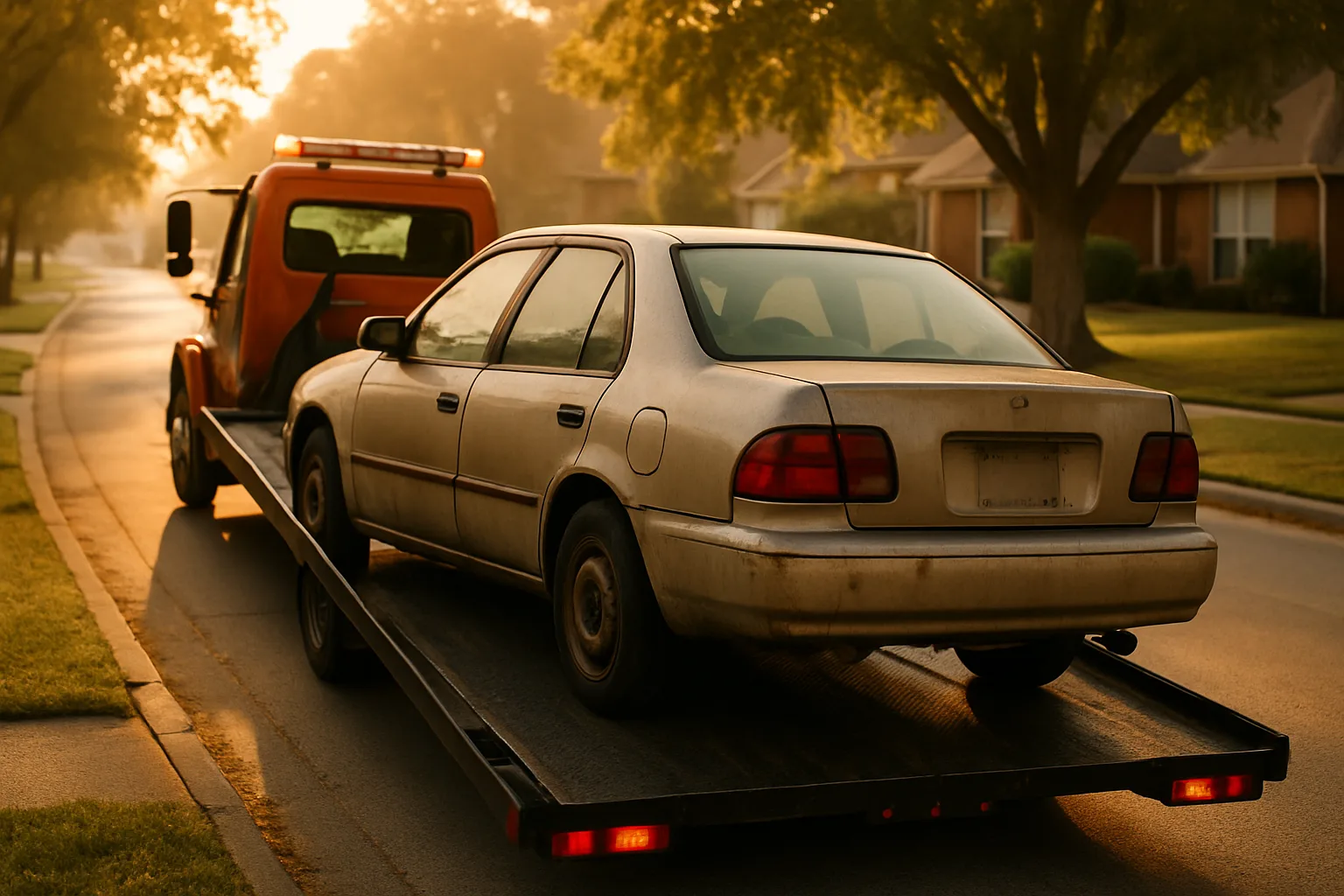
- Confirm pickup logistics. Legitimate buyers handle towing. You shouldn't need to move the vehicle yourself — especially for a non-running car. Richmond scrap metal services through cash-forcars.ca cover this directly.
- Paperwork at pickup. The buyer will need your vehicle title and a bill of sale. Have your ownership documents ready before they arrive. In British Columbia, this means your registered ownership paperwork from ICBC.
- Get paid. Cash or e-transfer at pickup, or in accordance with whatever terms were agreed to. Don't hand over the keys or sign anything until payment is confirmed.
If a buyer is vague about any of these steps — especially pickup timing, payment method, or paperwork — ask clarifying questions before you commit. Reputable buyers don't dodge specifics.
What Affects Junk Car Prices Today — And Why Timing Matters
Junk car prices aren't fixed. They move with commodity markets, and if you're not paying attention, you may sell at the wrong time. A few factors that directly affect what your vehicle is worth right now:
- Steel prices. Scrap steel is the base layer. When mill demand is strong, yards pay more per ton. When it softens, offers drop. Prices fluctuate — sometimes weekly.
- Non-ferrous metal prices. Copper, aluminum, and PGMs (in your cat) have their own price cycles tied to global demand. A car with significant aluminum content — newer vehicles especially — may be worth more than its steel weight alone suggests.
- Regional demand. A yard in Richmond, British Columbia, may be paying differently than a yard across the country — driven by local demand, shipping costs, and the buyers active in that region at a given time.
- Vehicle condition. A car that runs and drives commands a different price than a flat-tired shell. Be honest about condition upfront — it saves everyone time and protects your reputation as a seller.
If you're watching the market, you can time your sale better. To read car selling tips and stay current on what drives value in the Canadian scrap market, it's worth following resources built specifically for sellers — not generic automotive advice that doesn't apply to your situation.
Disclaimer: Metal prices fluctuate based on commodity markets. The values mentioned here are general ranges for context only. Always check current rates with buyers before committing to a sale.
Documentation Sells — Don't Show Up Unprepared
This step gets skipped constantly, and it costs sellers credibility and cash. When you can document what's on your vehicle — photos, service history, VIN verification, confirmation that the cat is intact — buyers have more confidence. More confidence from buyers means stronger offers.
Think about it from their side. Two identical vehicles come up for sale. One seller has clear photos of the underside showing the cat, a VIN that pulls clean history, and a packing list of intact components. The other seller says "it's all there, just come look." Which car gets a stronger bid? Every time, it's the documented one.
SMASH builds documentation into its process by design — photo uploads, VIN lookup, serial tracking for high-value components, and auto-invoicing that keeps the paper trail clean. That structure protects both sides and gives buyers the confidence to bid aggressively. When buyers trust what they're bidding on, competition increases. When competition increases, your outcome improves.
You don't need to be an expert to document your car well. Take photos in good light. Capture the exterior, interior, engine bay, undercarriage, and any components you're calling out specifically. Write down the VIN. Know the mileage. That's it.
Frequently Asked Questions
Q: How do I get the most money for my junk car in Richmond?
Get multiple offers before accepting anything. Know your vehicle's weight, condition, and whether the catalytic converter is intact — these details affect value significantly. Using a competitive auction platform like SMASH puts your vehicle in front of vetted buyers who bid against each other, which gives you a better chance of reaching true market value instead of accepting a single buyer's margin.
Q: Who buys junk cars in Richmond, British Columbia?
Several local salvage yards and scrap buyers operate in the Richmond area and across British Columbia. For a more competitive process, platforms like SMASH connect sellers with verified buyers across North America, including active buyers in British Columbia. Cash-forcars.ca also offers direct junk car buying with free removal.
Q: How does scrap car removal work in Richmond?
Once you agree on a price, the buyer arranges towing — you don't move the car yourself. They arrive at the agreed time, confirm the vehicle condition, complete the paperwork (you'll need your vehicle registration from ICBC and a bill of sale), and pay you on the spot. The whole process from quote to pickup typically takes one to three business days for most Richmond sellers.
Q: Does a non-running car still have scrap value?
Yes. Even a car that won't start or move has scrap value tied to its steel weight, any intact non-ferrous metals, and components like the catalytic converter. Be upfront about the condition when you request a quote — accurate info gets you an accurate offer and avoids disputes at pickup.
Q: Should I remove the catalytic converter before selling my junk car?
This depends on how you're selling. If you're selling the whole car to a single buyer, they'll typically account for the cat in their offer — but you can negotiate it as a separate line item if you know its value. If you want to maximize recovery, selling the cat separately through a documented, competitive process can sometimes yield more than bundling it into the car sale. Either way, know what you have before you decide.
If your junk car is sitting in your driveway costing you space and nothing else, that changes today. Do the prep work, get more than one offer, document what you have, and don't leave the catalytic converter out of the conversation. If you want to get cash for your car in Canada through a process that actually works in your favour, cash-forcars.ca is a solid place to start — get a free quote and see what your vehicle is actually worth.
For industry updates, scrap metal market insights, and news on what's moving in the North American recycling market, follow SMASH on LinkedIn — it's the kind of information that helps you sell smarter, not just faster.
```