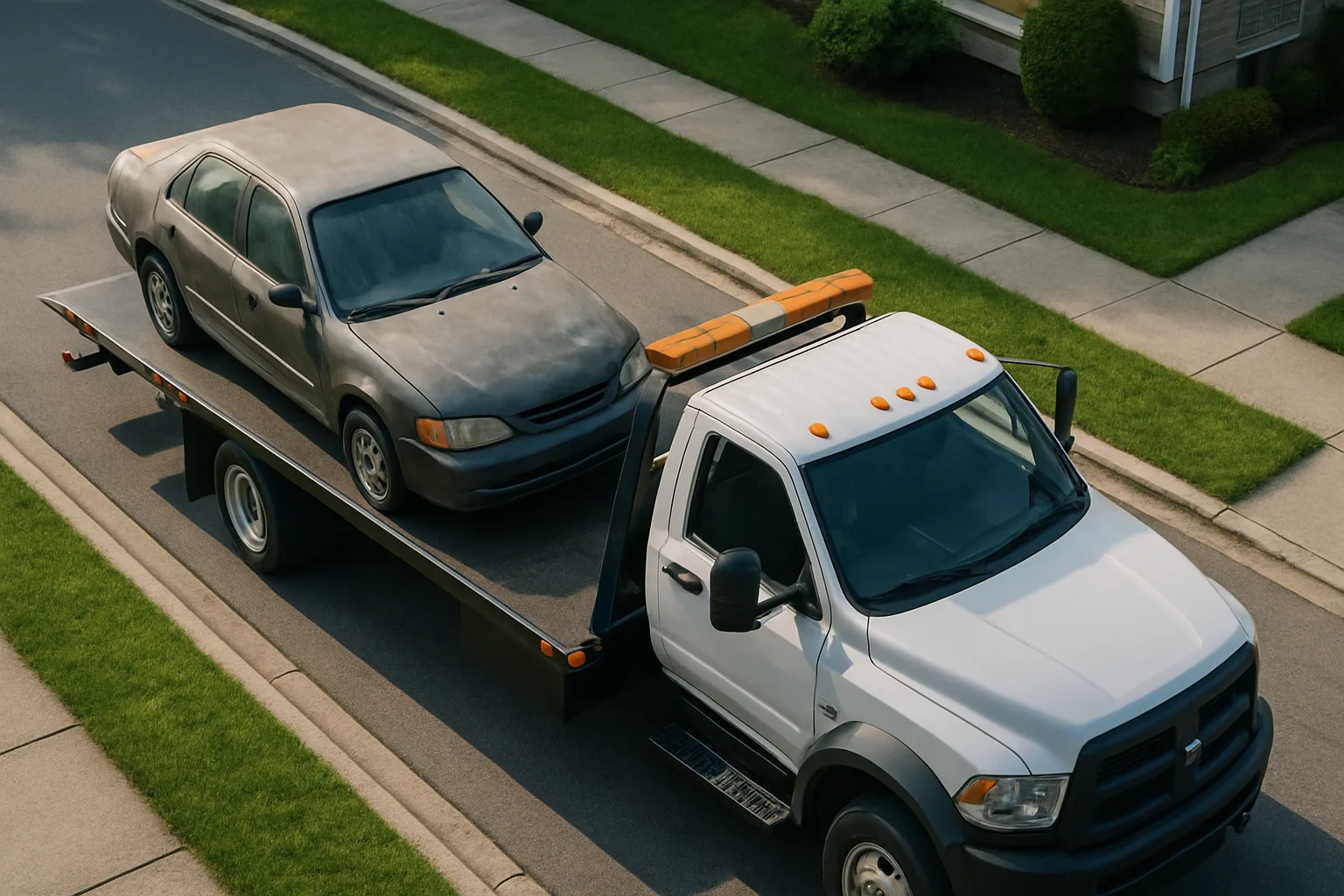
Most car owners in Gatineau leave hundreds of dollars on the table — not because they don't want to sell, but because they believe things about junk car removal that simply aren't true. Bad information spreads fast. A neighbour says you can't sell without a title. A friend says the car isn't worth anything if it doesn't run. You end up doing nothing, and the car sits in your driveway collecting rust. Let's fix that.
Whether you have a rusted-out 2009 Civic or a flood-damaged truck you've been putting off dealing with, understanding how junk car removal Gatineau actually works puts money back in your pocket. Here are the five most common myths — and the truth behind each one.
---Myth #1: Your Car Has to Run to Be Worth Anything
This is the biggest myth in the industry, and it stops more people from picking up the phone than anything else. The reality? A non-running vehicle still has significant material value. The engine block, transmission, catalytic converter, alternator, battery, and body panels all retain value regardless of whether the car starts.
Scrap buyers aren't purchasing your car to drive it. They're purchasing it for what's inside — metals, components, and recyclable materials. A dead car still weighs between 1,000 and 1,800 kg depending on the make and model. At current scrap steel and non-ferrous metal prices, that weight adds up fast. Don't let a dead battery convince you the whole car is worthless.
- Steel and iron from the frame and body panels have consistent commodity value
- Catalytic converters contain platinum, palladium, and rhodium — metals worth real money
- Copper wiring throughout the vehicle is recoverable non-ferrous scrap
- Aluminum from wheels, engine components, and trim adds to the total weight value
If you want to know what your specific vehicle is actually worth today, platforms like SMASH use VIN lookup and documented inventory tools to give buyers the information they need to bid competitively. More information means better price discovery — that's money in your hands, not guesswork.
---Myth #2: You Can't Sell a Junk Car Without a Title in Canada
The no-title myth keeps a lot of vehicles sitting idle, especially in Quebec. The rules vary by province and by buyer. While having your title makes the process smoother, not having it doesn't automatically disqualify you from selling. Many junk car buyers near me for cash no title do exist — you just need to know what documentation alternatives are accepted.
In Quebec, you may be able to use a vehicle registration certificate, proof of insurance history, or other provincial documentation to confirm ownership. The key is being transparent with the buyer upfront. A reputable buyer will walk you through what they need and won't blindside you with a title requirement at the last minute.
What you should gather before contacting a buyer:
- Your most recent vehicle registration document
- Government-issued ID matching the registered owner
- Any insurance paperwork that confirms you as the owner
- VIN (Vehicle Identification Number) — found on the dash or door frame
If you're unsure what applies in your situation, get cash for your car in Canada by reaching out to a buyer directly and asking what they require. Don't assume the answer is no until you've asked the question.
---Myth #3: All Junk Car Buyers Offer the Same Price
This one might be the most expensive myth on this list. If you call one buyer, get one number, and accept it — you've got no idea if you left $50 or $500 on the table. The scrap market is a commodity market. Prices move. Buyers have different cost structures, different downstream relationships, and different appetites for certain makes and models at any given time.
A 2012 Toyota with a working catalytic converter might be worth significantly more to one buyer than another, depending on their current inventory, their processing capacity, and where they're selling the recovered metals. The old way — one phone call, one price, take it or leave it — doesn't reflect the actual market. Competition does.
That's exactly where SMASH changes things. The platform brings vetted buyers into a competitive auction format, so your vehicle gets in front of multiple buyers at once. No subscription fees. No guessing. Just real competition that helps reveal what your scrap is actually worth in today's market. More buyers means better price discovery — and that's not marketing language, that's how commodity markets work.
If you're selling in Gatineau or anywhere else in Quebec, don't accept the first number you hear. Get a free car valuation and see what competitive buyers are actually willing to pay.
---Myth #4: The Catalytic Converter Doesn't Add Much Value
In 2026, this myth can genuinely cost you serious money. Catalytic converters contain platinum group metals (PGMs) — platinum, palladium, and rhodium — that have remained some of the highest-value scrap components in a vehicle. The exact value depends on the make, model, year, and converter type, but the difference between a vehicle with an intact converter and one without is not trivial.
Certain converters — particularly those from larger trucks, luxury vehicles, and hybrids — carry substantially higher scrap value than others. A Toyota Prius converter, for example, tends to command significantly more than a small domestic sedan. If you're planning to sell catalytic converters online separately, or you want to understand how much your converter contributes to your overall scrap car value, knowing your make and model matters.
Here's what affects catalytic converter value:
- Vehicle make and model — some brands use more PGMs than others
- Engine size — larger engines typically have larger converters
- Converter condition — intact units are worth more than cracked or damaged ones
- Current PGM spot prices — these fluctuate with global commodity markets
- Serial number tracking — platforms using serial tracking give buyers better confidence in what they're purchasing
Don't let someone lowball you on a converter without knowing what it's worth. Check current rates, document what you have, and let buyers compete for it. Prices fluctuate — always verify current scrap metal rates before finalizing any sale.
---Myth #5: Junk Car Removal Is a Long, Complicated Process
People assume junk car removal in Gatineau involves multiple appointments, complicated paperwork, towing arrangements they have to figure out themselves, and days of waiting. In practice, a straightforward junk car removal can happen quickly — often within 24 to 48 hours of your first contact with a buyer.
Most reputable buyers handle the towing themselves. You don't need to figure out how to get a non-running car to a yard. The buyer comes to you. You hand over the documentation, they hand over the payment, and the car is gone. Auto-invoicing and proper paperwork handled by the buyer means you're not chasing down receipts or dealing with administrative headaches afterward.
What a straightforward sale typically looks like:
- Contact a buyer — provide your VIN, make, model, year, and condition
- Get a quote — ideally from multiple buyers to understand what the market will bear
- Confirm pickup — most buyers schedule within 1-2 business days
- Hand over documentation — registration, ID, and any other required paperwork
- Get paid — cash or e-transfer at pickup in most cases
Whether you're in Gatineau, elsewhere in Quebec, or anywhere across Canada, the process is designed to be fast. The complexity usually only comes from working with buyers who aren't organized. Working with transparent, vetted buyers removes that friction entirely.
Ready to skip the guesswork? Read car selling tips to understand your options before you make a move — knowing more always leads to a better outcome.
---What Your Junk Car Is Actually Worth in 2026
Here's the honest answer: it depends. Vehicle weight, condition, location, current commodity prices, and whether components like the catalytic converter are intact all factor in. A complete, non-running vehicle in Gatineau will almost always be worth more than a stripped shell of the same model. Documentation helps. Photos help. Accurate VIN information helps.
What hurts your value: missing components, incomplete documentation, lack of competitive bids, and accepting the first offer without knowing what the market is actually paying. The scrap car value today is determined by real market conditions — steel prices, PGM markets, and what buyers in your region are actually willing to pay. Always confirm current rates directly with buyers, as scrap metal prices fluctuate and can change week to week.
Platforms like SMASH use photo documentation, VIN lookup, and vetted buyer networks to create a more transparent transaction. You're not guessing at scrap car value near me — you're seeing real bids from real buyers. That's how you find out what your car is actually worth in today's market, not what someone hopes you'll accept.
If you've been sitting on an unwanted vehicle anywhere in Canada — especially if you're in Gatineau or the surrounding Quebec region — the best move is a simple one. Find the best price for your scrap in Canada and stop letting a driveway full of metal go to waste. When you're ready to act, get cash for your car in Canada with a free quote at cash-forcars.ca — no pressure, no runaround, just a straight answer on what your vehicle is worth.
---Frequently Asked Questions
Q: Can I get junk car removal in Gatineau if my car doesn't run?
Yes. Most junk car buyers in Gatineau will pick up non-running vehicles. You don't need to arrange your own towing. The buyer typically handles pickup as part of the transaction. Make sure to confirm this when you get your quote.
Q: How much is a junk car worth in Quebec in 2026?
There's no single number — scrap car value depends on the vehicle's weight, condition, make, model, and current commodity prices. A heavier vehicle with an intact catalytic converter will generally be worth more than a stripped-out compact. Always get multiple quotes to understand what the market is actually paying, and check current scrap metal rates as prices fluctuate.
Q: Do I need a title to sell my junk car in Gatineau?
Not necessarily. While a title simplifies the process, many buyers accept alternative proof of ownership such as your Quebec vehicle registration certificate and a government-issued ID. Contact your buyer upfront to confirm what documentation they require before assuming you can't sell.
Q: How do I get the best price for my scrap car near me?
The most effective way is to get multiple buyers competing for your vehicle rather than accepting a single offer. Platforms like SMASH connect sellers with vetted buyers in a competitive auction format, which helps reveal what your scrap is actually worth instead of relying on one buyer's number.
Q: Is the catalytic converter included when I sell my junk car?
It depends on your agreement with the buyer. Some buyers price the vehicle as a whole, while others may value components like the catalytic converter separately. It's worth understanding what your converter is worth before agreeing to a sale — especially for certain makes and models where converter value is significant.
---Follow SMASH on LinkedIn for scrap metal market updates, industry news, and insights that help you make smarter decisions every time you sell.