From Assembly Line to Auction Block: What Really Happens to Your Car Over Its Lifetime
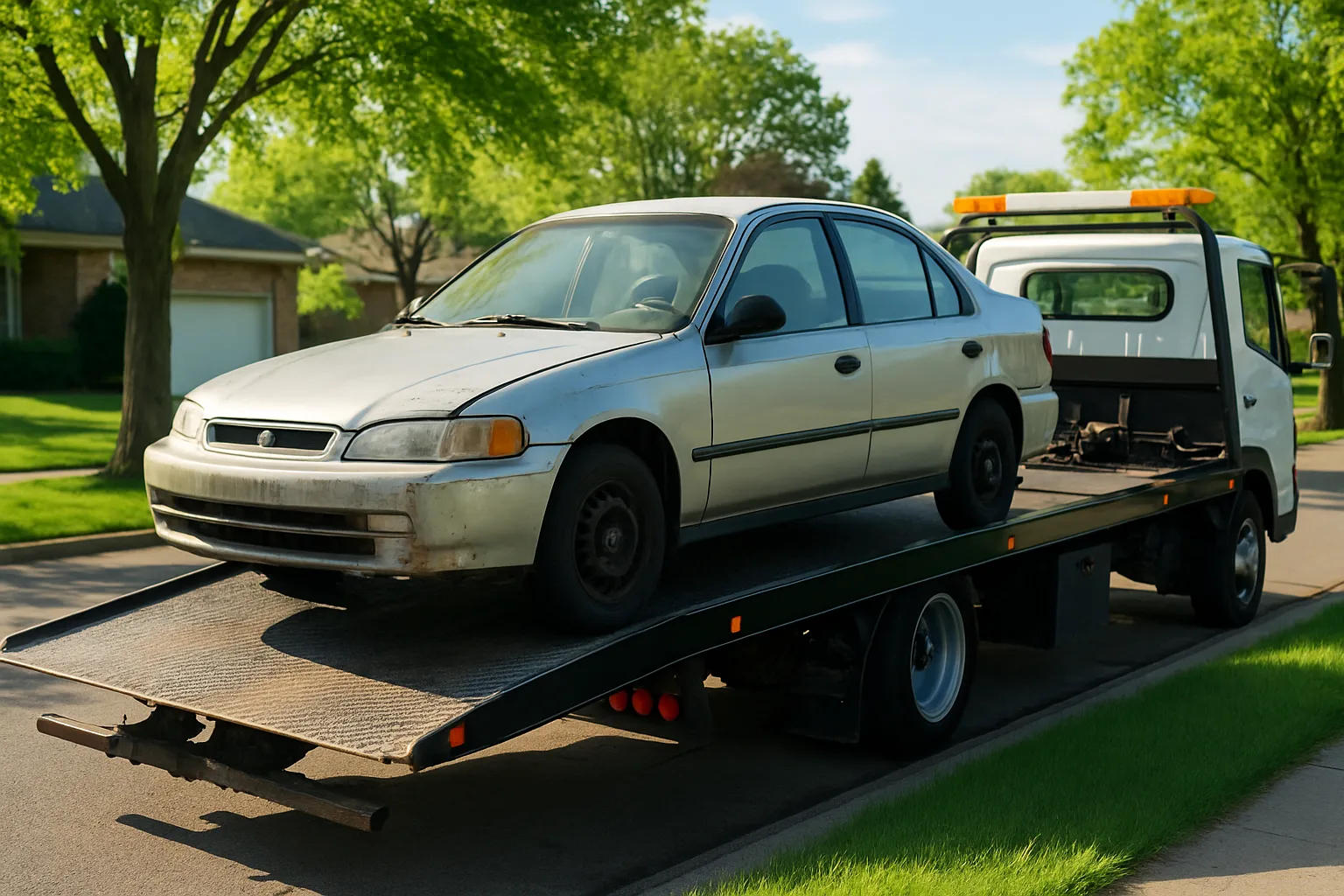
The average car in Canada changes hands 3 to 4 times before it ever sees a scrap yard. Most owners never think about what happens next — until they're sitting on a rusted-out hulk in their driveway wondering what it's worth. If you're searching we buy junk cars Thunder Bay, you're probably at that final chapter. But understanding the full lifecycle of a vehicle helps you make smarter decisions — and get more money when it's time to walk away.
This isn't a car history lesson for its own sake. Every stage of a vehicle's life affects its scrap value, its usable parts, and how buyers will assess it. Read this before you hand over your keys.
Stage 1: Manufacturing — Where the Value Starts
A modern vehicle rolls off the line containing roughly 900 to 1,000 kilograms of steel, 100 to 150 kilograms of aluminum, several kilograms of copper wiring, and smaller amounts of platinum, palladium, and rhodium in the catalytic converter. Every gram of that material has a market value. The car's scrap potential is literally baked into its design from day one.
Different makes and models carry different metal compositions. Trucks and SUVs tend to run heavier, with more ferrous steel in their frames. Luxury vehicles often use more aluminum to save weight. Hybrids and EVs carry large battery packs with lithium, cobalt, and nickel — materials that have their own complex recovery market. When you eventually ask how much is my junk car worth, a lot of that answer starts here, at the factory.
Stage 2: Active Life — Depreciation, Wear, and What Gets Used Up
The moment a car leaves the dealership, it starts losing value. In the first year alone, most vehicles depreciate 20 to 30 percent. By year five, they've often shed half their original sale price. By year ten or twelve, you're deep into "high mileage" territory — and decisions about repair versus replacement start becoming real.
During active use, several key components degrade in ways that directly impact scrap and resale value:
- Engine and transmission: High mileage doesn't kill scrap value, but a seized engine or blown transmission often signals the end of the road for private resale.
- Catalytic converter: This is often the most valuable single component on a scrap vehicle. It contains platinum-group metals that buyers actively compete for.
- Body panels and frame: Rust is the biggest killer of scrap value in Ontario. Thunder Bay winters are brutal — road salt accelerates corrosion faster than almost anywhere in the country.
- Tires, glass, and interior: These have minimal scrap metal value but can sometimes be sold separately before scrapping.
The takeaway? Don't wait too long. A vehicle that gets written off by age and neglect recovers less from the scrap market than one that's retired while still structurally intact. Every season that passes in Northwestern Ontario adds rust, and rust costs you money.
Stage 3: The Decision Point — Repair, Resell, or Scrap?
Most car owners hit a wall. The mechanic quotes $3,000 to fix a transmission on a car worth $2,500. Or the frame is cracked. Or it simply won't pass emissions. This is the crossroads — and it's where a lot of people in Ontario get stuck, holding onto a depreciating asset and paying for storage space they could use for something else.
There's a simple framework for this decision:
- Get an honest repair quote. Not a ballpark — an itemized quote in writing.
- Check the current private resale value. Be realistic. Use actual comparable listings, not wishful thinking.
- Get a scrap valuation. Use a tool like a how much is my junk car worth calculator to understand the floor value based on weight and current metal prices.
- Compare the numbers. If repair cost exceeds resale value, the math usually points to scrapping.
Platforms like compare scrap metal bids from Canadian buyers exist precisely because most sellers don't know what their vehicle is worth to the market. When only one buyer makes you an offer, you have no way to know if it's fair. Competitive bidding changes that equation entirely.
If you're in Thunder Bay and weighing your options right now, you can get a free car valuation without committing to anything. Know the number before you decide.
Stage 4: Scrap Car Removal — What Actually Happens to Your Vehicle
Most people assume scrapping a car is simple — someone hauls it away, it gets crushed, done. The reality is more involved, and knowing the process helps you avoid getting shortchanged.
Here's what actually happens during scrap car removal in Thunder Bay:
- Vehicle assessment: Weight, condition, make, model, and completeness are evaluated. A complete car with its catalytic converter, battery, and copper wiring intact is worth more than a stripped shell.
- Fluid removal: Oil, coolant, brake fluid, and refrigerant must be drained before the vehicle can be processed. Reputable yards handle this as part of their environmental compliance obligations.
- Parts harvesting: High-demand components — engines, transmissions, alternators, usable body panels — are pulled and sold separately. This often happens before the main metal is processed.
- Catalytic converter removal: This is handled separately due to the platinum-group metals inside. Cats are processed by specialized refiners who recover the precious metals.
- Shredding and separation: The remaining body gets shredded. Magnets pull ferrous steel. Air separators and eddy current systems isolate aluminum, copper, and other non-ferrous metals.
- Settlement and payment: You should receive payment that reflects the actual market value of the materials — not a flat lowball offer that ignores current commodity prices.
The more you understand this process, the harder it is for any single buyer to take advantage of you. Cash for cars Ontario sellers who treat this like any other transaction — get multiple offers, document everything, understand what you're selling — consistently do better than those who just call the first number they find.
How Much Is the Average Junk Car Worth in Canada?
This is the question everyone actually wants answered. The honest answer: it depends on several factors, and anyone who gives you a firm number without knowing your vehicle's specifics is guessing.
That said, here's a realistic framework for understanding how much the average junk car is worth:
- Weight matters most. A full-size pickup truck has significantly more steel than a compact sedan. More metal equals more baseline value.
- Completeness counts. A vehicle with its catalytic converter, battery, and major components still in place is worth more than one that's been picked over.
- Current metal prices fluctuate. Scrap steel, aluminum, and copper prices move with global commodity markets. A vehicle worth a certain amount today may be worth more or less next month. Always check current rates before agreeing to a sale.
- Location affects logistics. In Northwestern Ontario, transport costs can factor into buyer offers. Thunder Bay has active buyers, but it's worth confirming pickup terms and whether scrap car removal in Thunder Bay is included in the offer.
- Condition affects parts value. Even a non-running vehicle can carry significant value in its components. A working engine on a totaled car still has a buyer.
Want a starting point? Use a how much is my junk car worth calculator to get a baseline before you talk to any buyer. Then get more than one offer. That's the entire game — more competition, better price discovery. SMASH is built on exactly that principle: when buyers compete, sellers win.
If you want to get cash for your car in Canada without guessing at your vehicle's value, start with a real quote from buyers who are actually competing for your load.
Making the Most of Your Vehicle's Final Chapter
By the time a car reaches the scrap yard, it's completed a full economic lifecycle. Steel that was refined from ore, shaped into a body panel, painted, driven across highways, and finally corroded by a decade of Ontario winters — that steel still has value. It gets melted down and becomes rebar, or sheet metal, or the frame of another vehicle. Nothing is wasted in a functioning recycling market.
Your job as a seller is to make sure that final transaction reflects real market value — not a rushed decision or a single buyer's best interest. The Thunder Bay scrap metal services available through cash-forcars.ca connect you to a network of vetted buyers who are actively competing for vehicles in your area. That competition is what puts more money in your pocket.
SMASH powers the competitive auction process behind this network. When you list a vehicle through a platform that connects you to multiple buyers at once — rather than calling one yard and hoping for the best — you sell scrap metal online the way it should work. Transparent. Documented. Competitive.
Before you settle for the first offer, read car selling tips that can help you understand what your vehicle is worth and how to negotiate from a position of knowledge. You spent years owning that car. Spend a few minutes making sure the final transaction is fair.
Whether your vehicle is a 2012 half-ton with a rusted frame or a 2019 sedan with a blown head gasket, there's a buyer in Thunder Bay who wants it. The question is whether you're getting what it's actually worth. Get a free quote at cash-forcars.ca and let the market answer that question for you.
Frequently Asked Questions
Q: Do I need the title to sell a junk car in Thunder Bay?
In Ontario, a vehicle ownership document (commonly called the "pink slip") is typically required to transfer a vehicle for scrapping. If you've lost yours, contact ServiceOntario to request a replacement before arranging pickup. Some buyers may accept alternative proof of ownership — confirm this upfront.
Q: Does scrap car removal in Thunder Bay cost anything?
Reputable buyers who quote you a price for your vehicle should include free towing as part of the deal. Be wary of any buyer who deducts a significant towing fee from your payout after the fact — clarify pickup terms before you agree to anything.
Q: How long does the process take when you sell a junk car in Thunder Bay?
Most transactions from initial quote to pickup can be completed within one to three business days, depending on buyer availability and your schedule. Having your vehicle ownership and keys ready speeds things up considerably.
Q: Is my junk car worth more in parts or as scrap metal?
It depends on the vehicle. Certain components — catalytic converters, working engines, transmissions, and body panels from in-demand models — can be worth more sold individually. However, parting out a vehicle takes time and effort. For most owners, selling the whole car as scrap is faster and still competitive when you get multiple offers.
Q: How do I know if the offer I'm getting for my scrap car is fair?
The only reliable way to know is to get more than one offer. Single-buyer quotes give you no benchmark. Platforms like SMASH connect sellers to multiple vetted buyers, so you can see what the actual market looks like rather than guessing whether one number is fair.
---Prices for scrap vehicles and metals fluctuate based on commodity markets and local demand. Always check current rates before agreeing to a sale.
Stay current on scrap metal market trends and industry insights — follow SMASH on LinkedIn for updates that matter to Canadian recyclers and sellers.