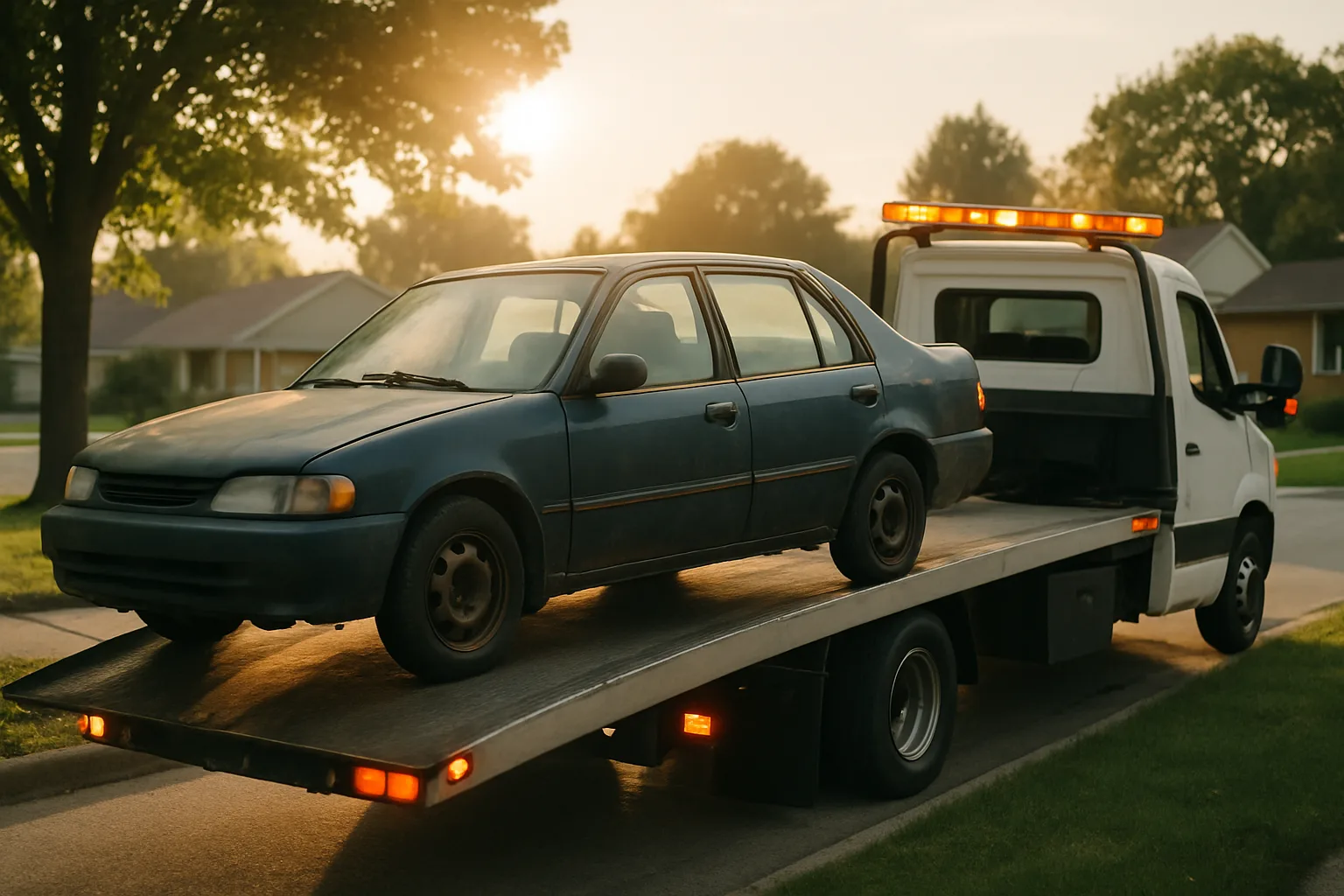
Every year, millions of vehicles reach the end of their road — and most Canadians have no idea what actually happens to them next. The good news? When you sell a scrap car the right way, you're not just getting cash in your pocket. You're keeping toxic fluids out of the ground, putting steel back into circulation, and doing your part for a cleaner supply chain. That's not marketing fluff — that's how modern auto recycling works in 2026.
If you've got an unwanted vehicle sitting in your driveway in Kitchener, or anywhere across Ontario, understanding the eco-friendly disposal process can change how you think about your next step. And when you're ready to move, platforms like SMASH connect sellers to vetted buyers who compete for your scrap — so you get fair market value without the guesswork.
Let's walk through what responsible car recycling actually looks like, why it matters, and how real sellers have used it to get cash for cars in Kitchener while doing right by the environment.
---Why Eco-Friendly Car Disposal Matters More Than You Think
A standard passenger vehicle contains roughly 30 different fluids when it rolls off the assembly line. Engine oil, transmission fluid, coolant, brake fluid, power steering fluid, refrigerants — the list goes on. When a car gets crushed or abandoned without proper depollution, those fluids don't disappear. They leach into soil and groundwater, creating contamination problems that cost communities far more than any scrap load is worth.
Beyond fluids, vehicles contain heavy metals, catalytic converters with platinum group metals, lithium-ion batteries in hybrids and EVs, and mercury switches in older models. Responsible recyclers pull all of it before the vehicle ever touches a shredder. That's not optional — it's standard practice for any licensed facility in Ontario, and it's a non-negotiable part of what separates a legitimate buyer from a backyard operation.
Here's what a proper eco-friendly vehicle disposal process looks like, step by step:
- Vehicle intake and documentation — VIN recorded, condition assessed, ownership verified
- Fluid extraction — all hazardous liquids drained and contained for proper disposal or re-refining
- Parts harvesting — usable components like alternators, starters, and body panels pulled for resale
- Catalytic converter removal — cats stripped and processed separately for precious metal recovery
- Battery removal — conventional lead-acid and EV lithium packs sent to certified recyclers
- Tire and glass removal — diverted to specialty recycling streams
- Shredding and metal separation — ferrous and non-ferrous metals separated for mill re-entry
When done correctly, up to 85% of a vehicle by weight gets recycled or reused. That's not a throwaway stat — it means your scrap car becomes rebar, new auto parts, and industrial steel rather than landfill.
How a Kitchener Seller Turned a Dead Sedan Into a Clean Win
Let's talk about a real scenario — the kind that plays out across Ontario every week. A homeowner in Kitchener had a 2013 sedan sitting in their backyard for two years. No title on hand, transmission shot, body rusting through. They'd been quoted low-ball prices by a single local buyer who showed up, shrugged, and offered a flat amount with zero explanation.
They found SMASH through a search for scrap car value in Ontario and listed the vehicle with basic details — year, make, condition, location. Photos went up. The platform's vetted buyers could see exactly what they were bidding on. Within a short window, multiple offers came in — each one higher than that original cold-call quote. The seller took the best bid, arranged pickup, and had cash in hand without chasing anyone down.
What happened to the car after pickup? The buyer was a licensed recycler who followed proper depollution protocol before crushing. The catalytic converter was tracked separately. Fluids were containerized. The steel went to a regional mill. That sedan didn't become an environmental liability — it became feedstock for new material. That's what eco-friendly disposal looks like in practice, not just in theory.
If you're in Kitchener and want to get cash for your car in Canada the same way, the process is simpler than most people expect.
Understanding Scrap Car Value — What Drives the Number You Get
One of the most common frustrations sellers have is not knowing what their car is actually worth. A single phone call to a single buyer gives you one data point — and no way to know if it's fair. That's been the broken model for decades.
Scrap car value in Ontario depends on several real variables:
- Curb weight — heavier vehicles produce more steel, which means more value
- Current scrap metal prices — steel, aluminum, and copper prices fluctuate with global markets
- Catalytic converter value — cats on certain makes and models carry significant precious metal content
- Reusable parts — engines, transmissions, and body panels in usable condition add value beyond base scrap
- Vehicle condition and completeness — a stripped shell is worth less than a complete car
- Location and pickup logistics — remote locations or non-running vehicles affect net return
Tools like a scrap car value calculator for Ontario give you a starting estimate, but the real market test is competition. When multiple buyers see your listing and bid against each other, you find out what the load is actually worth — not what one buyer wants to pay. That's the SMASH model, and it's how sellers across Ontario get better outcomes without negotiating blind.
Want to understand current values before you list? You can get a free car valuation and see where your vehicle lands in today's market. And for a broader picture of what Canadian scrap buyers are paying, compare scrap metal bids from Canadian buyers to see how the market moves.
Disclaimer: Scrap metal prices fluctuate with global commodity markets. Always verify current rates before making decisions based on historical pricing.
What Happens If You Don't Have a Title — And Why It's Not Always a Deal-Breaker
A lot of people sit on a dead car for months or years because they assume no title means no sale. That's not always true, and it's costing them money while the vehicle depreciates to nothing.
Rules around title requirements vary by province and situation. In Ontario, licensed recyclers and buyers are required to follow specific regulations around ownership documentation — but there are legal pathways for vehicles with missing or lost titles, particularly for older scrap vehicles being sold by weight. The key is working with a buyer who knows the process and is transparent about what documentation they need from you.
If you've ever searched for cash for cars no title situations or similar, the answer isn't always a flat no — it depends on the vehicle, the buyer, and the province. Ask upfront. A legitimate buyer will tell you exactly what's needed and won't string you along.
Documented inventory, clear photos, and accurate condition reports help buyers make confident offers even when paperwork is complicated. SMASH's listing process encourages sellers to document exactly what they have — which gives buyers confidence and tends to produce better bids. You can also explore Kitchener scrap metal services for local guidance on what's accepted in your area.
The Environmental Case for Competitive Bidding — It's Not Just About Price
Here's a connection most sellers don't make: competitive auctions don't just get you more money. They also push buyers toward better practices.
When buyers compete on a transparent platform, their reputation matters. Vetted buyers who follow proper depollution standards, carry appropriate licensing, and handle environmental compliance correctly are the ones who stay on the platform. Buyers who cut corners don't survive in a marketplace where sellers can see ratings, documentation requirements, and audit trails.
That accountability loop is part of why SMASH's model works for the industry, not just for individual sellers. More transparency means less room for bad actors who dump fluids, abandon crushed vehicles improperly, or strip cats without proper tracking. For sellers in Kitchener and across Ontario, working with vetted buyers through a platform that requires documentation means your car is more likely to end up properly processed — not creating an environmental headache somewhere down the line.
For more context on how to navigate the selling process from start to finish, read car selling tips that cover everything from preparing your vehicle to getting the best offer.
How to Get Started — The Straightforward Path to Cash for Cars in Kitchener
You don't need a running vehicle, a perfect title, or a deep knowledge of scrap metal prices to get started. Here's what the process actually looks like for most sellers in Ontario:
- Gather basic vehicle details — year, make, model, approximate weight, and condition
- Take clear photos — exterior, interior, under the hood if accessible
- List on a competitive platform — SMASH puts your vehicle in front of multiple vetted buyers simultaneously
- Review offers — compare bids with full transparency, no pressure
- Accept and arrange pickup — the buyer handles logistics, you handle paperwork handoff
- Get paid — auto-invoicing and payment confirmation built into the process
The whole process can move quickly when the listing is clean and well-documented. Sellers who include accurate condition notes and photos tend to attract stronger bids — because buyers are bidding with confidence, not hedging against unknowns.
If you've got a dead car, a flood-damaged SUV, a stripped pickup, or anything in between, the market wants to know about it. Competition can help reveal the true value of your scrap — and more buyers means better price discovery than any single phone call ever could.
When you're ready to move forward and get cash for your car in Canada, don't settle for the first number you hear. Put your vehicle in front of buyers who compete for it, make sure it ends up properly recycled, and walk away knowing you handled it right — financially and environmentally.
---Frequently Asked Questions
Q: How much can I get for a scrap car in Kitchener, Ontario?
The value depends on your vehicle's weight, condition, and current scrap metal prices — all of which fluctuate. A heavier vehicle with intact parts (especially a catalytic converter) will fetch more than a stripped shell. The best way to know what your car is actually worth is to get competing offers rather than relying on a single quote.
Q: Do I need a title to sell my junk car in Ontario?
Title requirements depend on the buyer and the specific circumstances of the vehicle. Many licensed recyclers in Ontario can work with sellers on older scrap vehicles even when original ownership documents are missing. Always ask upfront — a legitimate buyer will give you a clear answer about what documentation they need.
Q: How does eco-friendly car disposal work in Kitchener?
Licensed recyclers in Ontario follow a strict depollution process before crushing any vehicle. That includes draining all hazardous fluids, removing batteries, pulling catalytic converters, and diverting tires and glass to specialty recycling streams. When you sell through a vetted buyer, your vehicle is far more likely to be processed responsibly than if you abandon it or sell to an unlicensed operator.
Q: How long does it take to get cash for a scrap car?
Timelines vary, but sellers who list with complete information and photos tend to receive offers quickly. Once you accept a bid, pickup scheduling and payment processing can often be completed within a few business days. Platforms like SMASH include auto-invoicing to keep the paperwork side clean and fast.
Q: Is scrap car value the same across Ontario, or does location affect my offer?
Location does affect offers — pickup logistics, local buyer competition, and regional market conditions all play a role. Sellers in larger centres like Kitchener often have more buyer activity, which can mean stronger competition and better price discovery. That said, the base commodity price of steel and non-ferrous metals is driven by global markets, so those fundamentals apply province-wide.
---Follow SMASH on LinkedIn for ongoing scrap metal market updates, industry insights, and tips for getting the most out of every load you sell.
```