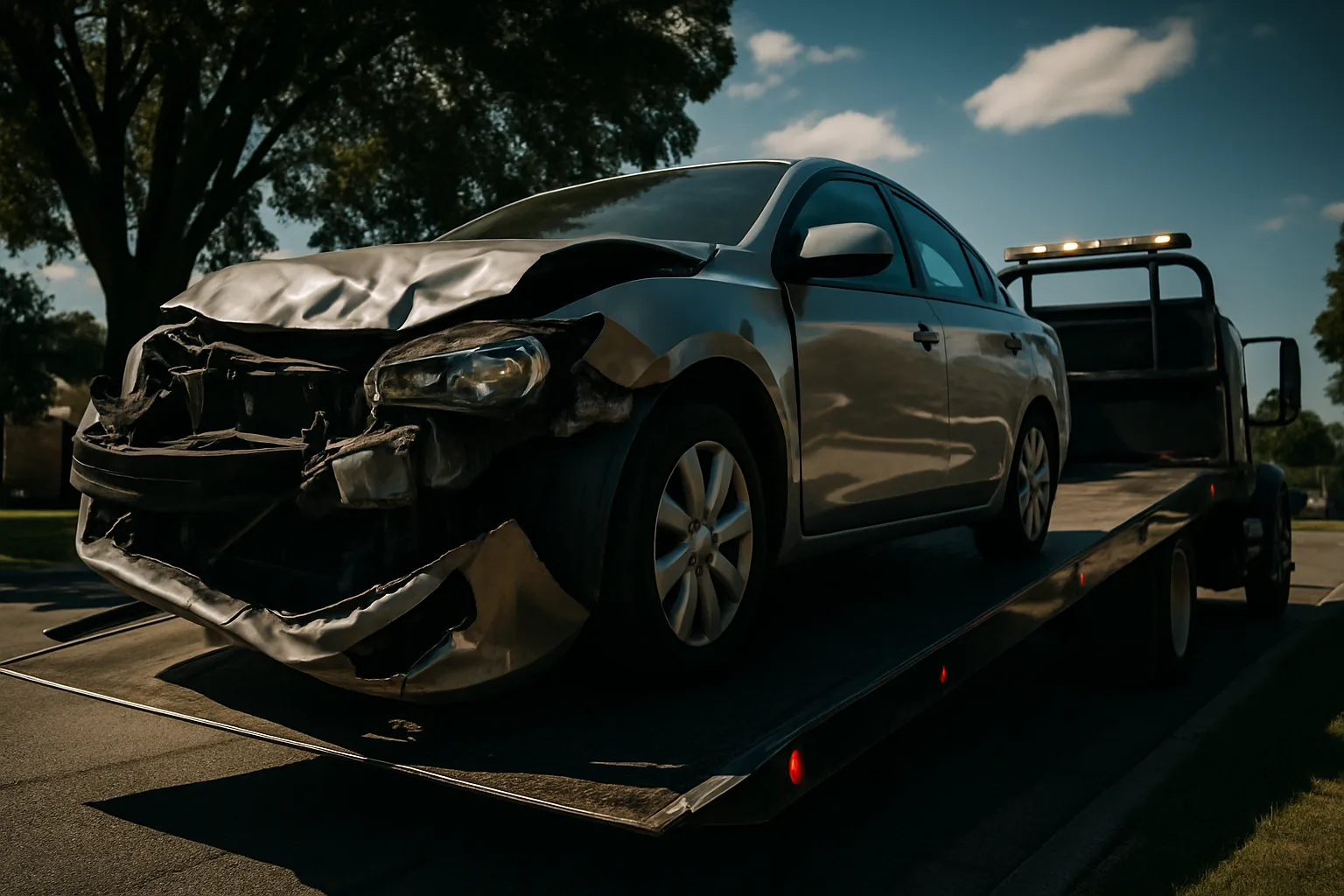
What Actually Happens to Your Car's Value After an Accident?
A wrecked car sitting in your driveway isn't worthless — but most accident victims have no idea what it's actually worth. Whether your vehicle took a hit on No. 3 Road or got totalled on the Massey Tunnel approach, the scrap and salvage market in British Columbia has real buyers who want what's left. The question is whether you're getting what it's actually worth, or just accepting the first number someone throws at you.
This guide walks you through exactly how to scrap a car that's been in an accident — what affects its value, what paperwork you need, and how to make sure you're not leaving money on the table when you search for cash for junk cars Richmond.
How an Accident Changes Your Car's Value (And What Still Has Worth)
An accident doesn't strip a car of all its value — it just changes where that value lives. A vehicle that's been in a collision can still be worth a meaningful amount depending on what's intact, what's damaged, and current scrap metal market conditions. The biggest mistake sellers make is assuming a wrecked car equals zero dollars.
Here's what still holds value after an accident:
- Catalytic converter — Often the highest-value single component on the car, containing platinum, palladium, and rhodium. Even on a totalled vehicle, the cat may be worth hundreds of dollars on its own.
- Engine and transmission — If the drivetrain survived the collision, it can be pulled and resold as a used part or scrapped separately.
- Non-ferrous metals — Copper wiring, aluminum wheels, and radiators all carry value independent of whether the car drives.
- Steel body and frame — Scrap steel is priced by weight. A mid-size sedan carries roughly 700–900 kg of ferrous metal. That weight has a market price every single day.
- Undamaged interior parts — Seats, dashboards, mirrors, and door panels from clean interiors can be pulled for resale before the car is crushed.
The takeaway: your accident-damaged car is a collection of assets, not a single broken unit. The buyers who know that will pay more. The ones who don't — or who want you to think it's worthless — won't.
How Much Is Your Salvage Car Worth? Key Factors That Set the Price
If you've ever searched how much is my salvage car worth and gotten a vague answer, that's because the real number depends on several moving parts. There's no flat rate for a wrecked car — but there are clear factors that drive the price up or down.
Year, make, and model matter significantly. A 2019 Honda CR-V and a 2009 Pontiac Torrent are not worth the same at scrap — even in identical condition. The CR-V has more in-demand parts, a heavier catalytic converter, and a stronger resale market for components. Always start with what your specific vehicle is, not just what category it falls into.
Extent and location of damage is critical. A rear-end collision that left the engine and front suspension intact is a very different vehicle from one that took a head-on hit at highway speed. Front-end damage often compromises the most valuable components. Rear damage often leaves them untouched.
Other pricing factors include:
- Current scrap steel and non-ferrous metal prices (these move weekly)
- Whether the vehicle is driveable, towable, or completely immobile
- Whether the title is clean, salvage-branded, or missing entirely
- Local demand in your area — buyers in Richmond and the Lower Mainland have different inventory needs than buyers in smaller markets
- Mileage on the engine (if it survived)
For a rough starting point, tools like a scrap car value calculator can give you a ballpark — but real offers come from real buyers who've seen the vehicle details. That's where platforms like SMASH Recycling — where verified buyers bid on your metal create an advantage. Instead of one buyer making one offer, documented vehicles go in front of multiple vetted buyers who compete for the load. Competition reveals the actual market.
The Paperwork You Need Before You Sell a Wrecked Car in British Columbia
Selling a salvage or accident-damaged vehicle in British Columbia isn't complicated, but skipping the paperwork will cost you time and potentially the sale. Get this sorted before you start calling buyers.
Vehicle title / ownership document — You need to prove you own the car. In B.C., this is your registration. If the title has been transferred to an insurance company after a total loss payout, you'll need to follow their process for releasing the vehicle to you before you can sell it independently.
Photo documentation — Serious buyers want to see the damage before they make an offer. Take clear photos of all four corners, under the hood, the interior, and the undercarriage if accessible. More documentation means more buyer confidence — and more buyer confidence means better offers.
Salvage designation awareness — ICBC may have branded your vehicle as salvage after a collision claim. Know your vehicle's status. A salvage-branded vehicle can still be sold for scrap or parts — buyers just need to know what they're getting.
Remove personal items and plates — Before the tow truck arrives, clear out everything personal. Your plates stay with you, not with the car, in B.C. Hand them back to ICBC or transfer them to your next vehicle.
Sell My Car for Cash in Richmond — How the Process Actually Works
If you're in Richmond and you want to sell my car for cash Richmond style — fast, local, no runaround — here's the realistic process from start to finish.
- Get your vehicle details together. Year, make, model, mileage, VIN, and an honest description of the accident damage. The VIN is important — buyers use it to pull history and confirm what they're bidding on.
- Get more than one offer. This sounds obvious but most sellers don't do it. Calling one buyer and accepting their first number is how you leave money behind. The scrap and salvage market is competitive — use that competition.
- Confirm pickup details. Most buyers in the Richmond area offer free towing for scrap vehicles. Confirm whether towing is included in the offer or deducted from it. A $600 offer minus a $150 tow fee is a $450 actual payout.
- Sign the paperwork at pickup. You'll sign over the ownership document when the car is collected. Don't sign anything before the vehicle is actually in their possession.
- Get paid. Cash, e-transfer, or cheque — confirm the payment method before you agree to the pickup. Reputable buyers don't ask you to wait for payment after the car is gone.
For sellers who want to sell scrap metal online through an auction-style process rather than cold-calling yards one by one, SMASH connects documented vehicle and metal loads with vetted buyers across North America. You get a free car valuation without committing to a single buyer's first offer.
If you're looking for local support, Richmond scrap metal services can connect you with buyers who operate in your area and understand the local market.
Common Mistakes That Cost Accident Car Sellers Real Money
After a collision, you're probably dealing with insurance adjusters, repair estimates, and a lot of stress. That's exactly when sellers make avoidable mistakes that reduce what they walk away with. Know these before you start.
Accepting the insurance company's scrap value without checking the market. Insurers have an interest in settling quickly and cheaply. Their offered scrap or salvage value may be lower than what the actual market will bear. You have the right to sell the vehicle yourself after receiving a total loss payout — check whether that makes sense for your situation.
Not separating high-value components before scrapping. If you have access to the vehicle and time before pickup, the catalytic converter alone may be worth pulling and selling separately. Same goes for aluminum wheels. One call to a non-ferrous buyer in Richmond before the car goes to the crusher could add real dollars to your total.
Assuming the car has no parts value just because it doesn't run. Non-running vehicles still have parts. Salvage yards pull components from wrecked vehicles constantly. A car that can't be started may still have a transmission, seats, sensors, and body panels that are worth money to someone rebuilding a similar model.
Not documenting the vehicle properly. Photos, VIN verification, and a clear description of what's damaged versus what's intact all increase buyer confidence — which increases offers. Buyers bidding blind bid conservatively. Buyers with documentation bid aggressively. That difference shows up in your payout.
Ready to get cash for your car in Canada without the guesswork? The process is straightforward when you go in with the right information.
What Scrap Metal Prices Look Like in 2026 — And Why They Matter for Your Car
Scrap metal prices in 2026 continue to move with global steel demand, energy costs, and non-ferrous commodity markets. What you get for a wrecked car today may be different from what someone got six months ago — and it could be different again next month. This is why timing and market awareness matter for sellers.
Ferrous scrap (your car's steel body and frame) is priced per ton and fluctuates with mill demand across North America. Non-ferrous components — aluminum wheels, copper wiring, the catalytic converter — follow separate commodity markets that can move significantly week to week. If your vehicle sits in your driveway for two months while you figure out what to do, the market you eventually sell into may not be the same one that existed when the accident happened.
For cash for cars British Columbia sellers, staying current on scrap prices gives you a baseline to evaluate offers against. You don't need to be a commodities trader — you just need to know enough to recognize a low-ball offer when you hear one. Platforms that expose your vehicle to multiple buyers handle this naturally: competitive bidding tends to surface the real market rate rather than one buyer's best-case margin.
Disclaimer: Scrap metal prices fluctuate based on market conditions. All price references in this article reflect general market dynamics as of August 2026. Always check current rates before accepting an offer.
Want more context on how pricing works and what to expect? Read car selling tips on our blog for practical breakdowns of the Canadian scrap and used car market.
Frequently Asked Questions
Q: Can I sell a car that was in an accident without a title in British Columbia?
Selling a vehicle without title documentation is significantly harder, but not always impossible. In B.C., you'll typically need to go through ICBC to resolve any ownership complications before a legitimate buyer will complete a transaction. If the title was transferred to an insurer after a total loss, contact them first to understand your options for reclaiming and reselling the vehicle.
Q: How much can I get for a junk car in Richmond?
The value of a junk or accident-damaged car in Richmond depends on the vehicle's year, make, model, weight, current scrap metal prices, and which components survived the collision. There's no universal flat rate. Getting multiple offers — rather than accepting the first one — is the most reliable way to understand what your specific vehicle is actually worth in the current market.
Q: How do I use a scrap car value calculator to estimate my car's worth?
Online scrap car value calculators typically ask for your vehicle's year, make, model, and general condition to produce a rough estimate. These are useful as a starting benchmark but won't account for local market conditions, specific damage, or the value of components like catalytic converters. Treat calculator results as a floor, not a ceiling — real competitive offers often come in higher when buyers have detailed documentation to work from.
Q: Does ICBC owning my totalled car affect my ability to sell it for scrap?
If ICBC has taken ownership of your vehicle as part of a total loss settlement, you no longer hold the title and cannot sell it independently. However, if you opted to keep your salvage vehicle after a total loss payout, you retain ownership and can sell it for scrap or parts — the vehicle will carry a salvage brand on its record, which buyers will factor into their offers.
Q: Is free towing included when I sell my junk car in Richmond?
Most reputable scrap car buyers in the Richmond area include free towing as part of their offer. Always confirm this upfront — ask specifically whether the towing cost is included in the quoted price or deducted from it. A clear answer to that one question can be the difference between several hundred dollars in your pocket.
If you've got an accident-damaged vehicle sitting idle, it's worth more than you think — and the right buyers are out there. The key is getting your vehicle in front of enough of them to let the market speak. Whether you go through a local yard or a platform like SMASH that connects sellers with vetted buyers across North America, more competition means better price discovery. Don't guess at your car's value. Find out. Get cash for your car in Canada — get a free quote at cash-forcars.ca.
Stay ahead of the scrap metal market — follow SMASH on LinkedIn for industry updates, pricing trends, and insights that matter to sellers and buyers across North America.