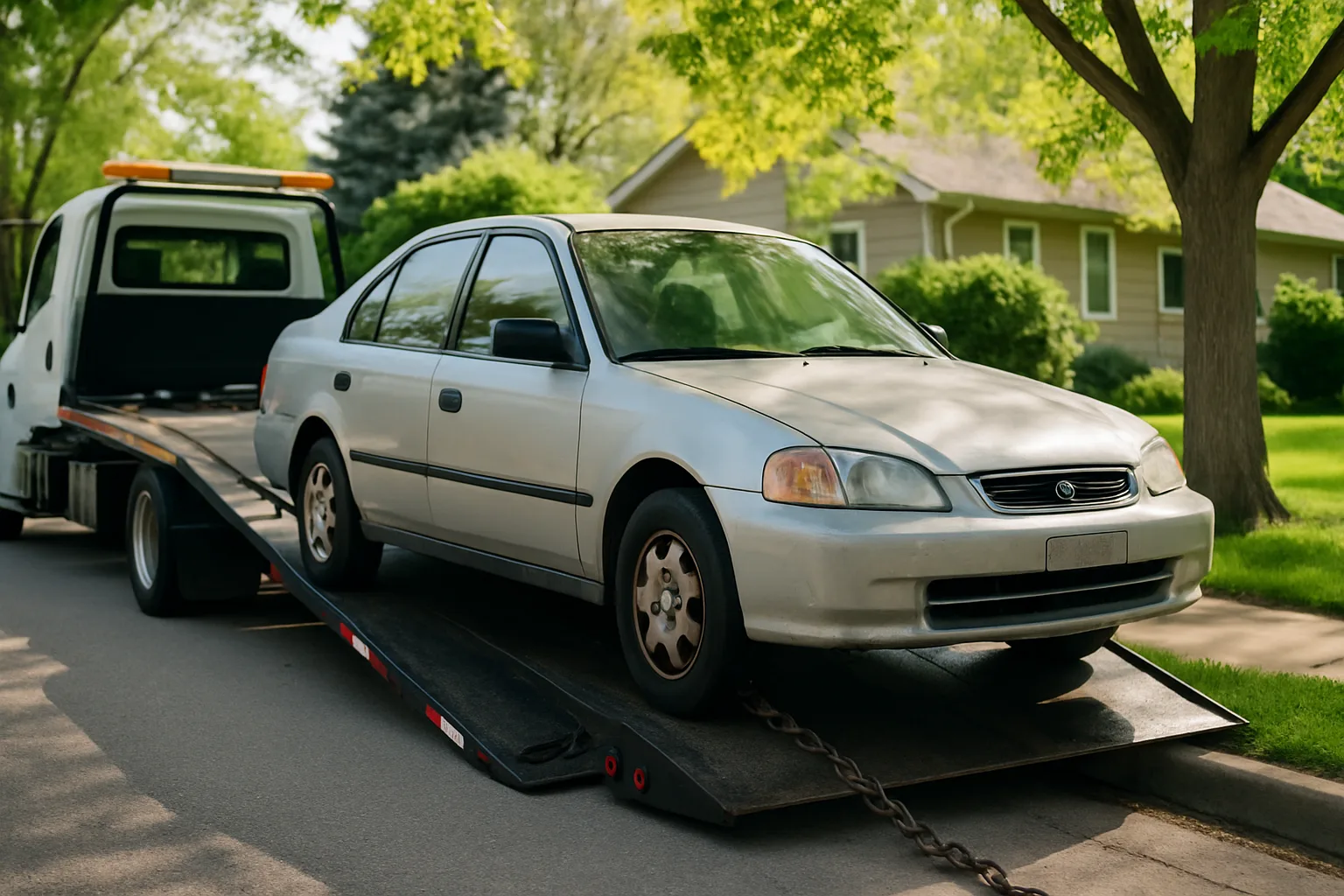
From Your Driveway to the Shredder: What Really Happens After Scrap Car Removal in Yorkton
Most people hand over their keys, pocket their cash, and never think about their old car again. That's fair — but if you've ever wondered what actually happens to a junk vehicle after it leaves your driveway, the answer is more organized, more valuable, and more environmentally significant than you might expect. Understanding the process can also help you get a better price. When you know what your car is worth in parts and metal, you stop leaving money on the table.
Whether you're arranging scrap car removal in Yorkton for the first time or you've done this before and want to know more, here's the full picture — step by step, no fluff.
Step 1: The Car Arrives at the Recycling Yard
Once the tow truck drops your vehicle at the auto recycler, the first thing that happens is intake. The yard logs the car — make, model, year, VIN, and condition. This isn't just paperwork. That VIN tells the recycler exactly what parts are in the vehicle, what they're worth in the used parts market, and how it should be processed. Modern yards use digital inventory tools to track every unit the moment it comes through the gate.
Platforms like SMASH Recycling — where verified buyers bid on your metal have pushed this further. Yards using structured inventory systems can attach photos, condition notes, and serial tracking to each vehicle. That documentation matters when buyers are bidding remotely — they need to trust what they're buying without seeing it in person. A well-documented car moves faster and attracts more competitive offers.
- VIN lookup confirms exact parts configuration
- Photos document exterior, interior, and mechanical condition
- Serial tracking links components to the source vehicle
- Condition grading determines parts vs. scrap metal value split
Step 2: Depollution — The Part Nobody Talks About
Before anything gets stripped or crushed, every vehicle goes through depollution. This is a regulated process, and it's non-negotiable at any licensed recycler. Fluids are drained and collected for proper disposal or recycling. That includes engine oil, transmission fluid, brake fluid, power steering fluid, coolant, and fuel. A single end-of-life vehicle can contain anywhere from 5 to 15 litres of hazardous liquids depending on its condition.
Airbags get deactivated. Tires are removed. The catalytic converter — one of the most valuable components on any vehicle — comes off at this stage. Cats contain platinum, palladium, and rhodium. Even a beat-up cat from a high-mileage vehicle has meaningful recovery value. That value is part of why junk car buyers near Yorkton can pay real money for vehicles that look like they're worth nothing.
Saskatchewan recyclers are held to provincial environmental standards, and legitimate yards document their depollution process. If you're selling to someone who skips this step, that's a red flag.
Step 3: Parts Harvesting — Where the Real Value Lives
After depollution, the car goes to dismantling. Skilled technicians pull every salvageable part — engines, transmissions, alternators, starters, body panels, doors, mirrors, seats, and electronics. What gets pulled depends on the vehicle's age, condition, and demand in the used parts market.
A 2015 to 2020 model with low mileage and a clean interior might have its entire drivetrain pulled and resold. An older high-mileage vehicle might only yield a handful of usable parts before the rest goes to metal recovery. Either way, every component that gets resold as a working part is worth significantly more than its weight in scrap steel.
This is also why scrap car value calculators give estimates, not guarantees. The actual recovery value of your vehicle depends on what the recycler can pull and resell — and that varies by model, demand, and local market conditions. If you want to get a free car valuation based on current market conditions, do that before you agree to any offer.
- High-value pulls: engines, transmissions, catalytic converters, ECUs
- Mid-value pulls: alternators, starters, door assemblies, seats
- Lower-value pulls: mirrors, trim pieces, small electronics
- Scrap-only material: damaged body panels, corroded frame sections
Step 4: The Metal Recovery Process and Why Scrap Metal Inventory Management Matters
Once parts are stripped, what's left is the body — steel, aluminum, copper wiring, and other non-ferrous materials. The vehicle shell gets compressed by a car crusher or processed through a shredder. Shredding reduces the car to fist-sized chunks of mixed metal, which then go through separation processes — magnets for ferrous steel, eddy current separators for aluminum, and density-based sorting for other non-ferrous materials.
The resulting commodities — shredded steel, zorba, twitch, insulated copper wire — get sold to mills and smelters. This is where scrap metal inventory management becomes critical. Yards that accurately document what's coming in can forecast outgoing loads, negotiate better with buyers, and avoid getting caught with unsorted material when the market moves. Sloppy inventory means leaving money behind at every stage.
SMASH supports yards through exactly this stage. Structured inventory, photo documentation, and vetted buyer networks mean that when a load of shredded steel or non-ferrous material is ready to move, there's a competitive auction process waiting — not a single buyer setting the price on a phone call. More buyers means better price discovery. That's not a sales pitch. That's just how markets work.
For yards doing this at scale in Saskatchewan and across Canada, the difference between a well-run inventory system and a manual logbook can represent thousands of dollars per month in recovered value.
What This Means for You as the Seller
Here's the practical takeaway: the more your car is worth to the recycler, the more they can pay you upfront. A vehicle with a working engine, intact catalytic converter, and salvageable parts commands a higher offer than a stripped shell. Condition, completeness, and documentation all factor into your price.
If you're in Yorkton and looking at scrap car removal options, don't settle for the first number someone quotes you over the phone without knowing what your car actually contains. A quick VIN lookup can tell you exactly what's under the hood. Knowing that your vehicle has a sought-after engine or a high-value cat gives you leverage in the conversation.
That's where tools matter. Platforms designed for this industry — like SMASH — put competitive pressure on the buyer side. Instead of one buyer making a lowball offer because they can, multiple vetted buyers compete. That competition can help reveal the actual market value of what you're selling. If you want to get cash for your car in Canada without guessing whether you got a fair deal, that's the kind of process you should be looking for.
You can also read car selling tips to better understand how to prepare your vehicle, what documentation to have ready, and how to time your sale for the best outcome.
The Environmental Side You Should Know About
Auto recycling is one of the more environmentally responsible things that happens to end-of-life vehicles — when it's done properly. A modern recycler recovers upwards of 80% of a vehicle's material by weight. Steel and aluminum get melted down and reused. Fluids get processed rather than dumped. Batteries and tires go to specialized recyclers.
In Saskatchewan, provincial regulations require licensed recyclers to follow strict depollution and disposal standards. When you use a legitimate service for Yorkton scrap metal services, you're not just getting paid — you're keeping hazardous material out of the ground and feeding raw material back into the manufacturing supply chain. That matters.
The vehicles that get processed sloppily — sold to unlicensed buyers, stripped in fields, fluids dumped on the ground — are the ones that create environmental liability. Know who you're selling to. Ask if they're licensed. A legitimate buyer will answer that question without hesitation.
Frequently Asked Questions
Q: How much does scrap car removal in Yorkton typically pay?
The value of a scrap vehicle depends on its weight, condition, make, model, and the current scrap metal market. A complete vehicle with a working engine or intact catalytic converter will generally command more than a stripped shell. Prices fluctuate with commodity markets — always get a current quote before agreeing to anything. Disclaimer: scrap metal prices change regularly. Check current rates before making a decision.
Q: How do I find junk car buyers near me in Yorkton?
Search for licensed auto recyclers operating in Saskatchewan, or use platforms that connect sellers with vetted buyers. Avoid anyone who won't confirm their license or skips depollution. A legitimate buyer will provide a written offer and handle all the paperwork.
Q: Does my car need to be running to get cash for it in Yorkton?
No. Most scrap and junk car buyers will purchase non-running vehicles. As long as the car has salvageable parts or recoverable metal, it has value. A non-running vehicle with an intact engine and cat can still be worth a meaningful amount depending on the model.
Q: What documents do I need to sell a scrap car in Saskatchewan?
You'll typically need proof of ownership — your vehicle registration or title. Some buyers may also require a government-issued ID. If you've lost your registration, contact SGI (Saskatchewan Government Insurance) to get a replacement before you sell. Selling without ownership documentation creates legal complications for both parties.
Q: How accurate is a scrap car value calculator?
Online calculators give a ballpark based on weight and market rates, but they don't account for parts value, condition specifics, or local market demand. Use a calculator as a starting point, then get a real quote from a buyer who has actually reviewed your vehicle's VIN and condition. The gap between calculator estimates and real offers can be significant in either direction.
If you've got an unwanted vehicle sitting in your driveway in Yorkton or anywhere else in Canada, you don't have to guess what it's worth or settle for the first number you hear. Get a real quote, understand what your car contains, and let competition work in your favor. Get cash for your car in Canada — get a free quote at cash-forcars.ca and find out what your vehicle is actually worth today.
Stay current on scrap metal market trends and industry updates — follow SMASH on LinkedIn for weekly insights from inside the recycling industry.