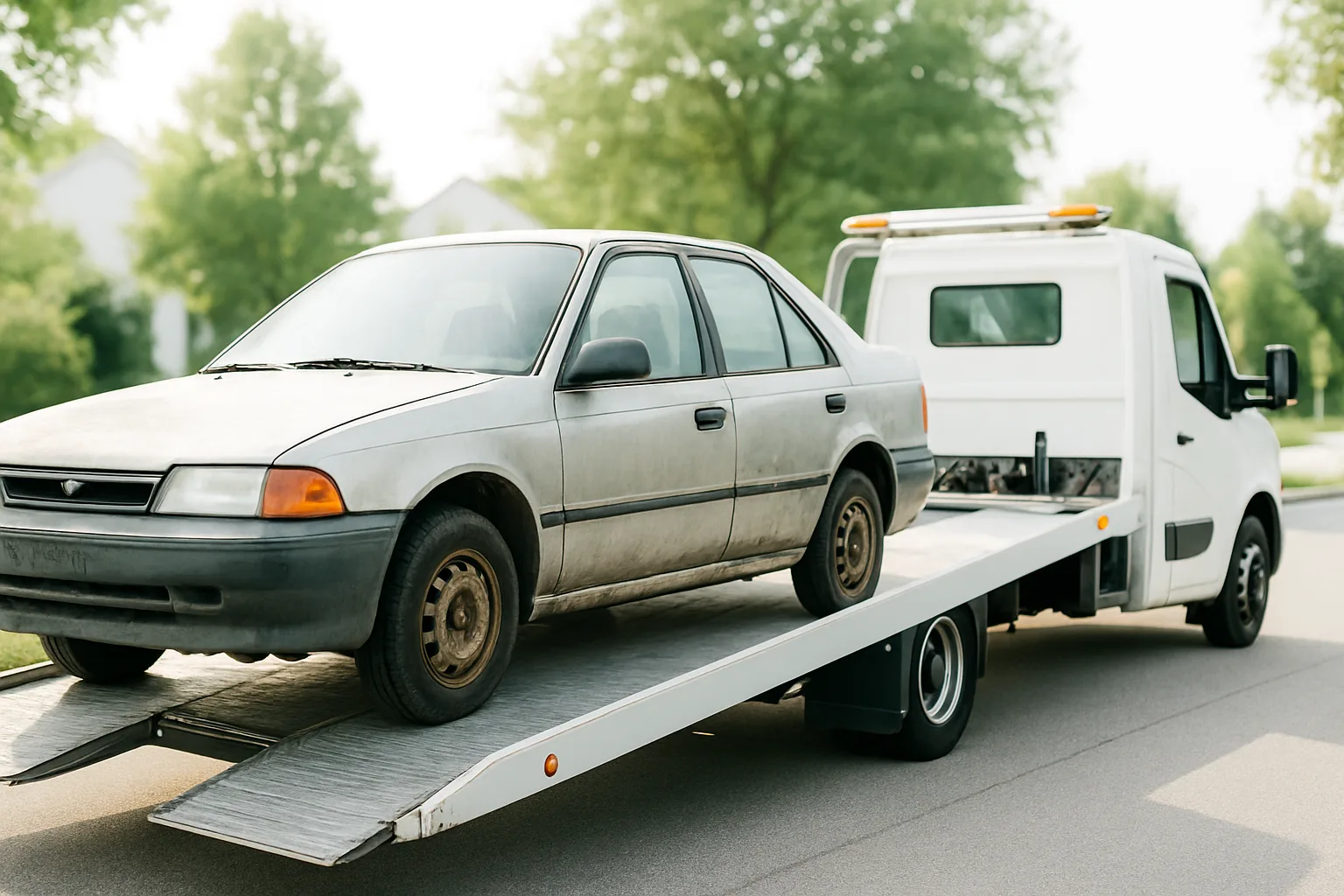
Most car owners assume a junk car is worth whatever the scrapper feels like paying that day. That assumption costs you money. The truth is, scrap car value today shifts based on real factors — your vehicle's make, model, condition, and what's sitting under the hood. If you're looking at junk car removal London, understanding why prices vary means you walk away with more cash instead of leaving it on the table.
London, Ontario has a steady market for end-of-life vehicles. Yards are buying. Buyers want metal, parts, and components like catalytic converters. But not every car gets the same offer — and the gap between a low offer and a fair one can run into hundreds of dollars.
Here's what actually drives that number.
Your Car's Weight Is the Starting Point — But Not the Whole Story
Scrap metal pricing starts with weight. Heavier vehicles — full-size trucks, SUVs, vans — carry more steel, and that base metal has value at the shredder. A compact sedan might weigh 1,200 kg. A half-ton pickup can push past 2,000 kg. That difference in steel tonnage alone moves the offer price.
But weight is just the floor, not the ceiling. The market for scrap steel fluctuates with global commodity prices, and what a yard pays per tonne in July 2026 differs from what they paid six months ago. Platforms like SMASH create open competition between vetted buyers, which helps surface better price discovery instead of relying on a single yard's word. If you want to get cash for your car in Canada, knowing the difference between base metal value and total vehicle value is where you start.
- Heavy trucks and SUVs: More steel, higher base scrap value
- Sedans and compacts: Less weight, but often more recoverable parts
- Minivans and crossovers: Middle range — value depends heavily on condition
- Electric and hybrid vehicles: Different value profile — battery packs and copper wiring matter more than steel weight
A London scrap yard isn't just buying your car for its shell. They're calculating what they can recover across steel, aluminum, copper, and individual components before they even look at your VIN.
Make and Model Drive Real Price Differences in the Scrap Market
Not all makes are equal when it comes to scrap and salvage value. This isn't about brand prestige — it's about parts demand, metal composition, and what buyers actually want to pull off a vehicle before it hits the shredder.
Popular models with high aftermarket demand — think common domestic trucks, widely owned sedans — have engines, transmissions, and body panels that salvage buyers will pay for. A Ford F-150 or a Honda Civic has a deep used parts market. That drives up what a buyer is willing to offer. A rare European model with limited parts demand? The math works differently, and not always in your favour.
Aluminum-intensive vehicles — many newer SUVs and trucks have aluminum body panels and engine blocks — carry more non-ferrous metal by weight. Non-ferrous scrap (aluminum, copper, brass) trades at a premium over steel. If your vehicle has a substantial aluminum content, a knowledgeable buyer will factor that in. Many won't unless you push them to.
- High-demand models: More parts value on top of base scrap
- Aluminum-heavy builds: Better non-ferrous recovery value
- Rare or low-volume models: Lower parts demand, scrap weight becomes the main driver
- Diesel trucks: Engine components often carry strong salvage value
If you're in London and trying to figure out where your specific vehicle sits in this spectrum, getting multiple offers is the only way to see the real market. One call to one buyer gives you one data point. Competition gives you a market price.
Condition Changes the Equation — But "Junk" Doesn't Mean Worthless
Here's what most sellers don't realize: a car doesn't need to run to have significant value. What it needs is intact components, accessible metal, and ideally documentation that makes the transaction clean.
Condition affects value in specific ways. A non-running car with a complete, undamaged catalytic converter is worth more than a running car that's had its cat cut. A vehicle that's been sitting in a field for three years with rust through the frame is harder to process than one that drove in last week. Fire damage, flood damage, and stripped interiors all reduce what a buyer can recover.
On the flip side, some "junk" cars have parts that yards actively want:
- Catalytic converters: These carry platinum, palladium, and rhodium. High-value cats on trucks and SUVs can represent a significant portion of the vehicle's total scrap value.
- Transmissions and engines: Low-kilometre engines in otherwise damaged vehicles have salvage value.
- Wheels and tires: If they're in good shape, they sell separately.
- Airbag modules: Undeployed airbags are resellable parts.
- Alternators, starters, and AC compressors: High-turnover parts in the remanufacturing market.
If you want to get a free car valuation before you commit to any offer, do it. Knowing what your specific vehicle is worth — parts included — puts you in a stronger position when a buyer makes an offer.
The Catalytic Converter Factor: Why It Changes Everything
Catalytic converters are the single biggest variable in scrap car pricing for many vehicle types. The precious metals inside — platinum group metals — trade on their own market, separate from steel and aluminum. A loaded cat from a diesel pickup or a late-model SUV can be worth hundreds of dollars on its own.
This is why the option to sell catalytic converters online has grown. Platforms that let you document your converter with photos, serial numbers, and vehicle information — and put it in front of multiple vetted buyers — can produce better outcomes than walking into a yard and accepting whatever's offered at the counter. SMASH gives buyers the documentation and competitive format to make confident offers on converters and full vehicles alike. That's a direct benefit to sellers who want fair price discovery rather than a single take-it-or-leave-it number.
In Ontario, converter sales carry regulatory requirements around documentation and seller identification. Make sure any platform or buyer you work with handles this properly. Proper documentation protects you and ensures the transaction holds up.
For London car owners specifically, London scrap metal services through verified buyers means your converter's value gets factored into your offer — not skimmed off by a middleman who knows more about the market than you do.
How to Get a Better Price for Your Junk Car in London, Ontario
Getting the best offer for a scrap vehicle isn't complicated, but it requires a few deliberate steps. Most sellers skip these and lose money by default.
- Document what's there. Take photos of the full vehicle, the engine bay, the catalytic converter (with any visible serial numbers), the interior, and the tires. Buyers who can see the vehicle make more confident offers.
- Know your VIN. The VIN tells buyers the exact make, model, trim, and engine — which directly affects what parts are on the car and what they're worth. Don't skip this step.
- Get multiple offers. One offer is a take-it-or-leave-it. Multiple offers are a market. If you're serious about cash for cars Ontario, this step alone can move your number substantially.
- Don't strip the car yourself unless you know what you're doing. Removing parts incorrectly can reduce value or create liability. If you have a high-value component like a converter, work with a buyer who will account for it properly.
- Use platforms with vetted buyers. Random buyers off classified boards carry more risk — payment issues, no-shows, lowball renegotiations at pickup. Vetted buyers through structured platforms create accountability on both sides.
You can read car selling tips that go deeper on each of these steps if you want to prepare before you start getting quotes. The more you know going in, the better your outcome.
And if your vehicle has non-ferrous metal components worth separating and selling independently, sell your scrap metal on SMASH Recycling to reach a broader buyer network that actually competes for your material.
Why the Old Way of Selling Scrap Cars Fails London Sellers
The traditional process goes like this: you call one yard, they give you a number, you take it or walk. Most people take it. That single-buyer dynamic means the yard has no pressure to offer market value. They quote low, protect their margin, and the seller never knows what they left behind.
This isn't unique to London. It's how scrap car transactions have worked across Ontario and across North America for decades. The information gap between what a buyer knows and what a seller knows has always favoured the buyer.
SMASH changes that by putting competitive pressure back on the buyer side. Multiple vetted buyers bidding on the same vehicle — with documentation, photos, and VIN data to support their offers — produces better price discovery for sellers. Not a guaranteed premium, but a real market. That's the difference between accepting the first number and understanding what your car is actually worth today.
If you're ready to find out what your vehicle is worth without guessing, the best move is straightforward: get a quote, compare it against the market, and make a decision with real information. Get cash for your car in Canada — start with a free quote at cash-forcars.ca and see what your vehicle is actually worth in 2026's market.
Disclaimer: Scrap car prices fluctuate with commodity markets, regional demand, and vehicle condition. Always check current rates before accepting any offer.
Frequently Asked Questions
Q: What affects the scrap car value today for my specific vehicle?
The main factors are vehicle weight (total metal volume), make and model (parts demand and metal composition), condition (what components are intact and recoverable), and current commodity prices for steel, aluminum, and precious metals in catalytic converters. Getting multiple quotes is the most reliable way to find out what your specific car is worth right now.
Q: How does junk car removal in London, Ontario work?
You request a quote, provide your VIN and vehicle condition details, and receive an offer from a buyer. If you accept, the buyer arranges pickup — typically within one to a few business days depending on location. You hand over your signed title and receive payment. Clean documentation on your end speeds up the process significantly.
Q: Does my car need to run to get cash for it in London?
No. Non-running, damaged, and high-kilometre vehicles all have scrap and salvage value. The key is documenting what's intact — engine, transmission, catalytic converter, tires, body panels — so buyers can make an informed offer. A non-running vehicle with an intact catalytic converter can still be worth a solid amount.
Q: Can I sell my catalytic converter separately before scrapping the car?
Yes, and in many cases it's worth considering. High-value catalytic converters on trucks and SUVs can represent a significant portion of the vehicle's total value. In Ontario, you'll need to provide identification and documentation for the sale. Platforms that allow you to sell catalytic converters online with proper documentation give you access to competitive offers rather than a single counter quote.
Q: How do I know if I'm getting a fair offer for my junk car in London?
The simplest test is to get more than one offer. If every buyer you contact gives you roughly the same number, you're likely at or near market. If one offer is significantly higher or lower than others, that's worth investigating. Using a platform like SMASH that creates competition between vetted buyers is one of the most straightforward ways to test whether an offer reflects the real market.
Follow SMASH on LinkedIn for industry updates, scrap metal market insights, and tips on getting the most out of your end-of-life vehicles.
```