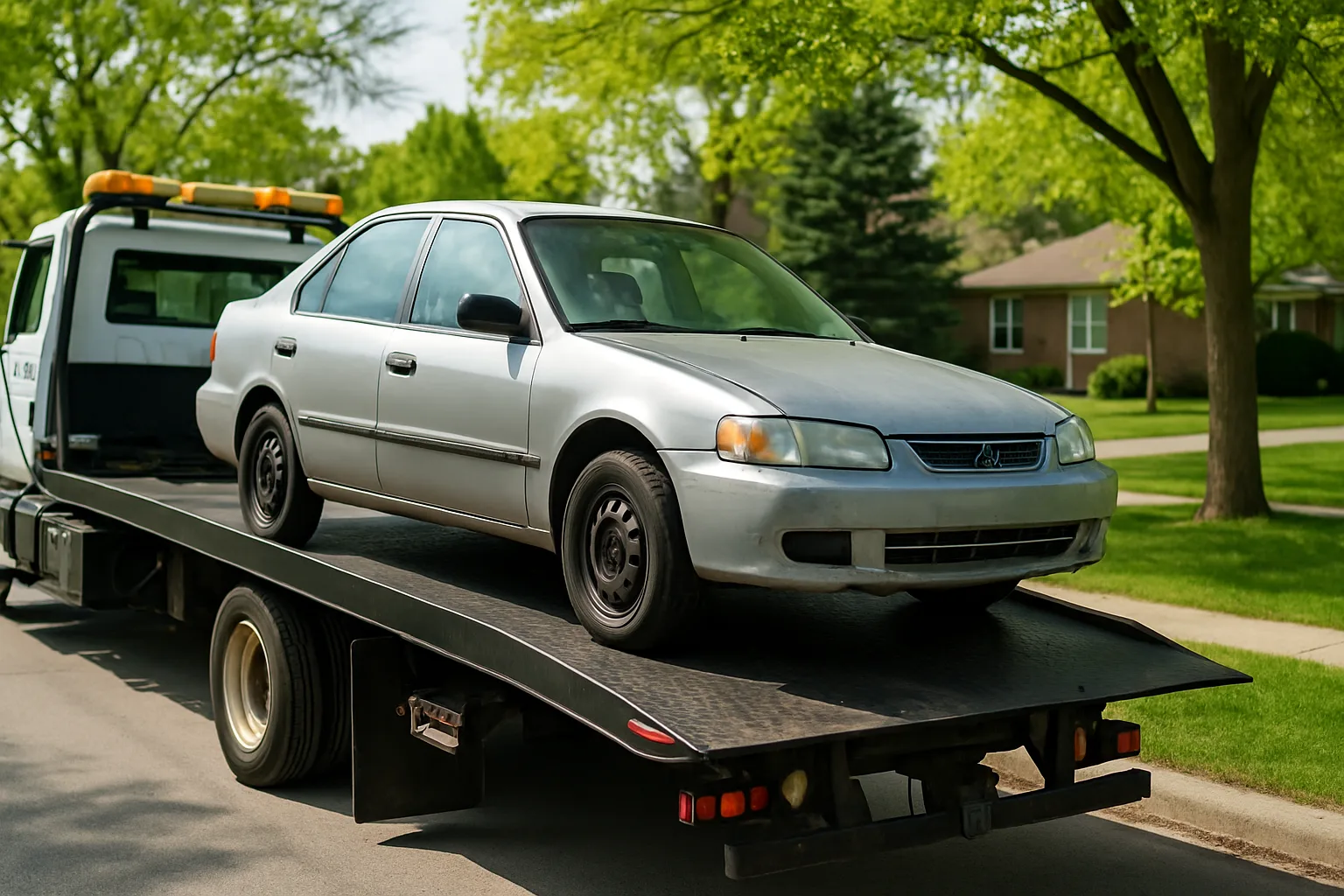
What Actually Happens to Your Car After Scrap Car Removal in Kitchener
Most people hand over their keys, pocket their cash, and never think about it again. But what happens next is more interesting — and more valuable — than most car owners realize. Your old Civic or F-150 doesn't just disappear. It gets broken down, catalogued, sold in pieces, and melted into something new. Every step has a dollar value attached to it. Understanding the process helps you make smarter decisions about scrap car removal in Kitchener — and makes sure you're not leaving money on the table before you call anyone.
The auto recycling industry in Canada processed millions of end-of-life vehicles in recent years, and that number keeps climbing as older fleets age out. In Ontario alone, auto recyclers handle a significant share of that volume. The process is more regulated, more systematic, and more profitable than most car owners expect. Here's what actually goes on once your vehicle leaves your driveway.
Step 1 — Depollution: The Car Gets Cleaned Out First
Before anything is removed or crushed, a licensed auto recycler in Ontario is legally required to depollute the vehicle. This means draining and safely disposing of all hazardous fluids — engine oil, transmission fluid, coolant, brake fluid, power steering fluid, and refrigerants from the A/C system. Fuel gets siphoned out too. This isn't optional. Ontario's environmental regulations under the Environmental Protection Act require proper handling of these materials, and recyclers face serious penalties for cutting corners.
This step protects the environment and protects the recycler. It also happens before any valuable parts are touched, which means a well-run yard works through a checklist before a single wrench turns. Some recyclers also remove airbag canisters and catalytic converters at this stage, since both require careful handling. The cat, in particular, has real metal value — platinum, palladium, and rhodium don't care how old your car is.
Step 2 — Parts Harvesting: Where the Real Value Gets Extracted
Once the car is clean, the disassembly starts. A skilled dismantler works through the vehicle pulling anything with resale value. What gets pulled depends on the year, make, model, and condition of the car — but here's a general picture of what recyclers target:
- Catalytic converters — High-value precious metals. Even older cats carry real weight in the secondary market.
- Alternators, starters, and engines — Pulled as cores or tested units depending on condition.
- Transmissions — Big-ticket items, especially from trucks and SUVs.
- Doors, hoods, fenders — Body panels move fast in collision repair markets.
- Seats and interior trim — Demand varies by vehicle but can be surprisingly strong.
- Wheels and tires — If there's usable tread left, tires sell. Alloy wheels always move.
- Headlights, taillights, mirrors — High breakage items that shops always need.
- Electronic modules — ECUs, BCMs, and other control units from late-model vehicles.
This is where the difference between a well-run yard and a sloppy one shows up. A professional recycler tracks every pulled part — part number, vehicle of origin, condition, photos. That documentation matters when a shop or buyer comes looking. It also matters for compliance. Platforms like SMASH help compare scrap metal bids from Canadian buyers, and that same transparency in parts documentation is what separates a yard that maximizes recovery from one that guesses its way through inventory.
Step 3 — Scrap Metal Inventory Management: Why Documentation Drives Value
Here's where most people don't realize how much process is involved. After parts are harvested, what's left — the body shell, frame, and remaining metal — gets weighed and categorized. Steel, aluminum, copper wiring, and other non-ferrous metals all go to separate streams. Each has a different price per pound on any given day.
Good scrap metal inventory management means knowing exactly what you have before a buyer makes an offer. A recycler that tracks their material by weight, grade, and grade mix gets better pricing from processors. One that guesses or eyeballs their loads typically leaves money behind. In a yard processing dozens of vehicles a week, that gap adds up fast.
For sellers on the front end — meaning you, the car owner — this is relevant too. A recycler using modern inventory systems has better visibility into what your car is actually worth. They're not pulling a number out of the air. They're working from data. That makes negotiations more honest and pricing more accurate. If a buyer can't explain how they arrived at your quote, that's worth questioning.
What Happens to the Shell — The Crusher, the Shredder, and the Mill
Once usable parts are off and the fluids are gone, the remaining body shell gets crushed or shredded. Most Ontario auto recyclers work with a network of metal processors and shredder facilities. The crushed car — called a bale or a flat — gets sold by the ton to these processors. The shredder breaks it down further into fist-sized chunks of steel, separates ferrous from non-ferrous material using magnets and eddy current separators, and prepares it for sale to steel mills.
That shredded steel eventually becomes new steel. North American steel mills use a significant proportion of recycled scrap in their electric arc furnaces. Your old car becomes rebar, I-beams, new auto sheet — the cycle is real. The process from crushed car to melt can happen within days depending on mill demand and inventory levels.
For recyclers trying to get the best price on their shredder loads, competition matters. Selling to one processor on a standing relationship versus putting a load out to multiple vetted buyers can mean a meaningful difference per ton. That's exactly the problem SMASH was built to solve — bringing competition to loads that used to sell on a handshake. If you're a yard operator in Kitchener or anywhere across Ontario, you already know how much a few dollars per ton matters at volume.
Junk Car Buyers Near Me for Cash — What to Know Before You Call
If you're searching for junk car buyers near me for cash — with or without a title — understanding this process makes you a better negotiator. The buyer looking at your car is mentally calculating part yield, scrap weight, and their own costs. You can do the same rough math. A heavier vehicle with a functional catalytic converter and complete drivetrain is worth more than an already-stripped shell, even if both are "junk."
A few practical things to know before you sell:
- Title situations: In Ontario, most legitimate buyers want to see your ownership documents. No title doesn't automatically disqualify you, but it does complicate the transaction. Be upfront about what you have.
- Get more than one quote: A single call to a single buyer gives you zero price discovery. Call at least two or three. Better yet, use a platform that puts buyers in competition for your vehicle.
- Don't strip the car yourself unless you know what you're doing: Pulling the catalytic converter off a car you're about to sell for scrap can actually reduce your offer — some buyers price cats into their quote and get annoyed when they arrive and the car is already picked over.
- Know your weight: A mid-size sedan runs roughly 3,000–4,000 lbs. A full-size pickup can be 5,000–6,000 lbs or more. Scrap prices are quoted per ton, so weight matters.
- Ask what the offer includes: Free towing? Same-day pickup? These details affect the real net value of the offer.
If you're in Kitchener and want to get cash for your car in Canada without the runaround, the process starts with a quote that reflects what your car is actually worth — not what someone hopes you'll accept.
Why Transparency in Auto Recycling Matters More in 2026
The auto recycling industry has gotten more professional in recent years, and 2026 is no exception. Regulatory pressure in Ontario around end-of-life vehicle handling has increased. Environmental compliance, documentation requirements, and chain-of-custody tracking for hazardous materials are all tighter than they were a decade ago.
That's good for car owners. It means the yard picking up your vehicle is more likely to be operating above board, tracking their inventory properly, and paying you based on real data rather than a guess. A yard that can't document their process is a yard you want to avoid — not just for environmental reasons, but because sloppy operations tend to lowball sellers and under-deliver on promises.
Platforms like SMASH have pushed the industry toward better documentation and competitive pricing by connecting recyclers with vetted buyers who expect organized, photographed, accurately described loads. That same culture of transparency benefits car owners at the front end. When the industry runs better, sellers get treated more honestly. You can read car selling tips to stay ahead of the process and walk into any negotiation with your eyes open.
If you're in Kitchener or anywhere in Ontario and you're done with your vehicle, the smartest move is to get a free car valuation before you accept anyone's first offer. The data is available. Use it.
For local options, Kitchener scrap metal services connect you with buyers who understand the local market and operate with the documentation standards that protect both sides of the transaction.
Your car has real value in it — even at the end of its life. The recycling process extracts that value systematically. Make sure you capture your share of it before the car ever leaves your driveway.
Frequently Asked Questions
Q: How long does scrap car removal in Kitchener typically take?
Most legitimate buyers can arrange pickup within one to three business days, and many offer same-day or next-day service. Once you accept a quote, the process is fast — a driver arrives, confirms the vehicle matches the description, and completes the paperwork on-site. Have your ownership documents ready to speed things up.
Q: Can I sell my junk car in Kitchener without a title?
Some buyers will work with you if you've lost your vehicle ownership documents, but it adds complexity. In Ontario, you'll generally need some form of proof that the vehicle belongs to you. Contact ServiceOntario to request a replacement ownership document before selling if possible — it protects you and makes the transaction cleaner for everyone.
Q: How do junk car buyers near me calculate what my car is worth?
They're looking at a combination of scrap metal weight, part yield (what usable components can be harvested), catalytic converter value, and their own local market for processors. Make, model, year, and condition all factor in. A heavier vehicle with an intact drivetrain and undamaged catalytic converter typically commands a stronger offer than a stripped-out shell.
Q: Does it matter if my car runs or not when selling for scrap in Kitchener?
Not really. Most scrap and junk car buyers in Kitchener handle non-running vehicles routinely — they bring flatbeds for a reason. A running car might get a slightly higher offer since it's easier to assess and move, but a non-runner is still worth real money based on its weight and recoverable parts. Don't let a dead battery or blown engine stop you from getting a quote.
Q: What documents do I need to sell my car to a scrap yard in Ontario?
In Ontario, you'll typically need your vehicle permit (ownership document) to transfer the vehicle. Some buyers may also ask for a valid government-issued ID. If there's a lien on the vehicle, that needs to be resolved before the sale can go through. Check with the buyer in advance so you're not caught off guard at pickup.
Ready to stop looking at that car in your driveway? Get cash for your car in Canada with a free, no-obligation quote at cash-forcars.ca — the process is straightforward, the pricing is based on real data, and pickup is fast.
Follow SMASH on LinkedIn for industry updates, scrap metal market insights, and news that affects what your vehicle is actually worth.