From Your Driveway to Done: What Really Happens After Your Junk Car Gets Picked Up
Most people hand over their keys, take their cash, and never think about their old car again. That's fair — the deal is done. But if you've ever wondered what actually happens to a junk car after the tow truck pulls away, the answer is more structured than you might expect. For anyone in Richmond looking to cash for junk cars Richmond deals, understanding this process helps you see exactly where your car's value comes from — and why getting the right buyer matters from the start.
Auto recyclers don't just crush cars and call it a day. There's a systematic process that extracts real value at every stage. The more a recycler can recover from your vehicle, the more competitive their offer can be to you upfront. That's the connection most sellers never make.
Step One: Arrival, Inspection, and Fluid Extraction
When your vehicle arrives at a licensed auto recycling facility in British Columbia, the first thing that happens is a full intake inspection. The yard documents the vehicle — VIN, condition, year, make, model — and photographs it. This creates a paper trail and helps the facility plan how to process it efficiently.
After intake, the car moves to the depollution bay. Before anything else is dismantled or crushed, all hazardous fluids must be safely removed. This is regulated in British Columbia and across Canada under environmental protection rules. Technicians drain and collect:
- Engine oil and transmission fluid
- Coolant and antifreeze
- Brake fluid and power steering fluid
- Fuel remaining in the tank
- Air conditioning refrigerant (captured with specialized equipment)
- Battery acid from lead-acid batteries
None of this goes down a drain. Reputable yards either recycle these fluids on-site or send them to licensed processors. If a yard skips this step, they're operating illegally — and that's a red flag for anyone trying to get cash for your car in Canada through a trustworthy buyer.
How Parts Are Pulled — and Why It Affects Your Payout
Once the car is depolluted, the real dismantling begins. Skilled auto recyclers don't just strip everything at once. They triage the vehicle based on what's likely to sell as a working used part versus what gets sent for scrap. This triage directly impacts the value a yard assigns to your car when they make you an offer.
High-value components pulled for resale typically include:
- Engines and transmissions — still the biggest-ticket used parts on the market
- Alternators, starters, and compressors — popular rebuilds
- Body panels, doors, and hoods — especially for common makes with high repair demand
- Wheels, rims, and tires — if they have usable tread
- Seats, dashboards, and interior trim — for vehicles with low mileage interiors
- Catalytic converters — one of the most valuable components on any vehicle
That last item deserves its own section. The catalytic converter is often the single most valuable recoverable part on a junk car — and it's why platforms that let you sell catalytic converters online have grown significantly. Converters contain platinum group metals (PGMs): platinum, palladium, and rhodium. Even a modest passenger car converter carries meaningful recovery value. Yards and processors weigh them, grade them by core type, and sell them through specialized channels. If you're curious what yours might be worth before you sell your vehicle, a platform like SMASH gives you a window into how these components are valued in the market.
The Scrap Metal Phase: Hulk Processing and Shredding
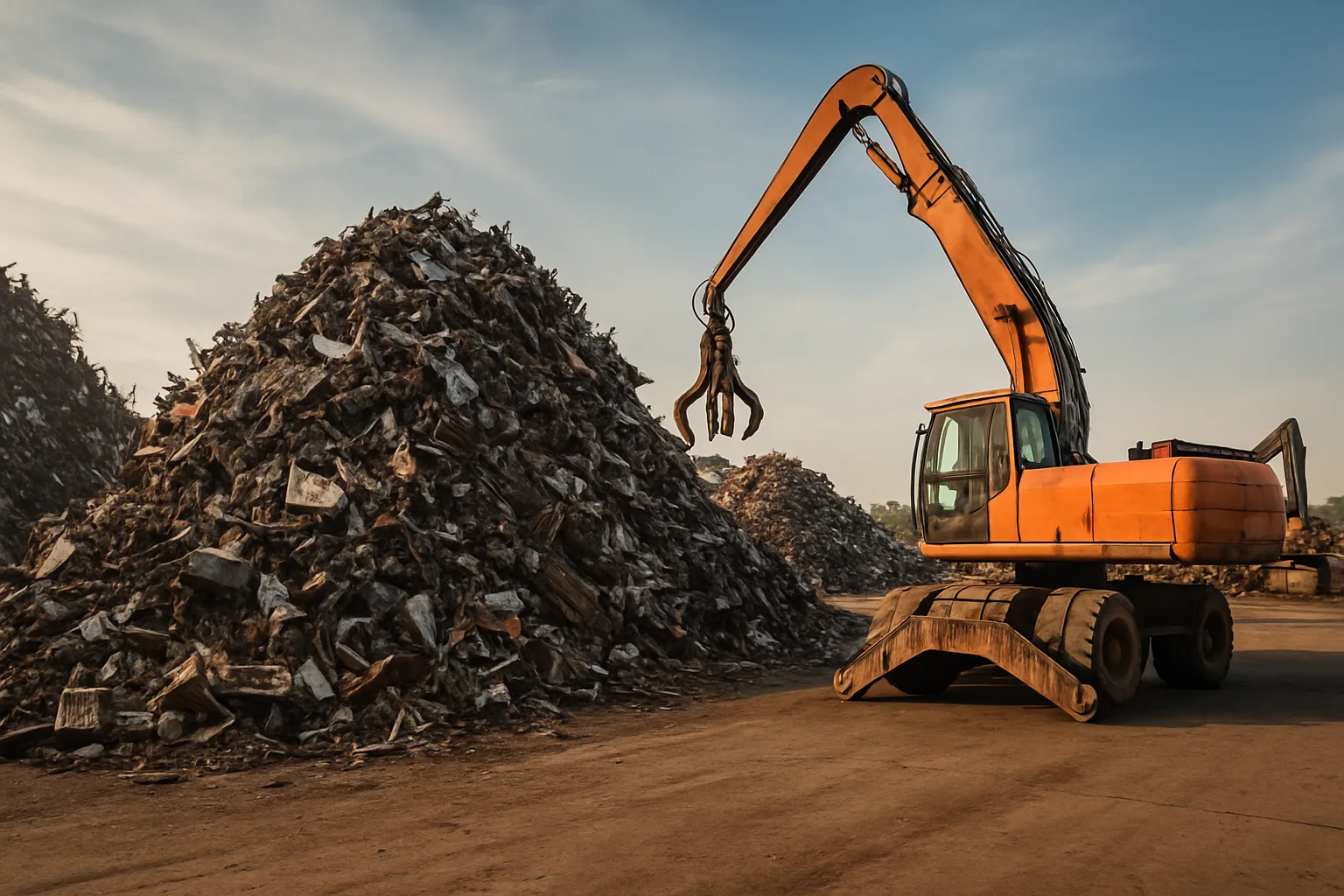
After usable parts are removed, what remains is the hulk — the bare shell of the vehicle. At this stage, the car is primarily steel, with some aluminum, copper wiring, and other non-ferrous metals still present.
The hulk goes through a shredder or crusher, depending on the facility's setup. Large auto shredders tear the vehicle into fist-sized fragments in seconds. Those fragments then run through a separation system that sorts:
- Ferrous metals (steel and iron) — pulled out with magnets and sold to steel mills
- Non-ferrous metals (aluminum, copper, zinc) — separated by density and air classification, sold to smelters
- Auto shredder residue (ASR) — the remaining foam, glass, rubber, and plastic, which goes to landfill or waste-to-energy processing
The steel from your car doesn't disappear. It gets melted down and re-enters the supply chain as new steel used in construction, manufacturing, and yes — new vehicles. Auto recycling is one of the most genuinely circular industries in existence. A single full-size car body can yield close to a ton of recoverable steel, though actual weights vary widely by vehicle type and what's already been stripped.
For Richmond-area sellers, facilities in the Lower Mainland and Greater Vancouver region process thousands of vehicles through this pipeline every year. The local infrastructure is mature and well-connected to both domestic processors and export markets through the Port of Vancouver.
Why Competitive Buyers Give You a Better Deal
Here's what most sellers don't realize: the price a junk car buyer offers you reflects their confidence in recovering value through this entire process. A buyer who has access to strong parts resale channels, a good metals broker, and an efficient depollution setup can afford to pay more than a small operation working with a single downstream buyer.
That's the core problem with the old way of selling — one phone call, one number, take it or leave it. You have no way of knowing if that offer reflects actual market value or just what's convenient for one buyer. When you get a free car valuation through a platform that brings multiple vetted buyers to the table, competition does the work. That's exactly how SMASH approaches the market — not one buyer giving you a gut-feel number, but documented inventory and real buyer competition driving price discovery.
If you're in Richmond and you've been told your car is worth next to nothing, it might just mean you've been talking to the wrong buyer. The same vehicle listed with better documentation — photos, VIN-verified specs, noted condition of the catalytic converter and drivetrain — can attract meaningfully different offers. More information equals more buyer confidence equals better outcomes for the seller.
What About Cars With No Title?
One of the most common questions from sellers is what happens if they don't have the title. Searches for cash for cars no title near me are high-volume for a reason — a lot of people are sitting on vehicles they inherited, abandoned, or simply lost paperwork for over the years.
In British Columbia, ICBC registration documents can often substitute or help establish ownership for scrap purposes. Licensed auto recyclers know how to navigate this. If you're unsure, the first step is to contact a buyer directly and describe your situation before assuming your car has no value. Don't let missing paperwork stop you from getting a quote. Buyers deal with this regularly, and it's rarely a complete dealbreaker — especially for vehicles with clear scrap value.
The SMASH platform and the team at smashrecycling.ca work with recyclers who understand the documentation realities of the North American market. If you're working through a more complex situation, talking to a knowledgeable buyer early saves time and frustration.
The Full Picture — and Your Next Move
Your old car isn't just a hunk of metal when it gets picked up. It's a collection of recoverable materials — parts, fluids, steel, non-ferrous metals, and high-value components like catalytic converters — that move through a well-organized recovery chain. Licensed recyclers in Richmond and across British Columbia operate within environmental regulations that protect both the local ecosystem and the integrity of the scrap market.
When you understand what your car is actually worth in pieces, you can approach the sale with more confidence. You're not begging someone to haul away a liability. You're selling a commodity with real downstream value — and you deserve to be paid fairly for it.
If you haven't sold yet, you can read car selling tips on our blog to sharpen your approach before you get your first quote. And when you're ready, the best move is to get in front of real buyers who compete for your load — not one number from one caller.
For sellers in Richmond and across British Columbia, the Richmond scrap metal services available through Richmond scrap metal services make it straightforward to connect with vetted buyers who know exactly what your vehicle is worth in the current market. Ready to find out what your car is actually worth? Get cash for your car in Canada — get a free quote at cash-forcars.ca.
Frequently Asked Questions
Q: How long does the full recycling process take after my car is picked up in Richmond?
Most vehicles are fully processed — from pickup to shredding — within a few weeks, though timelines vary by facility volume and parts demand. Depollution typically happens within the first day or two. If your car has high-demand parts, it may sit in dismantling inventory longer before the hulk is processed.
Q: Does my car have to run to get cash for junk cars in Richmond?
No. Most junk car buyers in Richmond and across British Columbia will pick up non-running vehicles. The offer may reflect the condition, but a non-starter with an intact catalytic converter and salvageable parts still carries real value. Always get a quote — don't assume a dead car is worthless.
Q: Can I sell my car for cash in Richmond without a title?
It depends on the buyer and the situation. In British Columbia, ICBC registration records can help establish ownership for scrap purposes. Contact a licensed buyer directly and explain your situation — many handle no-title vehicles regularly and can walk you through the local requirements.
Q: What part of my junk car is worth the most money?
For most vehicles, the catalytic converter and the drivetrain components (engine and transmission) carry the highest individual recovery value. The catalytic converter contains platinum group metals that have significant commodity value regardless of the car's overall condition. Beyond that, steel weight and any intact high-demand body parts add to the total.
Q: How does SMASH help me get a better price when I sell my car in British Columbia?
SMASH brings vetted buyers into a competitive auction format rather than leaving you to accept the first number you're given. Documented inventory — photos, VIN data, condition notes — gives buyers more confidence, which supports better price discovery. More competition between buyers means the market determines your price, not one buyer's gut feel.
Follow SMASH on LinkedIn for scrap metal market insights and industry updates: linkedin.com/company/scrap-metal-auction-sales-hub.