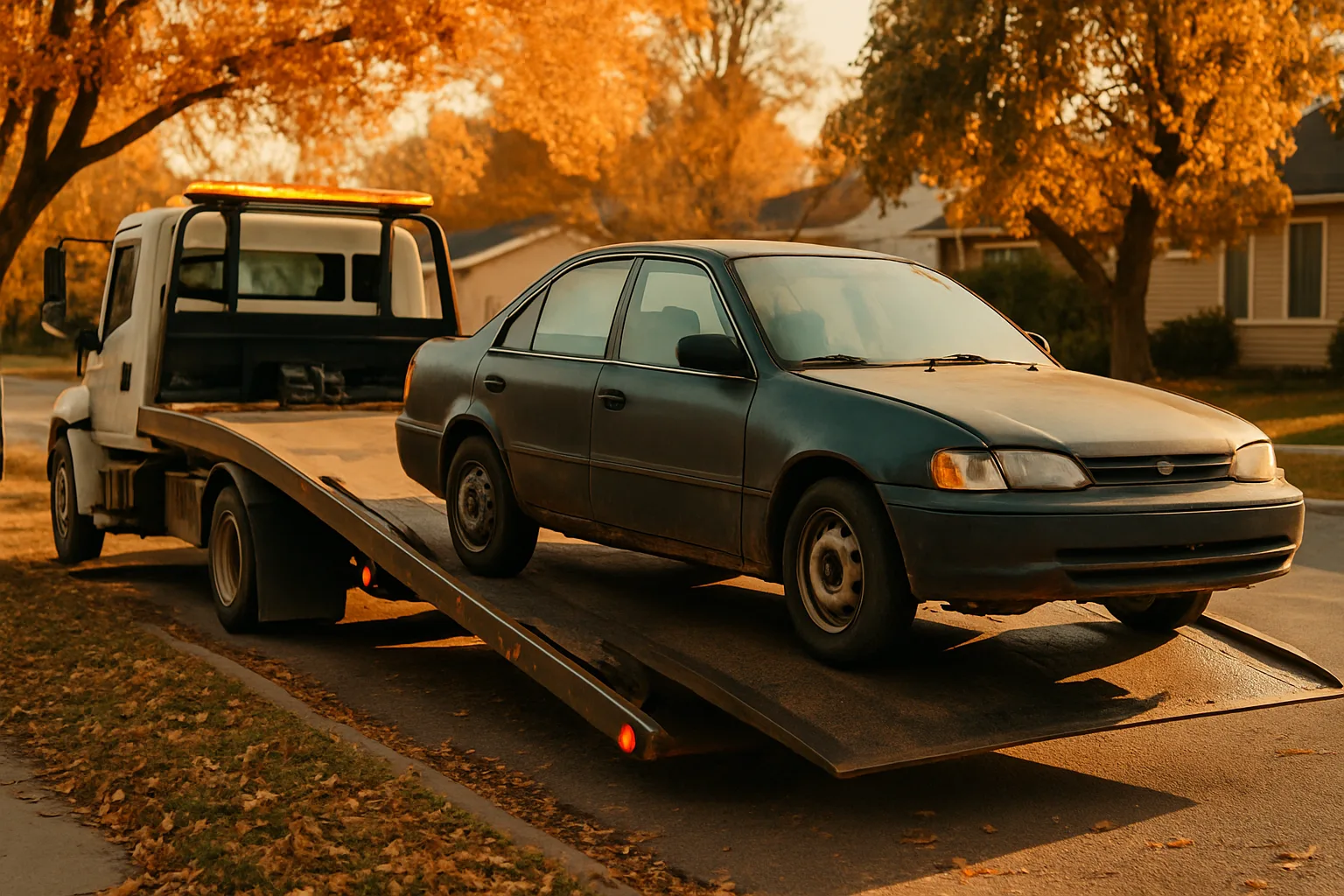
5 Myths About Junk Car Removal That Are Costing Winnipeg Drivers Real Money
That rusted half-ton sitting in your driveway isn't just an eyesore — it might be worth more than you think. Yet most car owners in Winnipeg walk away from hundreds of dollars every year because they believe things about junk car removal that simply aren't true. Bad information leads to bad decisions. Let's kill the myths and get you paid.
Whether your vehicle runs or not, has a title or doesn't, looks like scrap or could still turn over — there's a process for turning it into cash. And in 2026, that process is faster, more transparent, and more competitive than it's ever been. Here's what's actually going on behind the scenes when you get cash for your car in Canada.
---Myth #1: Your Car Has to Run to Be Worth Anything
This is the biggest myth in the junk car world, and it stops sellers cold before they even make a call. The truth? A non-running vehicle can be worth just as much — sometimes more — than a running clunker. Scrap buyers aren't buying your car to drive it. They're buying the steel, aluminum, copper wiring, the catalytic converter, and dozens of salvageable parts.
A mid-size sedan weighs roughly 1,400 to 1,800 kilograms. Even at baseline scrap steel prices, that's real money sitting in your driveway. Add in the catalytic converter (which contains platinum, palladium, and rhodium), aluminum rims, and copper components, and a "dead" vehicle starts looking a lot more valuable. Don't let the fact that it won't start convince you it's worthless.
- No engine: Still has a body, frame, wiring, and metal
- Blown transmission: Every other component still has value
- Flood or fire damage: Assessable on a part-by-part basis
- Stripped interior: The shell still carries weight — literally
Buyers on platforms like the SMASH Recycling auction platform evaluate vehicles based on total recoverable value, not whether they start. Competition between vetted buyers means the market sets the price — not one guy lowballing you over the phone.
---Myth #2: You Can't Sell a Car Without the Title in Canada
Missing your title? You're not alone, and you're not stuck. While having your vehicle registration and title makes the process smoother, most reputable junk car buyers in Canada work with sellers who've lost their paperwork. The process varies by province, but in Manitoba, you can often obtain a replacement title through Manitoba Public Insurance (MPI) before completing a sale.
The phrase junk car buyers near me for cash no title gets searched thousands of times a month for a reason — people lose documents, inherit vehicles from family members, or buy project cars that never got properly transferred. This is a common situation, not a dealbreaker. A legitimate buyer will walk you through what's needed, not turn you away at the door.
What you'll typically need when title is unavailable:
- Government-issued photo ID
- Proof of ownership (old registration, insurance records, bill of sale)
- In some cases, a statutory declaration confirming ownership
- VIN confirmation — the number on the dash, door frame, or engine block
Bottom line: missing paperwork is a speed bump, not a wall. Work with a buyer who knows the regulations and can guide you through the right steps for Manitoba. Don't let a missing document leave money on the table.
---Myth #3: All Junk Car Buyers Pay the Same — Shopping Around Is a Waste of Time
This one is flat-out wrong, and it's the myth that costs sellers the most money. Scrap metal prices fluctuate weekly. Buyer demand shifts based on what's moving at the mill, what parts are in short supply, and how many vehicles a buyer has already committed to. The price one buyer quotes you on a Monday could be 20% lower than what a competitive market would actually pay.
The old way of selling a junk car — calling one yard, taking their number, done — works in the buyer's favour, not yours. When only one buyer knows what your car is worth, you're negotiating blind. That's why the shift toward auction-style and multi-buyer platforms has changed how smart sellers approach this. More buyers means better price discovery. It's that simple.
SMASH built its entire model around this principle. Instead of one buyer naming their price in a phone call you can't verify, vetted buyers compete. That competition can help reveal what your vehicle is actually worth in the current market — not what one yard thinks they can get away with paying. If you want to get a free car valuation before you commit to anything, that's the right first move.
---Myth #4: The Scrap Value of a Car Is Basically Nothing
People assume junk cars fetch $50 to $100 and leave it at that. In reality, scrap car value depends on a combination of factors — and some of them work heavily in the seller's favour right now. Steel, aluminum, and copper markets shift constantly. In 2026, global demand for recycled metals — driven by EV manufacturing, infrastructure projects, and North American industrial activity — has kept scrap values meaningful.
Here's what drives your scrap car value in Canada:
- Vehicle weight: Heavier vehicles (trucks, SUVs, vans) return more on steel weight alone
- Catalytic converter condition: Cats contain precious metals and can be among the most valuable parts on a scrap vehicle
- Non-ferrous metals: Aluminum wheels, copper wiring, and brass fittings all command separate pricing
- Salvageable parts: Engines, transmissions, doors, and electronics with resale value
- Current market rates: Scrap metal is a commodity — prices move, and timing matters
Note: Scrap metal prices fluctuate based on market conditions. Always check current rates before accepting an offer — what was quoted last month may not reflect today's market. If you're in Winnipeg and wondering what your specific vehicle might fetch, Winnipeg scrap metal services can give you a current read on local pricing.
Don't assume your car is barely worth anything until you've actually checked. The gap between assumption and reality can be significant.
---Myth #5: Junk Car Removal Is a Hassle That Takes Weeks
People picture junk car removal as a complicated, drawn-out process — scheduling, paperwork, waiting around, dealing with unreliable tow operators. That reputation is outdated. In most Canadian markets, including Winnipeg and across Manitoba, a straightforward junk vehicle sale can go from first contact to pickup in 24 to 72 hours. Sometimes same-day.
Here's what a typical no-nonsense transaction actually looks like:
- Submit your vehicle details — year, make, model, condition, VIN, photos
- Receive an offer — based on current market data, not a guess
- Accept and schedule pickup — most buyers work around your timeline
- Get paid — cash or e-transfer at the time of pickup in most cases
The process feels slow when you're working with a single buyer who has no urgency. When there's competition, things move. Buyers who want the load make it happen fast. That's the difference between one cold call and a marketplace where buyers are actively looking for inventory.
If you want to skip the back-and-forth and read car selling tips that actually apply to your situation, the process becomes even clearer. Documentation upfront, accurate vehicle description, and knowing your car's weight and parts condition — that combination speeds everything up.
---What the B2B Scrap Metal Marketplace Means for Individual Sellers
Here's something most private sellers don't know: the same dynamics that drive the B2B scrap metal marketplace also affect what you get paid for your junk car. Yards buy from private sellers and then move that material to mills and processors through a competitive chain. When that downstream market is strong, your offer goes up. When yards are sitting on inventory, offers tighten.
Platforms like SMASH operate in the commercial space — connecting recycling yards and industrial sellers with vetted buyers across North America. That marketplace activity sets a baseline for what scrap is actually trading at. Understanding that your junk car sits at the front end of a long supply chain helps explain why offers vary, why timing matters, and why working with informed buyers beats calling around blindly.
For Winnipeg sellers, this means the local market doesn't exist in isolation. Steel and aluminum demand in Winnipeg is connected to what's happening at processors across Manitoba and beyond. A good buyer knows that and prices accordingly. A lowball buyer hopes you don't.
---Frequently Asked Questions
Q: How do I sell my car for cash in Winnipeg quickly?
Start by gathering your vehicle details — year, make, model, VIN, and an honest description of condition. Contact reputable buyers or use a platform that brings multiple buyers to you. In Winnipeg, same-day or next-day pickup is often available for straightforward transactions. Having your ID and any ownership documents ready speeds things up considerably.
Q: Can I sell my junk car in Winnipeg without a title?
In many cases, yes. Manitoba allows replacement titles through MPI, and many buyers will work with alternative proof of ownership — registration documents, insurance records, or a statutory declaration. Contact the buyer upfront, explain your situation, and they'll tell you exactly what's needed. Don't assume a missing title kills the deal.
Q: What's my scrap car actually worth in Canada right now?
Scrap car value in Canada depends on vehicle weight, metal composition, current steel and non-ferrous prices, and whether any major components (engine, transmission, catalytic converter) are intact. Prices fluctuate — what's accurate today may shift within weeks. Always get a current quote rather than relying on older estimates.
Q: Are there junk car buyers near me in Winnipeg who pay cash?
Yes. Winnipeg has active scrap car buyers operating across the city and surrounding Manitoba communities. The key is finding buyers who are transparent about their pricing and competitive in their offers. Working with a platform that puts your vehicle in front of multiple buyers gives you a better read on actual market value than calling one yard at a time.
Q: Does SMASH work with individual car sellers, or only businesses?
SMASH primarily operates as a B2B platform connecting commercial sellers and vetted industrial buyers. However, the pricing transparency and market data that SMASH generates flows through to the broader scrap market — including what private sellers receive for their vehicles. Cash-for-cars services connected to the SMASH network bring that market intelligence directly to individual sellers.
---That old car taking up space in your driveway isn't a burden — it's an asset you haven't converted yet. The myths around junk car removal keep sellers from acting, and that hesitation costs real money. The process is faster, simpler, and more competitive than most people expect. If you're ready to stop guessing and start getting paid, get cash for your car in Canada — get a free quote at cash-forcars.ca and see what your vehicle is actually worth today.
Stay current on scrap metal markets and industry updates — follow SMASH on LinkedIn for regular insights on what's moving in the North American recycling market.