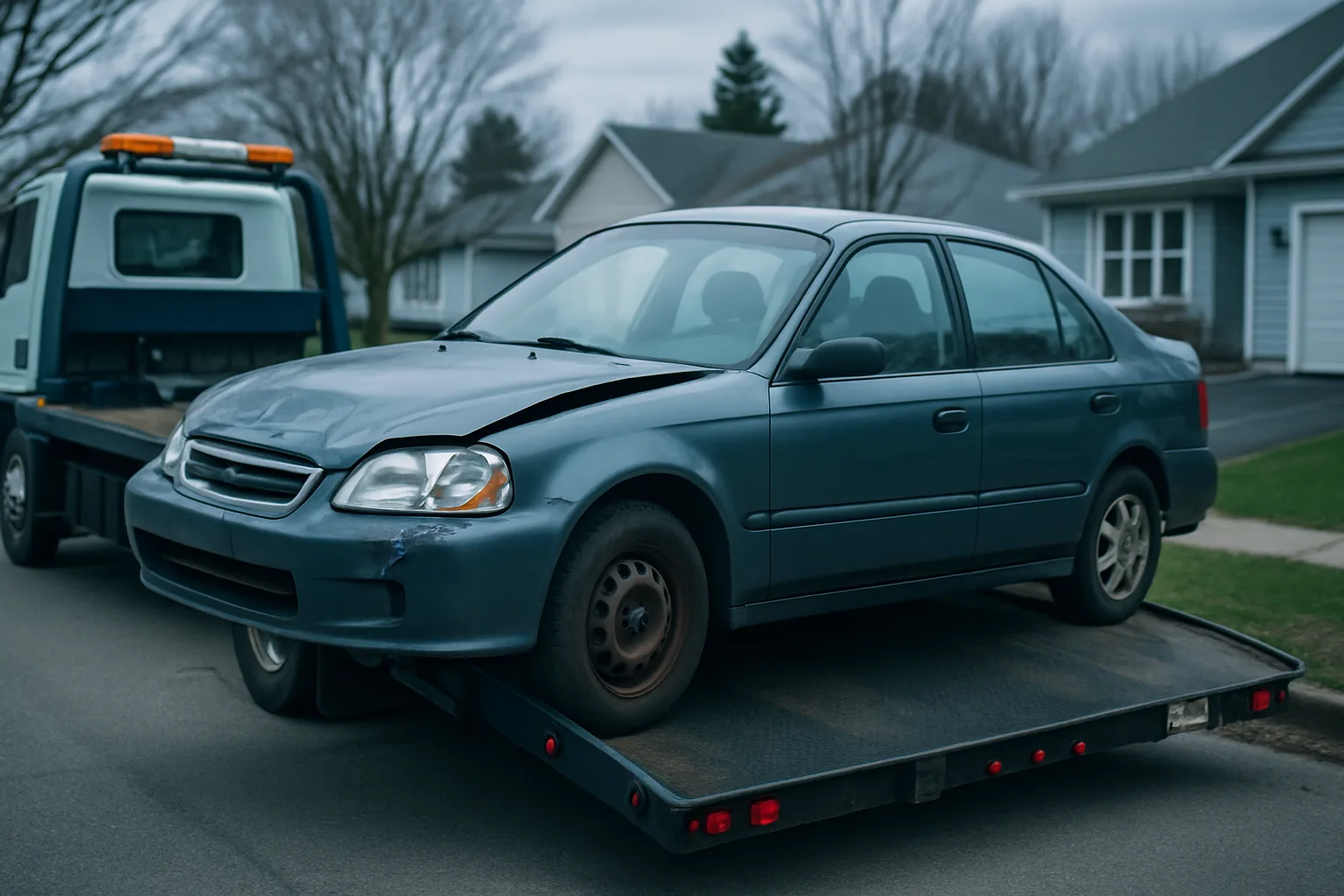
Most car owners in Moncton have heard at least one of these before: "Your car isn't worth anything." "They'll lowball you no matter what." "It takes forever and costs money upfront." These myths stop real people from getting real cash for vehicles sitting in their driveways right now. Let's cut through the noise.
Whether you've got a 2009 Civic with a blown head gasket or a half-stripped pickup that hasn't moved in three winters, junk car removal Moncton is more straightforward — and more profitable — than most people think. The problem isn't the process. It's the bad information floating around.
Here's what's actually true in 2026, and why platforms like smashrecycling.ca are changing how sellers in New Brunswick think about scrap value.
Myth #1: Your Junk Car Has No Real Value
This is the biggest one. A car stops running, and people assume it's worthless. It's not. Even a fully non-functional vehicle contains components that buyers want — steel, aluminum, copper wiring, and critically, the catalytic converter.
Catalytic converters contain platinum group metals (palladium, rhodium, platinum) that hold serious value in the recycling market. A single cat off a common North American vehicle can be worth a meaningful amount depending on the make, model, and current metal prices. Beyond that, the scrap steel in a typical passenger car — roughly 1,500 to 2,000 pounds — has a market price per ton that fluctuates but never hits zero. Your car is a pile of sellable materials. It's not garbage.
- Steel: The largest component by weight in most vehicles
- Aluminum: Found in wheels, engine blocks, and trim
- Copper: Wiring harnesses throughout the vehicle
- Catalytic converter: Often the highest-value single component
- Usable parts: Alternators, starters, doors, mirrors, and more
If you want to understand scrap car value today, stop guessing. Get a quote based on what the vehicle actually contains — not what someone assumes it's worth at a glance. Services that let you get a free car valuation before you commit do exactly that.
Myth #2: All Junk Car Buyers Pay the Same — So It Doesn't Matter Who You Call
This one costs sellers money every single day. The assumption is that scrap yards and junk car buyers all work from the same price sheet, so you might as well call the first number you find. That's not how it works.
Buyers price based on what they need, what they've already got in inventory, their overhead costs, and how motivated they are to close a deal that week. One buyer might be short on non-ferrous material. Another might be loaded up and lowballing to slow intake. Without competition, you have no way to know if the number you're getting is fair or if you're leaving money on the table.
That's exactly why SMASH exists. Rather than calling one junk car dealer near me and accepting whatever they offer, SMASH puts your vehicle in front of vetted buyers who compete for it. Competition drives better price discovery. It's not a guarantee of a specific outcome — but more buyers bidding means the market sets the price, not one person's gut feeling on a Tuesday morning.
In New Brunswick, where the buyer pool in any single city can feel limited, this kind of reach matters. You're not stuck with whoever answers the phone in Moncton. You have options.
Myth #3: Junk Car Removal Is a Complicated, Expensive Process
People imagine mountains of paperwork, hidden towing fees, days of back-and-forth, and a final payout that barely covers the hassle. In reality, removing a junk car is one of the simpler transactions you can do with a vehicle.
Here's what a straightforward junk car removal actually looks like:
- Get a quote — provide basic info about the vehicle (year, make, model, condition, whether it runs)
- Accept an offer — once you're satisfied with the number, confirm the sale
- Schedule pickup — most legitimate buyers arrange towing at no cost to you
- Sign over the title — hand over the paperwork and get paid
- Done — the car leaves your property, cash arrives
Reputable services handle the towing. They bring the paperwork. They pay you — not the other way around. If a buyer is asking you to pay for pickup on a vehicle sale, that's a red flag, not standard practice. Legitimate cash for cars New Brunswick services don't operate that way.
For first-time sellers especially, it helps to read car selling tips before you start — so you know what to expect and what questions to ask before anyone shows up at your door.
Myth #4: You Need a Running Car to Get a Decent Payout
A surprisingly common belief — and completely false. The scrap and salvage market doesn't care if your car starts. Buyers are pricing the materials and recoverable parts, not whether you drove it to the lot.
Non-running vehicles are bought and processed every day across North America. Fire-damaged vehicles. Flood cars. Cars that sat for a decade. Cars with missing engines. As long as the core metal and components are there, the vehicle has value. What matters is accurate documentation of what's actually in it — not whether it idles smoothly.
This is where proper photo documentation and part identification comes in. When you can show a buyer exactly what they're getting — including serial numbers, VIN, and component condition — they bid with more confidence. Confidence means better offers. It's that straightforward.
If you're thinking about whether to sell catalytic converters online separately before scrapping the rest of the car, that's a legitimate strategy worth considering. In some cases, selling the cat independently through a documented platform before scrapping the body can put more money in your pocket overall. Just make sure you're working with buyers who can verify and process precious metals properly.
Myth #5: The Junk Car Industry Is Full of Shady Operators — Best to Avoid It
There's a kernel of truth here. Like any industry, there are operators who lowball, disappear after promising pickup, or charge hidden fees. But using that as a reason to let a car rot in your driveway is throwing money away to avoid a problem you can sidestep with basic due diligence.
Vetted buyer networks exist precisely to filter out the bad actors. When a platform like SMASH requires buyers to go through a verification process, you're not just throwing your vehicle listing into a void of anonymous bidders. You're dealing with buyers who have accountability — who stand behind their bids and complete transactions.
For sellers in Moncton, that accountability matters. You want to know that the buyer showing up at your property is legitimate, that the payout is real, and that the car is gone when they say it'll be gone. Checking reviews, asking for references, and using platforms that document the transaction protect you as a seller.
Explore Moncton scrap metal services that connect you with buyers who actually show up and pay what they promised.
What Sellers in Moncton Actually Get Right (And What to Watch For)
Sellers who get the best outcomes on junk vehicles tend to do a few things consistently:
- They document the vehicle upfront — photos of exterior, interior, engine bay, undercarriage, and the VIN plate
- They know what's in the car — especially whether the catalytic converter is still present and intact
- They get multiple quotes — never accept the first number without knowing what else is out there
- They understand current market conditions — scrap metal prices move with global demand; a quote from six months ago may not reflect today's rate
- They work with vetted buyers — not anonymous strangers from a classified ad
The sellers who get burned are the ones who make decisions on incomplete information. One call, one offer, no documentation, and a vague verbal commitment about pickup. That's where things go sideways.
SMASH removes that uncertainty. The auction format, the vetted buyer network, the documentation tools — they exist because transparency benefits sellers. When a buyer knows exactly what they're bidding on, and a seller knows exactly who's bidding, the transaction goes smoother for everyone.
If you're ready to stop letting a junk car drain your driveway space and start treating it like the asset it actually is, the path forward is simple. Get cash for your car in Canada without the guesswork — get a free quote at cash-forcars.ca and find out what your vehicle is actually worth in today's market.
Frequently Asked Questions
Q: How much can I get for junk car removal in Moncton?
The value depends on your vehicle's weight, the condition of its components (especially the catalytic converter), and current scrap metal prices. There's no fixed number, and any service quoting you a firm price without seeing the vehicle should raise a flag. Get a quote based on documented information — not a ballpark guess.
Q: Do I need the title to sell a junk car in New Brunswick?
Having the title makes the process faster and gives buyers more confidence. If you've lost it, contact Service New Brunswick to request a replacement before you start the sale process. Some buyers will work with you if you can prove ownership through registration or other documentation, but requirements vary.
Q: Does junk car removal in Moncton include free towing?
Reputable junk car buyers typically include towing as part of the transaction — you shouldn't be paying out of pocket to have a vehicle hauled away that you're selling. Always confirm the towing arrangement before you agree to a sale, and get it in writing if possible.
Q: How do I know if I'm getting a fair price for my scrap car?
The best way is to get multiple quotes and let buyers compete. Platforms like SMASH connect sellers with vetted buyers through a competitive auction format, which means the market — not a single buyer's preference — helps determine the price. More competition means better price discovery.
Q: Can I sell my catalytic converter separately before scrapping the rest of the car?
Yes, and in some cases it makes financial sense to do so — especially if the cat is in good condition and from a make/model with higher precious metal content. Make sure you're selling through a documented, legitimate channel that can properly identify and value the part. Keep records of the transaction for your own protection.
Stay current on scrap metal market conditions and industry trends — follow SMASH on LinkedIn at linkedin.com/company/scrap-metal-auction-sales-hub for regular updates.