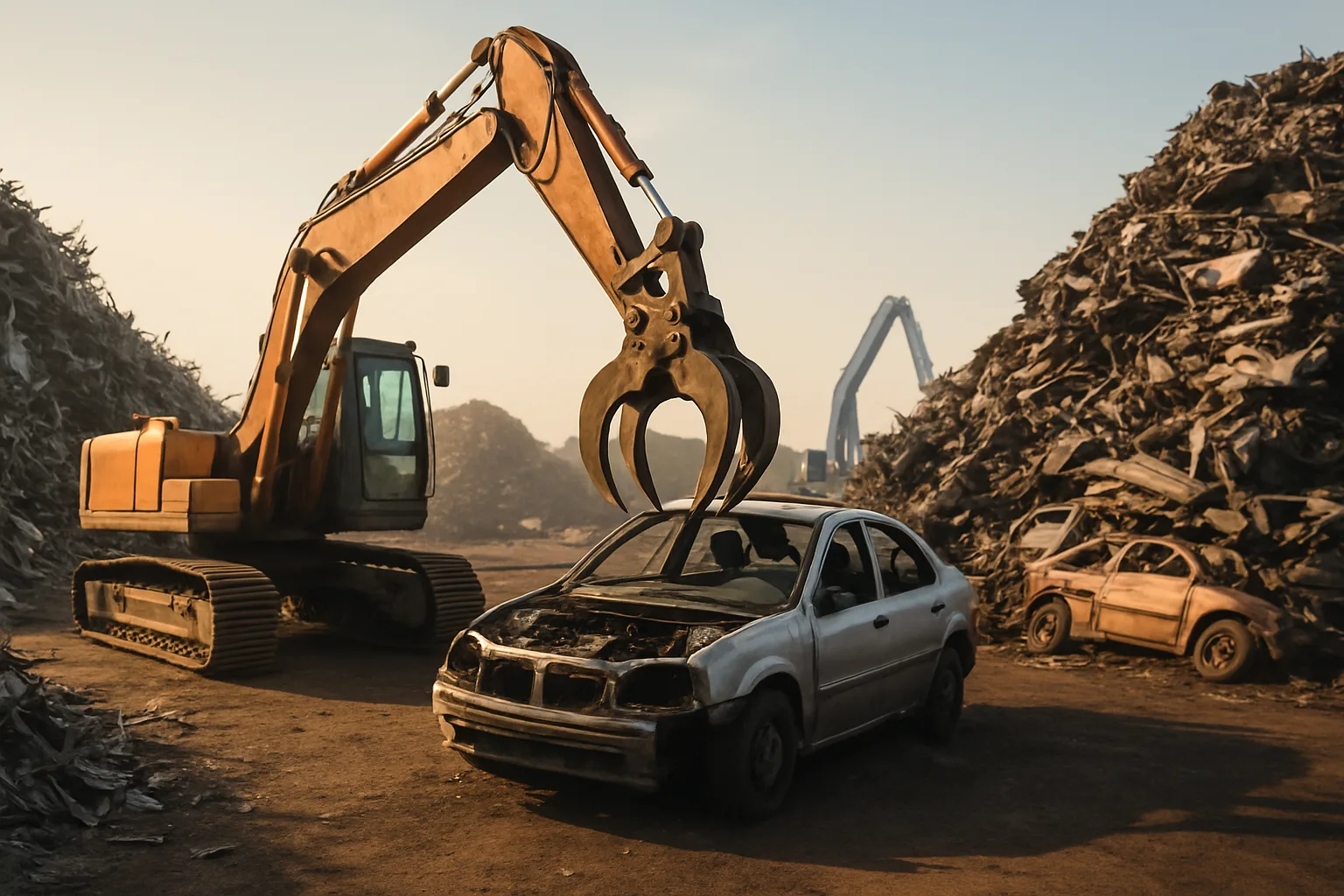
Why Your Neighbor Got More for Their Scrap Car Than You Did
Two cars. Same year. Same street in Halifax. One owner walks away with significantly more cash than the other. Same scrap yard, same day — different payouts. If that sounds frustrating, it should. But it's not random. Scrap car value today is driven by a set of real, measurable factors — and once you understand them, you can stop leaving money on the table.
This week's market recap breaks down exactly why prices vary so dramatically by make, model, and condition. Whether you're sitting on a rusted-out 2009 Civic or a relatively clean F-150 with a blown transmission, what you get for that vehicle depends on more than just its weight in steel.
Weight Matters — But It's Not the Whole Story
Let's start with the obvious one. Scrap yards price vehicles partly by weight. A heavier vehicle contains more raw ferrous metal, which translates directly to a higher base value. That's why a full-size pickup or an SUV will almost always fetch more at the scale than a compact sedan — even if both are total write-offs with no salvageable parts.
The average passenger car weighs between 1,300 and 1,800 kg. A full-size truck or body-on-frame SUV can push 2,500 kg or more. That weight difference adds up fast when scrap steel is trading at current per-tonne rates. But here's where sellers get tripped up: weight is the floor, not the ceiling.
- Catalytic converters contain platinum, palladium, and rhodium — precious metals worth real money above and beyond the steel value.
- Aluminum components (wheels, engine blocks, transmission housings) are worth significantly more per kilogram than steel.
- Copper wiring harnesses, especially in newer vehicles with advanced electronics, add non-ferrous value to the total.
- Reusable parts — working alternators, starters, doors, glass — can be pulled and sold separately before the shell goes to crush.
A yard that only quotes you on weight is leaving value on the table. A smart buyer — or a competitive auction process — accounts for all of it.
Make and Model Drive Salvage Demand — and That Drives Your Price
Here's a factor that most private sellers don't think about: parts demand. The secondary parts market in Canada is enormous, and certain makes and models have dramatically higher demand for salvageable components. That demand directly affects what a buyer is willing to pay for your vehicle before it gets crushed.
Popular vehicles — think high-volume trucks, fleet vehicles, common crossovers — generate more salvage demand because more of them are on the road. When a 2016 Ram 1500 needs a fender or a door handle in Nova Scotia, the nearest yard wants to have that part. The more common the vehicle, the more buyers exist for its parts. That competition raises your baseline offer.
On the flip side, an obscure import with low local market penetration might be worth less in salvage terms, even if it's mechanically intact. Parts for rare vehicles move slowly. Yards price that risk into their offers.
A few factors by make and model that affect scrap value:
- Engine size and type: Larger engines contain more aluminum and steel. Diesel engines often have higher component value.
- Transmission type: Automatic transmissions with reusable cores have real market value. Manual units on popular models can move quickly too.
- Catalytic converter grade: Some manufacturers use higher concentrations of precious metals in their cats. Toyota, Honda, and certain BMW models are known for this.
- Body style: Trucks and SUVs typically return more than sedans of equivalent age, due to frame weight and parts demand.
- Model year: Vehicles from the last 10-15 years generally have better parts demand than older units with dwindling repair market activity.
If you're in Halifax and you're trying to Halifax scrap metal services to get a realistic number on your vehicle, understanding this context helps you ask the right questions — and push back if the first offer seems low.
Condition Changes Everything — Even for a Car Going to Scrap
People assume that once a car is "done," condition doesn't matter. That's wrong. Condition affects scrap car value today in several concrete ways, and a vehicle in genuinely poor condition can be worth measurably less than one that just won't run.
Consider the difference between a car that doesn't start versus one that's been sitting in a field, stripped of its catalytic converter, with fluids leaking into the ground. The first car may have a dead battery or a seized engine — but it's still intact. The second car has had value literally removed from it, and a buyer knows that on sight.
Key condition factors that affect your offer:
- Catalytic converter present or missing: This is increasingly significant. Catalytic converter theft is a real issue across Canada, including in Nova Scotia. A missing cat can reduce your offer meaningfully — buyers know exactly what they're not getting.
- Fluid contamination and environmental liability: A vehicle leaking coolant, oil, or transmission fluid creates handling costs for the yard. Some buyers factor this in.
- Structural damage and completeness: A car that's been in a major collision and has significant parts missing is worth less than a complete vehicle, even if neither will ever drive again.
- Tires and wheels: Four usable tires and intact aluminum wheels add value. Missing or shredded rubber on steel rims is a deduction in some buyers' math.
- Documentation: A vehicle with a clear title, matching VIN, and basic paperwork moves faster and sometimes commands a better offer. Buyers take on less risk.
Photo documentation matters here too. When you can show a buyer exactly what they're getting — full photo set, VIN confirmed, condition notes — you reduce the uncertainty that drives conservative lowball offers. Platforms like the SMASH Recycling auction platform are built around this principle: documented inventory creates buyer confidence, and buyer confidence creates competition.
How Competitive Auctions Change the Math for Scrap Car Sellers
Here's the honest truth about the traditional scrap car sale: one call, one offer, no leverage. Most sellers in Halifax and across Canada are getting a single number from a single buyer and deciding on the spot. That's not price discovery — that's guessing with extra steps.
The old way puts all the information advantage on the buyer's side. They know current metal prices. They know parts demand for your specific model. They know their margin targets. You know almost none of that when you're standing in your driveway taking a phone call.
A competitive auction format flips that dynamic. When multiple vetted buyers see the same vehicle, with the same documentation, at the same time — they have to compete on price. That competition is what reveals what your vehicle is actually worth in today's market. More buyers means better price discovery. It's that simple.
SMASH is built to do exactly that for the scrap and recycling sector. The platform connects sellers with vetted buyers, supports inventory documentation (including photo sets, VIN lookup, and serial tracking), and removes the guesswork from pricing. No subscription fees. No single-buyer bottleneck.
If you want to get cash for your car in Canada without relying on a single cold call and hoping the number sounds right, a transparent competitive process is the better path.
Weekly Market Recap: What's Moving Scrap Car Values Right Now
As of this week in June 2026, scrap steel prices across North America continue to reflect tighter supply conditions in certain regional markets. Halifax and the broader Atlantic Canada corridor have seen steady buyer activity — yards are moving material, and there's appetite for well-documented loads of end-of-life vehicles.
Non-ferrous metals remain the wildcard. Aluminum and copper pricing has been active, which benefits sellers of late-model vehicles with significant aluminum content. Catalytic converter precious metal values have stabilized somewhat after the volatility of recent years, but high-grade cats from Japanese and German manufacturers continue to command meaningful premiums.
For sellers in Nova Scotia specifically, timing and documentation remain the two levers you can actually control. You can't move metal markets. But you can make sure your vehicle is accurately represented, fully documented, and visible to more than one buyer. That's where the real price difference gets made.
Want to stay current on what's driving values week to week? Read car selling tips and market updates on the blog — and don't make a selling decision based on outdated numbers.
Ready to find out what your specific vehicle is actually worth? Get a free car valuation and see what competitive pricing looks like for your make, model, and condition. No commitment, no pressure — just real numbers based on your actual vehicle.
Disclaimer: Scrap metal and vehicle prices fluctuate based on market conditions, regional demand, and commodity pricing. Always check current rates before making a selling decision. The figures and ranges referenced in this article are general in nature and are not guaranteed offers.
Frequently Asked Questions
Q: What is scrap car value today in Halifax, Nova Scotia?
Scrap car value depends on the vehicle's weight, make, model, condition, and current commodity prices. There is no universal flat rate — a complete, intact vehicle with a catalytic converter and aluminum wheels will return more than a stripped or heavily damaged unit. For an accurate current number, get a quote based on your specific vehicle rather than relying on general estimates.
Q: Does the make and model of my car really affect what I get paid?
Yes, significantly. High-volume vehicles with strong parts demand in the local market typically return better offers because buyers can recover value from salvageable components before crushing the shell. Rare or obscure models with low parts demand are often priced more conservatively. Engine size, transmission type, and catalytic converter grade also vary by make and model and all affect the final number.
Q: What happens if my catalytic converter has been stolen?
A missing catalytic converter will reduce your offer. Buyers account for the precious metal value (platinum, palladium, rhodium) that would normally be in a complete cat. Be upfront about this when getting quotes — it's better to disclose it and get an accurate number than to have a buyer adjust their offer on pickup.
Q: How do I sell my junk car for cash in Halifax without getting lowballed?
The single best thing you can do is get multiple offers from multiple buyers. Don't settle on the first number you hear. Document your vehicle thoroughly — photos, VIN, condition notes — and use platforms or services that create buyer competition. SMASH connects sellers with vetted buyers through an auction format designed to surface real market value rather than a single buyer's best guess.
Q: Does scrap car removal near me cost extra, or is it included?
This varies by buyer and service. Many scrap car buyers in Halifax include free towing or pickup in their offer, but it's always worth confirming before you agree to a price. Some services quote a gross number and then deduct towing — ask specifically whether the quoted price is net after pickup, so you're comparing apples to apples across different offers.
If you've been sitting on an unwanted vehicle and wondering whether now is the right time to sell, the answer is usually the same: the best time is when you're informed, documented, and talking to more than one buyer. Head to cash-forcars.ca to get a free quote on your specific vehicle — no guessing, no pressure, just a real number for a real car.
Follow SMASH on LinkedIn for weekly scrap metal market insights, industry updates, and pricing trends across North America.