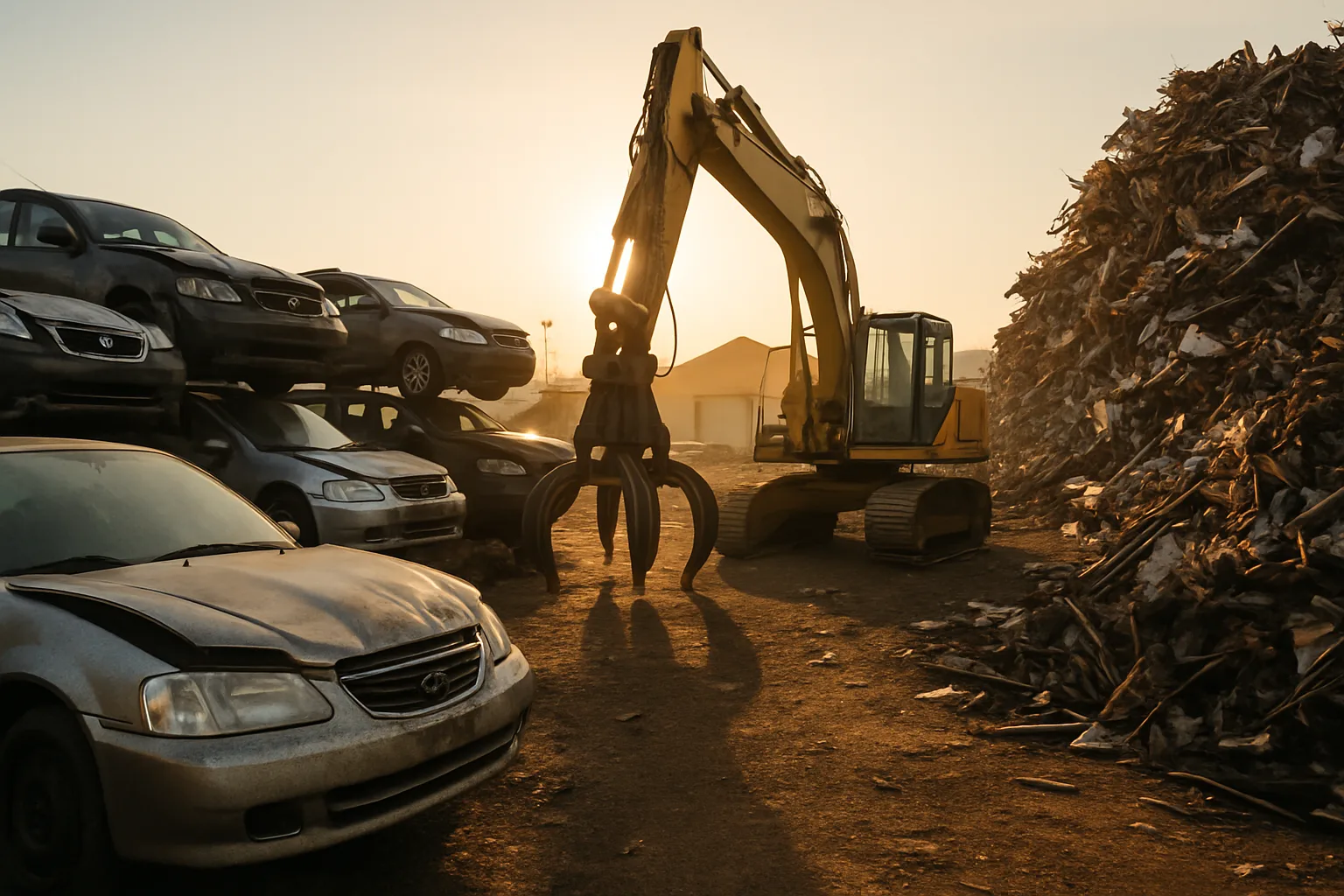
Your car survived a flood or a fire — but barely. Now it sits in your driveway, waterlogged or scorched, and you're wondering if it's worth anything at all. The short answer: yes, it probably is. And if you're in Trois-Rivières or anywhere across Quebec, you have more options than you think.
Flood-damaged and fire-damaged vehicles are among the most misunderstood assets in the used car market. Most owners assume the damage makes the car worthless. Scrap buyers and recyclers know better. Steel is steel. Non-ferrous metals don't care about smoke damage. Catalytic converters survive fires. And platforms like SMASH exist precisely to connect sellers with buyers who understand that value.
This week's market recap digs into what's happening with damaged vehicle sales across Canada in mid-2026 — and what you should know before you make a single phone call.
What Flood and Fire Damage Actually Means for Your Car's Value
Here's the thing most people get wrong: damage type matters less than you think when you're selling for scrap. What actually drives your payout is the vehicle's weight, the metals inside it, and the current scrap market conditions. A flooded 2019 pickup truck with a seized engine is still hauling around 3,500 to 5,000 pounds of steel, aluminum, copper wiring, and a catalytic converter loaded with platinum-group metals.
Fire damage is a different story structurally, but the metal value remains. Aluminum melts at roughly 660°C — most vehicle fires don't reach sustained temperatures that destroy every recoverable component. Copper wiring, catalytic converters, and solid steel components often come through a vehicle fire with significant salvage value intact.
Where damage does affect your price:
- Total loss designation: Once an insurer writes a vehicle off as a total loss, it gets a salvage title. That limits resale but doesn't eliminate scrap value.
- Fluid contamination: Flood-damaged engines and transmissions with deep water intrusion are typically uneconomical to repair. Buyers price accordingly.
- Completeness: A stripped-out burned shell is worth less than a complete vehicle. Catalytic converters, wheels, and usable parts add up fast.
- Age and weight class: Heavier vehicles — trucks, SUVs, minivans — recover more in scrap value than a subcompact sedan with identical damage.
Bottom line: don't let the condition of your dashboard or interior distort your understanding of what your vehicle is worth at the metal level. Get a free car valuation before you assume the worst.
The Weekly Market Picture: Scrap Car Prices in Canada, June 2026
Scrap metal markets in Canada have been range-bound through the first half of 2026. Steel prices have faced headwinds from global overcapacity, but domestic demand from Canadian recyclers and secondary steel producers has kept yard payouts from collapsing. If you're sitting on a damaged vehicle and waiting for prices to spike dramatically before you sell, you may be waiting longer than the math justifies — storage, insurance, and municipal bylaw violations have real costs.
Non-ferrous metals tell a more optimistic story. Copper, aluminum, and the platinum-group metals inside catalytic converters have held firmer through 2026 compared to bulk steel. This matters for damaged vehicle sellers because a complete vehicle with an intact catalytic converter can meaningfully outperform what the steel weight alone would suggest.
Disclaimer: Scrap metal prices fluctuate daily based on global commodity markets, currency exchange, and local buyer demand. Always check current rates before committing to a sale. The figures and trends referenced here reflect general market conditions as of June 2026 and are not guaranteed pricing.
If you want to understand what multiple buyers are actually willing to pay right now, compare scrap metal bids from Canadian buyers instead of accepting the first number you hear over the phone.
Selling a Flood-Damaged Car in Trois-Rivières: What the Process Looks Like
Trois-Rivières sits in one of Quebec's most industrially active corridors. The recycling and scrap infrastructure in the region is robust — but that doesn't mean every buyer offers the same price or the same service. The traditional approach is to call one local yard, take whatever they offer, and move on. That works. It's also almost certainly leaving money on the table.
Here's what a smarter process looks like when you're selling a flood-damaged or fire-damaged vehicle in Trois-Rivières:
- Gather your documentation. You need your vehicle registration and proof of ownership. If your insurer has already processed a total loss claim, get the release documentation. Selling a flood car without clear paperwork is a headache you don't want.
- Know your vehicle's specs. Year, make, model, trim, and approximate weight class. This directly affects your scrap quote. Know whether your catalytic converter is still there — it's a meaningful line item.
- Get more than one offer. This sounds obvious. Most people still don't do it. One phone call to one local buyer is not price discovery — it's a guess. Platforms like SMASH put your vehicle in front of vetted buyers who compete for it, which is a fundamentally different dynamic than a single cold call.
- Confirm towing logistics. Most legitimate scrap car buyers offer free towing for damaged vehicles. Confirm this in writing before you commit. Surprise towing fees are a classic margin grab.
- Get paid before or at pickup. Cash, e-transfer, or certified payment at the time of pickup is standard. If a buyer asks you to wait for payment after they've taken the vehicle, that's a red flag.
The cash for cars Trois-Rivières market is active enough that you should never have to accept a low-ball offer just to get rid of a problem vehicle. Competition exists — use it.
We Buy Junk Cars Trois-Rivières: What Buyers Are Actually Looking For
When a buyer says "we buy junk cars Trois-Rivières," what they mean in practice is that they're buying the metals and usable components inside your vehicle. Understanding what they value helps you negotiate more effectively and spot underpayment when it happens.
What buyers want from a flood or fire-damaged vehicle:
- Catalytic converter: Contains palladium, platinum, and rhodium. High-value item. If yours survived the damage, make sure you're getting credit for it in your quote.
- Steel body and frame: The largest portion of weight in most vehicles. Paid out at bulk steel rates, which fluctuate with commodity markets.
- Aluminum components: Wheels, engine blocks in newer vehicles, hoods and body panels on aluminum-intensive models. Pays better per pound than steel.
- Copper wiring: Often recoverable from flood-damaged vehicles. Fire damage complicates this but doesn't always destroy it.
- Usable parts: Transmissions, suspension components, doors, and glass from a flooded vehicle with no fire damage may have secondary market value beyond scrap weight.
Knowing this puts you in a stronger position. If a buyer quotes you purely on steel weight and ignores the catalytic converter or aluminum content, you're not getting a complete picture. Get cash for your car in Canada through a process that accounts for the full value — not just what's convenient for the buyer to price.
Scrap Metal Recycling Canada: The Bigger Picture Behind Your Damaged Vehicle
Every flood car and fire-damaged vehicle that gets properly recycled feeds back into Canada's domestic scrap metal supply chain. That matters more than most car owners realize. Steel recycling uses significantly less energy than primary steel production. Recovering platinum-group metals from catalytic converters reduces dependence on newly mined supply. When you scrap your damaged vehicle properly, you're participating in a supply chain that has real environmental and economic significance.
Scrap metal recycling in Canada is a mature, competitive industry. Yards in Quebec, Ontario, Alberta, and British Columbia are buying continuously, and the best ones are connected to national and international buyers who push payouts higher. The challenge for individual sellers has always been access — most car owners don't have relationships with multiple buyers, so they default to whoever is closest or easiest to find.
That's exactly the gap that platforms like SMASH were built to close. No subscription fees. No phone tag. You list your vehicle, vetted buyers compete, and you see actual market-driven pricing instead of one buyer's guess at what you'll accept. If you want to read car selling tips that go deeper on this process, there's plenty more on the blog.
Whether you're in Trois-Rivières, Calgary, or anywhere else across Canada, the principle is the same: more buyers means better price discovery. One phone call is not a market.
What to Do Right Now If You Have a Damaged Vehicle Sitting
Don't let a flood car or fire-damaged vehicle age in your driveway. Here's why acting sooner makes more financial sense than waiting:
- Further corrosion after a flood degrades metal value over time. A flooded vehicle left sitting for months will lose recoverable value as rust spreads through the frame and body panels.
- Insurance and registration costs continue to accrue on a vehicle you're not driving.
- Municipal bylaws in Quebec and across Canada increasingly restrict the storage of inoperable vehicles on private property. Trois-Rivières, like most Quebec municipalities, has enforcement mechanisms for this.
- Market timing is imperfect, but waiting for a massive price spike is a risky bet. Moderate, consistent pricing now often beats speculative waiting.
The process doesn't have to be complicated. Get your ownership documents in order, get more than one quote, confirm towing is included, and get paid at pickup. SMASH makes the multi-buyer part of that equation straightforward — and that's the step most sellers skip.
If you have a flood-damaged or fire-damaged vehicle and you're ready to turn it into cash, the best next step is simple. Get a free car valuation, understand what your vehicle is actually worth in the current market, and move forward with confidence. You don't need to guess. The market will tell you — if you ask it properly.
Frequently Asked Questions
Q: Can I sell a flood-damaged car for cash in Trois-Rivières even if it has a salvage title?
Yes. A salvage title limits your ability to sell the vehicle for road use, but it does not prevent you from selling it for scrap or recycling. Scrap buyers and recyclers in Trois-Rivières and across Quebec purchase salvage-titled vehicles regularly. You'll need your ownership documents and any insurer-provided release paperwork to complete the transaction cleanly.
Q: How much is a flood-damaged car worth for scrap in Canada?
The value depends on the vehicle's weight, make, model, the condition of recoverable components like the catalytic converter, and current scrap metal prices. Heavier vehicles — trucks and SUVs — typically return more than sedans. Prices fluctuate with commodity markets, so always get current quotes rather than relying on general estimates. Getting multiple offers is the most reliable way to understand what your specific vehicle is worth right now.
Q: Does cash for cars Trois-Rivières include free towing for damaged vehicles?
Most legitimate buyers and scrap car services in the Trois-Rivières area include free towing as part of the offer. Always confirm this explicitly before you agree to a sale — some operators advertise high prices and recover margin through towing fees. Get the towing terms in writing before pickup day.
Q: How long does it take to sell a junk car in Trois-Rivières?
With the right documentation ready, the process from first contact to pickup can move quickly — often within a few business days. The main delays are usually paperwork-related, particularly if you're waiting on insurance documentation for a total loss vehicle. Having your registration and proof of ownership ready from the start keeps things moving.
Q: Is there still value in a car that was completely destroyed by fire?
Yes, in most cases. Even a severely fire-damaged vehicle retains steel weight value and may have recoverable non-ferrous metals depending on what survived. The catalytic converter is the highest-priority item to check — if it's intact or partially intact, it adds meaningful value above the bulk steel price. A proper quote from a vetted scrap buyer will reflect the full recoverable value, not just the worst-case assumption.
Ready to stop staring at that damaged vehicle and start getting paid for it? Get cash for your car in Canada with a free quote at cash-forcars.ca — no pressure, no runaround, just real numbers based on what your vehicle is actually worth today.
Stay current on scrap metal market conditions and industry updates by following SMASH on LinkedIn — practical insights for sellers and buyers across North America, posted regularly.
```