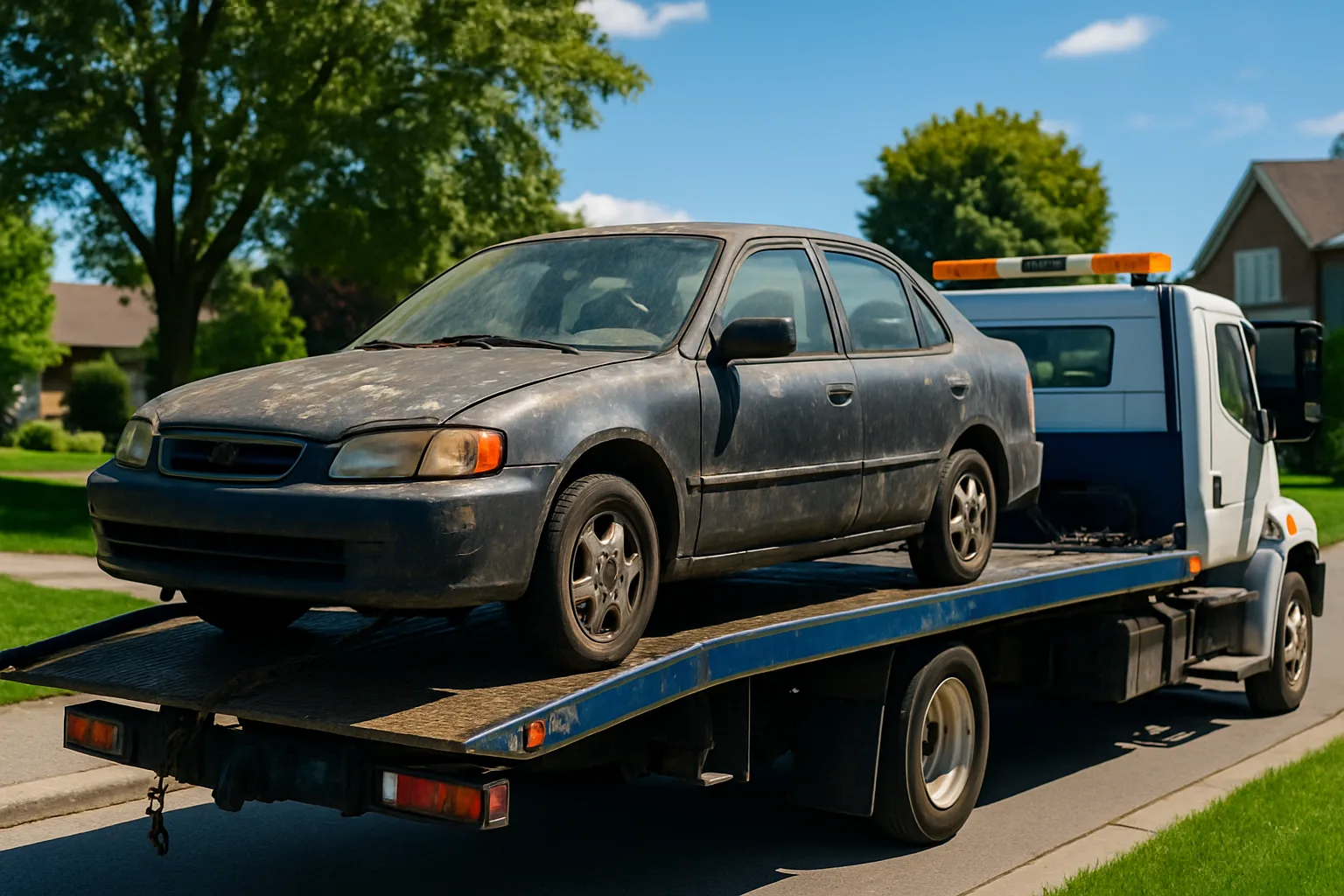
Flood-Damaged or Fire-Damaged Car? Here's What It's Actually Worth (And How to Get Rid of It Fast)
A flood or fire doesn't just destroy a car — it kills its resale value overnight. If you're sitting on a water-logged or smoke-damaged vehicle and wondering what your options are, you're not alone. Thousands of Canadian car owners face this every year, especially after severe weather events that have become more common across Ontario. The good news: a damaged car still has value. You just need to know where to look — and who to call.
Whether your vehicle drowned in a basement flood, took heat damage in a garage fire, or got caught in a wildfire evacuation zone, this guide breaks down exactly what your options are. We'll cover what buyers actually pay for, what documentation you need, and why free scrap car pickup Oshawa services exist specifically for situations like yours.
Flood-Damaged vs. Fire-Damaged: What's the Difference When Selling for Scrap?
Not all damage is equal in the eyes of a scrap buyer or recycler. Understanding the difference helps you set realistic expectations before you make a single phone call.
Flood-damaged vehicles typically suffer from:
- Electrical system corrosion and failure
- Mold and mildew inside the cabin and trunk
- Rust accelerating in the frame and underbody
- Engine hydro-locking if water entered the intake
- Contaminated transmission and differential fluids
Flood cars can sometimes be repaired — but the costs usually exceed the vehicle's post-repair value. Most insurers write them off quickly. The metal itself is largely intact, which means scrap buyers and recyclers still want the ferrous and non-ferrous metals inside.
Fire-damaged vehicles are a different story:
- High heat warps frames and structural components
- Aluminum, copper wiring, and non-ferrous metals may be partially recovered depending on burn intensity
- Tires, plastics, and rubber are destroyed
- The catalytic converter (the cat) may be partially salvageable or completely gone
- Battery and hybrid packs present hazardous material concerns
Fire-damaged vehicles generally fetch less at scrap than flood cars because more of the recoverable material is destroyed. But "less" doesn't mean nothing. Steel is still steel. A burned-out sedan still weighs over a ton. At current scrap metal prices, that weight adds up — and a legitimate junk car buyer will pay you for it rather than leave it rotting in your driveway.
Can You Sell a Flood or Fire Car With No Title?
This is the question we hear constantly. The short answer: it depends on your province and the buyer you're working with. In Ontario, a salvage title is issued when an insurer writes off a vehicle. If your car was totalled in a flood or fire and the insurer took ownership, you may no longer hold the title at all — the insurance company does.
Here's what typically happens:
- Your insurer declares the vehicle a total loss and issues a payout.
- The insurer takes ownership and issues a salvage certificate.
- You either buy back the salvage or walk away.
- If you walk away, the insurer sells the car at auction or to a wrecker.
If you kept the vehicle after the payout — or if the damage wasn't insured — you may be the registered owner without a clean title. Many scrap buyers, including services offering junk car removal Oshawa, will work with salvage certificates and bill of sale documentation. Some secondary keywords like sell car for scrap no title reflect a real search pattern — people in this situation outnumber you'd think. Always confirm with your buyer what paperwork they need before booking a pickup.
One practical tip: contact ServiceOntario or your provincial equivalent to confirm your ownership status before calling a buyer. It speeds up the process significantly and avoids surprises on pickup day.
5 Options for Selling a Flood or Fire-Damaged Vehicle (Ranked Worst to Best)
Not all selling options are created equal. Here's an honest breakdown of what's available to you — and what each option actually delivers.
1. Post It Privately on a Classifieds Site
This works occasionally for flood cars that are cosmetically repairable. For anything with structural damage or fire involvement, expect almost zero serious interest. Buyers are spooked by liability, and you're legally required to disclose the damage. Slow, frustrating, and often fruitless.
2. Sell to a Used Parts Dealer
If specific components survived — a clean engine block, intact transmission, undamaged body panels — a parts dealer might cherry-pick what they want. But they won't take the whole car off your hands. You're left with a stripped carcass and a new problem.
3. Donate It
Some charities accept damaged vehicles and sell them at auction. You may receive a tax receipt. But the vehicle still needs to be drivable or towable, and not every charity accepts severe flood or fire damage. Check terms carefully before committing.
4. Call a Local Wrecker or Scrap Yard Directly
Better. A licensed wrecker will tow and pay you based on weight and metal value. The downside: you're dealing with one buyer, one price, no competition. You take what you're offered or walk. This is the old way — and it works, but you're leaving money on the table if you stop here.
5. Use a Platform That Brings Buyers to You
This is where things change. Platforms like smashrecycling.ca connect sellers with vetted buyers across North America. Instead of calling one yard and accepting their number, your vehicle — even a flood or fire write-off — gets in front of multiple buyers who compete for it. More buyers means better price discovery. That's the SMASH model, and it's built for exactly this kind of inventory: damaged, distressed, or hard-to-move vehicles that deserve more than a single lowball offer.
If you're in Oshawa or anywhere across Ontario, combining a local free scrap car pickup Oshawa service with a platform that drives buyer competition is your strongest play.
What Documentation Do You Actually Need?
Getting this right before you call saves you hours. Here's what most legitimate buyers and recyclers in Ontario will ask for:
- Vehicle registration: Confirms you're the registered owner.
- Salvage certificate or total loss declaration: If your insurer wrote it off, this document replaces a clean title.
- Government-issued ID: Required for any cash transaction above a certain threshold.
- Bill of sale: Some buyers require a signed bill of sale even for scrap transactions — this protects both parties.
- VIN documentation: Serial tracking is standard in scrap metal recycling Canada operations. Platforms like SMASH use VIN lookup to verify vehicle history and help buyers bid with confidence.
Missing paperwork delays payment and can kill deals. If your title or registration was destroyed in the fire or flood, contact your provincial motor vehicle registry immediately. In Ontario, a replacement permit is typically available within a few business days.
For flood-damaged vehicles specifically, photograph all visible water damage before anything is moved or cleaned. Documented condition — including photos showing waterline marks, corrosion, or engine bay damage — gives buyers more confidence and can actually improve your offer. SMASH's photo documentation process is built around exactly this principle.
How SMASH Changes the Game for Damaged Vehicle Sellers
Here's the honest problem with selling a damaged car the traditional way: you're negotiating blind. One buyer, one price, take it or leave it. You have no idea if the offer is fair because you have nothing to compare it to.
SMASH runs a vetted-buyer auction model. Your vehicle — documented with photos, VIN, and condition notes — goes in front of multiple buyers who compete. That competition is what drives price discovery. It doesn't guarantee you'll love the number, but it does guarantee you're not leaving cash on the table because you only talked to one yard.
For sellers in the Oshawa area, this matters. Ontario has an active scrap and recycling market, but individual yards still operate with information asymmetry. They know what they can flip your car for. You often don't. Platforms like SMASH close that gap.
SMASH also handles auto-invoicing, BOLs, and documentation — meaning the paperwork side of a damaged vehicle sale doesn't become your problem. You get cash for your car in Canada without chasing down invoice templates at 11pm.
Want to understand your options before committing? Get a free car valuation and see what your damaged vehicle is actually worth in today's market. And if you're new to this process, read car selling tips to understand what to expect at every step.
The old way of selling scrap — one call, one price, cross your fingers — is broken. A flood or fire already hit your wallet hard. Don't let a single low offer make it worse. If you're ready to move your vehicle, Oshawa scrap metal services are available now, and getting a quote costs you nothing.
When you're ready, get cash for your car in Canada — a free quote takes minutes and you'll know exactly where you stand before anyone shows up with a tow truck.
Frequently Asked Questions
Q: Can I get free scrap car pickup in Oshawa for a flood-damaged vehicle?
Yes. Most licensed scrap buyers and junk car removal services in Oshawa offer free towing as part of the deal — the pickup cost comes out of the buyer's margin, not your pocket. Confirm this upfront when you request a quote, and make sure the pickup is included in the price you're offered, not billed separately afterward.
Q: How much is a flood-damaged car worth for scrap in Ontario?
Value depends on the vehicle's weight, year, make, and the current scrap metal market. A full-size sedan or SUV can yield a meaningful return even in damaged condition — steel prices fluctuate, so check current rates before accepting any offer. Getting quotes from multiple buyers through a platform like SMASH gives you a realistic benchmark. Disclaimer: scrap metal prices change frequently. Always verify current rates before finalizing a sale.
Q: What if my title was destroyed in a fire or flood?
You can apply for a replacement registration or ownership document through ServiceOntario. Many scrap buyers in Oshawa will work with a salvage certificate or bill of sale in the interim — but confirm this before booking a pickup. Having your VIN available helps speed up the replacement process.
Q: Do I need to drain fluids before a scrap car pickup in Oshawa?
No. Licensed scrap yards and recyclers are equipped to handle fluid removal as part of their depollution process — this is actually a regulated requirement under Ontario environmental rules. Do not attempt to drain fuel, coolant, or transmission fluid yourself unless you're a licensed facility. The buyer handles it.
Q: Can I sell a fire-damaged car with no title in Ontario?
Potentially, yes — but it depends on your specific paperwork situation. If your insurer declared the vehicle a total loss, you may have a salvage certificate instead of a clean title, which most legitimate scrap buyers will accept. If you have no documentation at all, start by contacting ServiceOntario to verify ownership status. Never sell a vehicle you cannot prove ownership of.
Stay ahead of the scrap metal market — follow SMASH on LinkedIn for industry updates, metal price trends, and insights for buyers and sellers across North America.