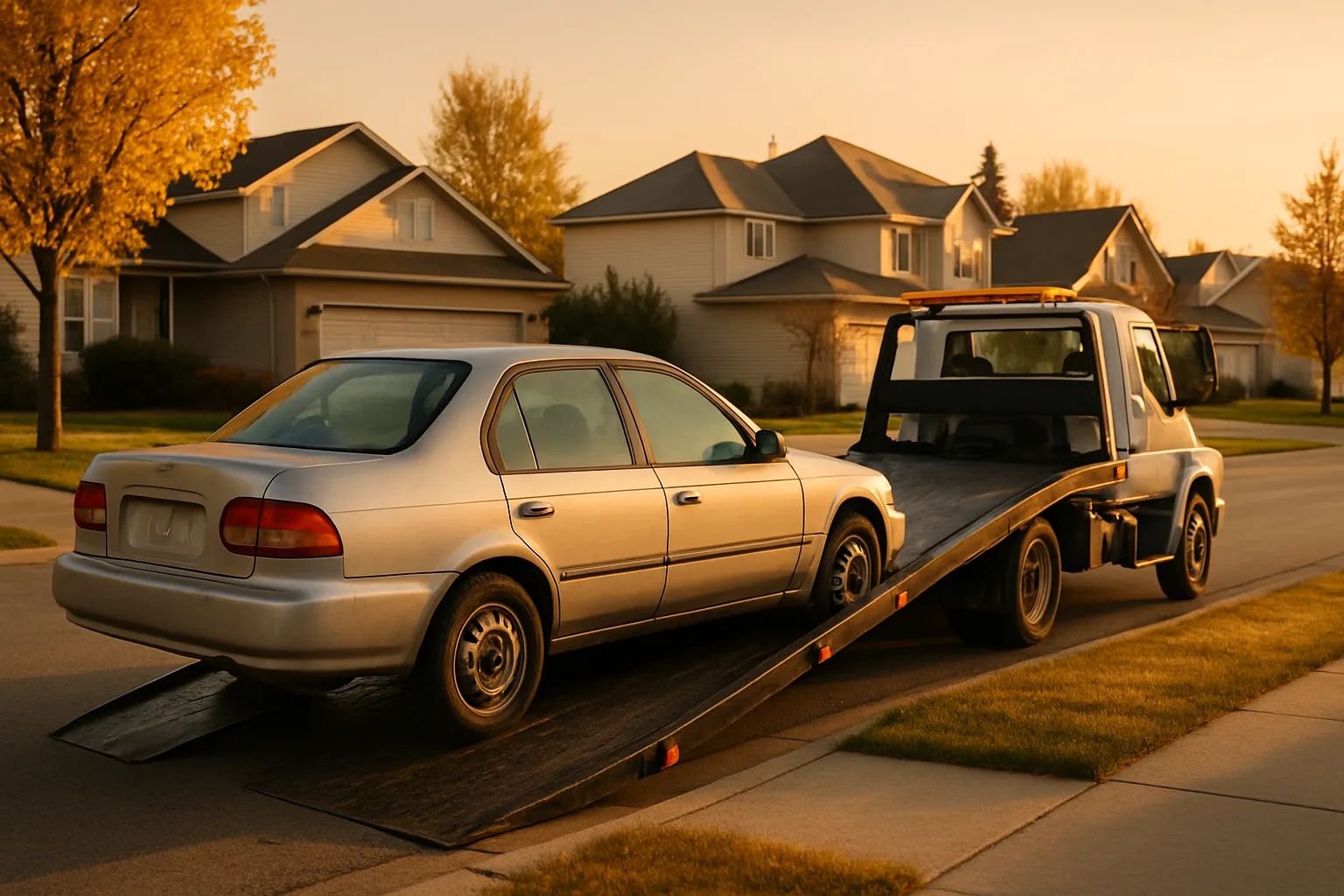
Not All Scrap Cars Are Worth the Same — Here's Why
You've got an old car sitting in the driveway. Maybe it doesn't run. Maybe it's rusted through. You figure scrap is scrap — hand it over, get a cheque, move on. But here's the thing: two identical-looking beaters sitting side by side can fetch completely different prices. If you're trying to sell my car for cash Edmonton, understanding what drives that number is worth your time before you accept the first offer you get.
Scrap car pricing isn't random. It's driven by metal content, parts demand, weight, condition, and market forces that shift week to week. This guide breaks down exactly what makes one car worth more than another — and how to make sure you're not leaving money on the table.
Why Make and Model Matter More Than You Think
Vehicle make and model affect scrap value in two distinct ways: raw metal composition and parts demand. A full-size pickup truck from a domestic brand will almost always outweigh a compact import — and in the scrap world, weight is money. More steel, more aluminum, more copper wiring means more value at the yard.
But weight isn't the whole story. Certain makes and models hold strong parts demand even when they're beaten up beyond reasonable repair. A high-mileage Honda Civic or a Ford F-150 with a blown transmission still carries valuable components — alternators, starters, doors, engines, even body panels — that parts buyers and dismantlers actively want.
Here's a rough breakdown of how make and model influence scrap value:
- Full-size trucks and SUVs: Highest scrap value by weight. More steel, larger catalytic converters with higher precious metal content, and strong parts demand.
- Mid-size sedans (domestic): Solid steel content, decent parts market, middle-of-the-road pricing.
- Compact imports: Lower weight means lower base metal value, but high-volume models can offset this with parts demand.
- Luxury vehicles: More aluminum, exotic alloys, and high-demand electronic components can push values up — but only if the parts market is active for that model.
- Diesel-powered vehicles: Often carry more valuable fuel system components and larger, more precious-metal-rich catalytic converters.
Bottom line: before you get cash for your car in Canada, know what's under your hood and what it's actually worth to someone dismantling it for parts or recycling it for metal.
How Vehicle Condition Swings the Number — Sometimes Dramatically
Condition is where most sellers get surprised. They expect the yard to pay the same for a car with a seized engine as one that's still running but just unwanted. That's not how it works. Condition affects value in layers, and each layer either adds or subtracts from your final number.
Consider the difference between these three scenarios:
- Running and driving (just unwanted): Highest value. The car still has a functioning drivetrain, which opens up the parts and used vehicle markets. You're not limited to scrap pricing alone.
- Non-running but complete: Moderate value. The car can still be stripped for usable parts before the remainder goes to the shredder. Fluids, catalytic converter, battery, alternator, and more are still intact and sellable.
- Stripped, fire-damaged, or crushed: Lowest value. You're down to raw metal weight. The salvageable components are gone, so the price is almost entirely tied to current steel and aluminum commodity rates.
Beyond driveability, other condition factors hit the price hard:
- Catalytic converter present or missing: This single component can represent a significant portion of your scrap car's value. If someone's already pulled it, expect a noticeably lower offer.
- Body integrity: Severe rust that's eaten through structural steel reduces the usable metal content and makes the car harder to process.
- Complete vs. stripped interior: Airbags, infotainment systems, and seats all have resale value. A stripped interior means those are gone.
- Engine and transmission status: Running or rebuildable powertrains are worth far more than seized or hydrolocked ones.
If you want a realistic starting point before talking to a buyer, using a scrap car value calculator Canada free tool can give you a ballpark. Just remember it's a starting point, not a final offer.
The Role of Steel and Commodity Prices — What the Market Does to Your Car's Value
Even if your car is in perfect condition for scrap, the market has its say. Steel, aluminum, copper, and platinum-group metals (found in catalytic converters) all trade on commodity markets that move daily. When steel prices drop, so does what the yard will pay you. When platinum spikes, that catalytic converter under your car gets a lot more interesting to buyers.
This is why the same car can be worth noticeably different amounts in different months. It's not the buyer playing games — it's the underlying market moving. For Edmonton and the broader Alberta market, proximity to major recycling infrastructure and active industrial demand means pricing can be relatively competitive, but it's still tied to North American commodity swings.
Platforms like the SMASH Recycling auction platform help solve this problem by creating competition among vetted buyers. Instead of accepting whatever one yard tells you the market is doing, you get multiple buyers responding to the same listing. That competitive pressure is what moves prices toward actual market value — not the floor that a single buyer would prefer you accept.
Disclaimer: Scrap metal and vehicle prices fluctuate based on commodity markets, regional demand, and individual vehicle condition. Always check current rates before finalizing a sale.
How Geography Affects What You Get Paid in Edmonton and Alberta
Where you are matters. Sellers in dense urban areas typically have more buyers competing for their vehicles, which creates better price discovery. Edmonton sellers benefit from being in one of Alberta's largest cities — there's meaningful recycling and dismantling activity here, and that competition can work in your favour.
But geography cuts both ways. If your vehicle is in a rural area outside Edmonton, towing costs factor into the equation. Some buyers offer free towing; others deduct it from the offer. Always confirm whether your quote is all-in before agreeing to anything. A high quote that comes with a steep towing charge can end up netting you less than a slightly lower all-inclusive offer.
Regional buyers also have different appetites for certain vehicles. In Alberta, trucks, SUVs, and work vehicles are in strong supply — which can mean the parts market for those is more competitive. For Edmonton scrap metal services, local buyers understand the regional vehicle mix and can typically price accordingly.
If you're comparing this market to the U.S. — say, if you've seen prices quoted in articles targeting sellers trying to sell my junk car Houston — keep in mind that cross-border pricing doesn't translate directly. Exchange rates, provincial regulations, and regional commodity demand all affect what Canadian sellers receive. Use Canadian benchmarks for Canadian vehicles.
What Gives Certain Cars Dramatically Higher Scrap Value
Some vehicles consistently outperform expectations at scrap. It's not luck — it's specific characteristics that make them more valuable to dismantlers, recyclers, and metal buyers. Here's what drives top-tier scrap valuations:
- High platinum-group metal content in the catalytic converter: Vehicles with larger or more complex exhaust systems — particularly trucks, SUVs, and certain hybrids — often carry converters with meaningful amounts of platinum, palladium, or rhodium.
- Aluminum-intensive construction: Aluminum trades at a significant premium over steel by weight. Vehicles with aluminum hoods, frames, engine blocks, or wheels add up fast.
- Strong OEM parts demand: If a model has a large number of vehicles still on the road, there's active demand for used parts. That demand gets priced into what a dismantler will pay you upfront.
- Complete and unmolested condition: A car that hasn't been picked over before it hits the yard is worth more. Every missing part is money someone else already took.
- Clear title: Buyers pay more when the paperwork is clean. A vehicle with liens or title issues creates legal risk that gets priced into the offer — usually as a discount to you.
SMASH connects sellers with a network of vetted buyers who understand exactly what these factors are worth. Rather than guessing what your car should bring, you let the market respond. That's the difference between price discovery and price guessing. If you want to get a free car valuation before you decide anything, start there — then let buyers compete for your vehicle.
How to Maximize What You Get When You Sell My Junk Car in Edmonton
Knowing what affects price is only useful if you act on it. Here's a practical checklist to get the most out of your scrap car sale:
- Don't strip the car yourself unless you know exactly what you're doing. Pulling parts incorrectly can reduce their resale value. Buyers often pay more for a complete vehicle.
- Get the title ready. In Alberta, you'll need the vehicle registration and ownership paperwork. A clean title is a stronger negotiating position.
- Document the vehicle honestly. Photos of all four sides, the engine bay, the interior, and any damage points. Transparent documentation builds buyer confidence and reduces lowball offers.
- Get multiple quotes. Never accept the first number. Use competitive platforms and get at least two or three offers before committing.
- Confirm towing terms upfront. Free pickup is standard in many markets — but verify it's included before you agree.
- Check current commodity rates. If steel or platinum prices have moved significantly, that's the moment to sell — or wait.
- Use a platform that creates competition. A B2B scrap metal marketplace like SMASH puts your vehicle in front of multiple vetted buyers simultaneously, which is how you find out what your car is actually worth in today's market.
If you're ready to stop guessing and start getting real offers, read car selling tips from people who work in this market daily. Then put your vehicle in front of buyers who actually compete for it.
You worked hard for that vehicle — even if it's no longer running. Get what it's actually worth. Get cash for your car in Canada — get a free quote at cash-forcars.ca and let the market tell you what your car is worth today.
Frequently Asked Questions
Q: Why does the same car get different quotes from different buyers in Edmonton?
Every buyer has different needs. A dismantler values parts inventory differently than a shredder focused on metal weight. Some buyers are stocked up on certain models and bid lower; others actively need your vehicle and bid higher. Getting multiple quotes is the only way to find out who values your car most right now.
Q: Does my car's mileage affect the scrap price?
For pure scrap purposes, mileage matters less than condition and completeness. A high-mileage car with a functioning engine is still more valuable than a low-mileage car with a seized one. However, high mileage can reduce parts demand if buyers expect components to be worn out — especially for powertrain parts.
Q: Can I sell my junk car in Edmonton without a title?
It's more complicated without a title. In Alberta, buyers typically require proof of ownership. Without it, you're limited in who will purchase your vehicle, and offers may be lower to account for the added legal risk the buyer is taking on. Sort the paperwork first if at all possible.
Q: How long does it take to get paid for a scrap car in Edmonton?
Most reputable buyers complete pickup and payment on the same day or within 24-48 hours of accepting an offer. Confirm payment method upfront — cash or e-transfer is standard in Alberta. Never hand over your keys before payment clears.
Q: Is there a free scrap car value calculator for Canada?
Yes, several online tools offer a rough estimate based on make, model, year, and condition — a scrap car value calculator Canada free search will surface options. Treat these as a starting point only. Actual offers depend on current commodity prices, local buyer demand, and your specific vehicle's condition. Getting real quotes from buyers is always more accurate than an online estimate.
Stay current on scrap metal markets and car selling trends — follow SMASH on LinkedIn at linkedin.com/company/scrap-metal-auction-sales-hub for industry updates and market insights.