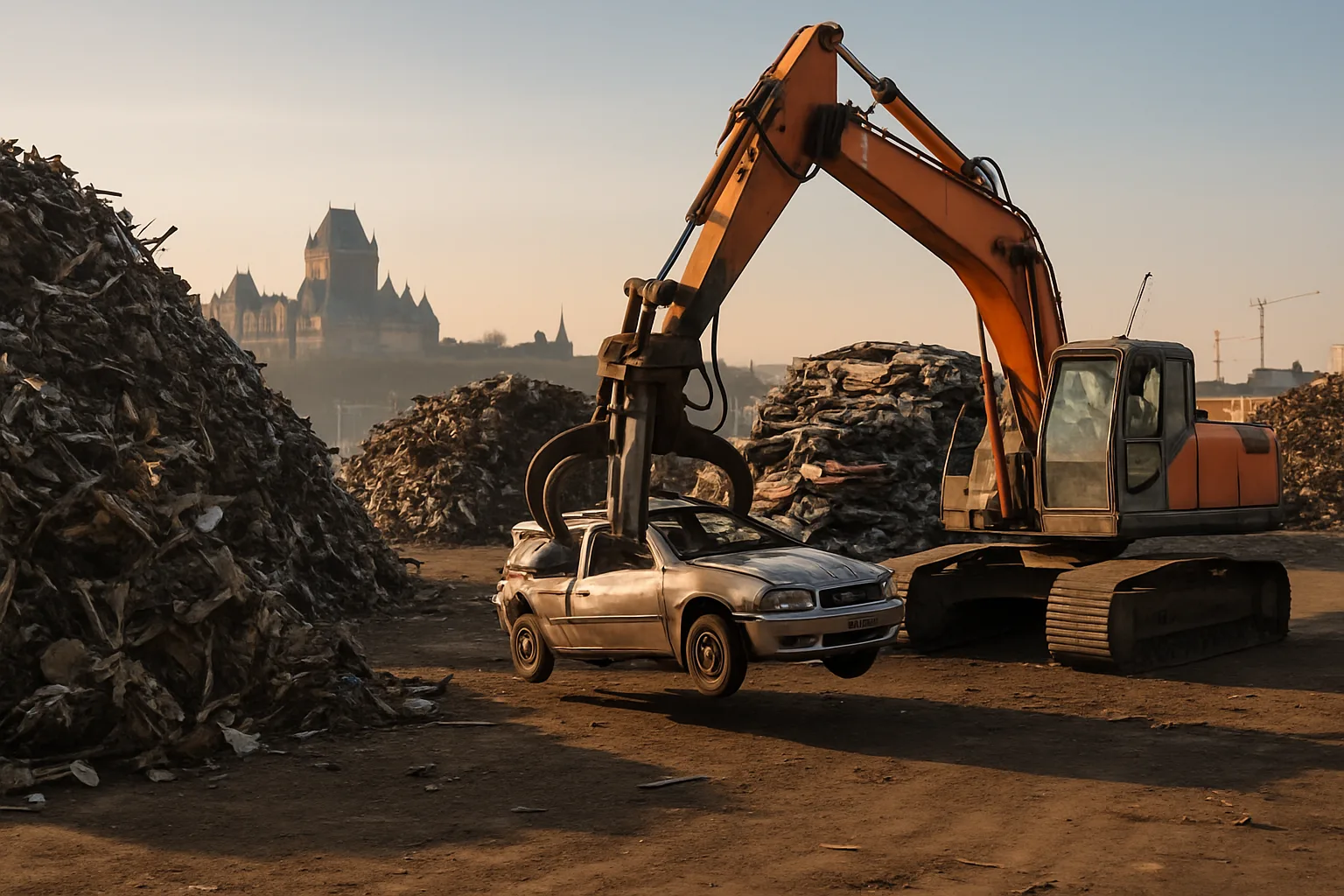
Why Eco-Friendly Car Disposal Matters More Than Ever in 2026
An average scrapped vehicle contains over 25 recyclable materials — and most of them never make it back into the supply chain. That's not just wasteful. In Quebec City and across Canada, improper car disposal is a genuine environmental liability. Fluids leak. Metals rust into soil. Plastics sit in landfills for centuries.
The good news? Recycling your unwanted vehicle the right way doesn't have to be complicated — and it can put real cash in your pocket. Whether you're sitting on a rusted-out sedan in Sainte-Foy or a flood-damaged pickup in Limoilou, free scrap car pickup Quebec City services make eco-responsible disposal accessible to anyone. This guide breaks down what actually happens to your car when it gets recycled, compares your disposal options, and shows you how to get the most value from a vehicle you no longer need.
What Eco-Friendly Car Disposal Actually Looks Like (Step by Step)
Most people picture a crusher and a compactor. The reality is far more detailed — and far more responsible — when you use a certified recycler. Here's the actual process a scrapped vehicle goes through at a legitimate facility:
- Fluid Extraction: Engine oil, transmission fluid, brake fluid, coolant, power steering fluid, and refrigerants are drained and either recycled or disposed of according to provincial environmental regulations. In Quebec, this step is non-negotiable. Letting these fluids seep into the ground is an environmental offence.
- Battery Removal: The 12-volt lead-acid battery is pulled and sent to a battery recycler. A standard car battery contains lead and sulfuric acid — both hazardous if improperly discarded.
- Catalytic Converter Removal: Cats contain platinum, palladium, and rhodium. They're valuable and always removed before shredding.
- Tire and Wheel Separation: Tires go to rubber recyclers. Wheels — steel or alloy — are separated and processed individually.
- Parts Harvesting: Usable components (alternators, starters, doors, glass, seats) get pulled for resale or reuse. This extends the life of good parts and reduces manufacturing demand.
- Airbag Deployment: Unexploded airbags are carefully neutralized. They contain chemicals that can't go into a shredder safely.
- Shredding and Metal Separation: What's left — the steel body, frame, and non-ferrous components — gets shredded. Magnetic separators and eddy current systems sort ferrous from non-ferrous metals. The metal is baled and sold as scrap.
- Fluff Processing: The non-metal residue (plastics, foam, glass fragments) is called automotive shredder residue (ASR). Responsible facilities manage this separately rather than dumping it.
When you hand your car to a certified facility — rather than abandoning it or selling it to an unlicensed operation — you're ensuring all eight of these steps actually happen. In Quebec City, licensed auto recyclers follow both federal and provincial environmental standards. That matters.
Comparing Your Junk Car Disposal Options in Quebec City
Not all disposal paths are equal. Some pay more. Some are faster. Some are greener. Here's a straight comparison of the main options available for junk car removal Quebec City owners actually use:
Option 1: Private Sale
You list it, you field calls, you negotiate, you handle paperwork. For a running vehicle with clean title, this can yield the highest return. For a non-running, damaged, or high-mileage car? Buyers are few and lowball offers are common. It also does nothing to guarantee eco-responsible disposal — whoever buys it may not recycle it properly.
Option 2: Trade-In at a Dealership
Convenient, yes. But dealers heavily discount trade-in values on older or damaged vehicles. A car with significant rust or mechanical issues may get offered a few hundred dollars — or rejected outright. And you lose control of what happens to the vehicle afterward.
Option 3: Abandon or Donate to a Questionable Buyer
This one needs to be said plainly: abandoning a vehicle — even on your own property — creates environmental and legal risk in Quebec. Unlicensed "free towing" operations that don't pay you anything aren't doing you a favour. They're stripping your car for parts and pocketing all the value.
Option 4: Certified Scrap Car Pickup Service
This is the smart move for most owners. A licensed buyer handles pickup (often free), offers transparent pricing based on actual scrap metal values, and ensures proper recycling. You get paid. The car gets handled legally. The environment doesn't take a hit. For Quebec City scrap metal services, this is the standard most reputable operators work to.
Option 5: Auction Through a Vetted Platform
Platforms like SMASH connect sellers with multiple vetted buyers competing for loads. More competition typically means better price discovery. If your vehicle has non-ferrous components, good steel yield, or recoverable parts, an auction format can surface buyers willing to pay more than a single cold call ever would. Compare scrap metal bids from Canadian buyers and see what competition actually does for your return.
How Scrap Metal Recycling Canada Actually Values Your Vehicle
Here's what determines what your scrapped car is actually worth when it reaches a scrap metal recycling Canada facility:
- Vehicle weight: Steel scrap is priced per ton. A heavier vehicle yields more raw metal. A full-size truck or SUV will almost always return more than a compact sedan.
- Steel market prices: Ferrous scrap prices fluctuate with global demand — particularly from steel mills in Asia and North America. Prices in June 2026 reflect current market conditions; they won't be the same in three months. Always check current rates before committing.
- Non-ferrous content: Aluminum, copper, and brass components add value. An older vehicle with more metal construction (less plastic) often recycles better than a newer lightweight model.
- Catalytic converter grade: The cat alone can be worth a meaningful portion of a vehicle's total scrap value, depending on the vehicle make and model.
- Condition and completeness: A vehicle that arrives intact — with its engine, transmission, and catalytic converter — is worth more than one that's been stripped.
- Location: Transport costs affect net payout. A car in a dense urban area like Quebec City costs less to move than one on a rural property 90 minutes out.
Disclaimer: Metal prices fluctuate based on market conditions. The factors above affect relative value, but actual payout depends on current rates at the time of sale. Always get a quote that reflects today's market.
If you want to understand how much is my salvage car worth in real terms, get multiple quotes. One buyer's offer is just one data point. Platforms like SMASH are built around exactly that principle — more buyers, better data, fairer outcomes. You can get a free car valuation and compare it against what the scrap market is offering right now.
The Environmental Case for Getting Paid to Recycle Your Car
Let's be direct about the environmental math. A vehicle left sitting on a property doesn't just look bad — it actively degrades. Rubber seals crack. Fluids leach out slowly. Battery acid corrodes. In Quebec's climate, with freeze-thaw cycles hitting hard every winter, that degradation accelerates. A vehicle that's worth something today is worth less — and more environmentally risky — every season you wait.
Steel recycling uses roughly 75% less energy than producing steel from raw ore. Recycling aluminum saves close to 95% of the energy required for primary production. When your old car gets processed correctly, those numbers apply to every kilogram of recoverable metal in it. That's a real environmental contribution — not a marketing claim.
Proper junk car removal Quebec City services align financial incentive with environmental responsibility. You get paid. The materials re-enter the supply chain. The hazardous components get handled safely. That's the outcome a responsible disposal process is supposed to deliver.
If you want to go further and read car selling tips before you commit to a buyer, do it. Understanding the process makes you a smarter seller and helps you avoid the operators who cut corners on both payment and environmental compliance.
Why Quebec City Sellers Should Use a Competitive Bidding Process
Quebec City's scrap market has multiple active buyers — recyclers, dismantlers, metal processors, and exporters. That's leverage you're leaving on the table if you call one yard and accept their first number.
The old way: one phone call, one offer, take it or leave it. No way to know if it's fair. No transparency on how they calculated it.
The SMASH way: your vehicle's details go in front of multiple vetted buyers. They bid. You see competition happen in real time. Better price discovery isn't a guarantee — but it's a structural advantage the old way doesn't offer at all. Get cash for your car in Canada through a process that actually works in your favour, not just the buyer's.
For sellers in Quebec City and across the province of Quebec, working with platforms that document inventory, track serial numbers, and handle invoicing automatically means fewer disputes, faster payment, and a paper trail that satisfies provincial compliance requirements. That's not just convenient. It's the difference between a clean transaction and a headache.
Frequently Asked Questions
Q: Is free scrap car pickup actually free in Quebec City?
Yes — most licensed scrap car buyers in Quebec City offer free towing as part of their service. The cost of pickup is factored into their pricing model. You should never have to pay out of pocket for a licensed buyer to collect your vehicle. If someone is charging you for pickup on a vehicle with scrap value, get another quote.
Q: How do I know if my junk car removal service in Quebec City is environmentally certified?
Ask the buyer directly whether they operate under Quebec's environmental regulations for end-of-life vehicle processing. Legitimate operators will be transparent about their facility, licensing, and fluid disposal process. If they can't answer basic questions about how they handle hazardous materials, that's a red flag.
Q: How much is my salvage car worth in Quebec in 2026?
It depends on the vehicle's weight, metal content, condition, completeness, and current scrap metal market prices. There's no universal number — prices fluctuate regularly. Getting multiple quotes from vetted buyers is the most reliable way to understand what your specific vehicle is worth right now. Platforms like SMASH are built for exactly this kind of price discovery.
Q: What documents do I need to scrap my car in Quebec City?
You'll typically need the vehicle's registration and proof of ownership. If the title is missing, some buyers will work with you on alternatives, but it varies. Contact your buyer in advance to confirm their specific documentation requirements before scheduling pickup.
Q: Can I scrap a car that doesn't run in Quebec City?
Absolutely. Non-running vehicles are among the most common scrap car pickups. A vehicle doesn't need to start, drive, or pass any inspection to have scrap value. Its weight and metal content still matter regardless of mechanical condition. Free pickup services in Quebec City routinely handle non-runners.
If your car is sitting unused, degrading, and costing you space — it's time to turn it into cash the right way. Eco-responsible disposal, certified recycling, and fair market pricing are all available to you right now. Get cash for your car in Canada and get a free quote at cash-forcars.ca — and find out what your vehicle is actually worth before you commit to anything.
Stay current on scrap metal market conditions and industry updates by following SMASH on LinkedIn. If you're selling loads regularly, it's the feed worth having.