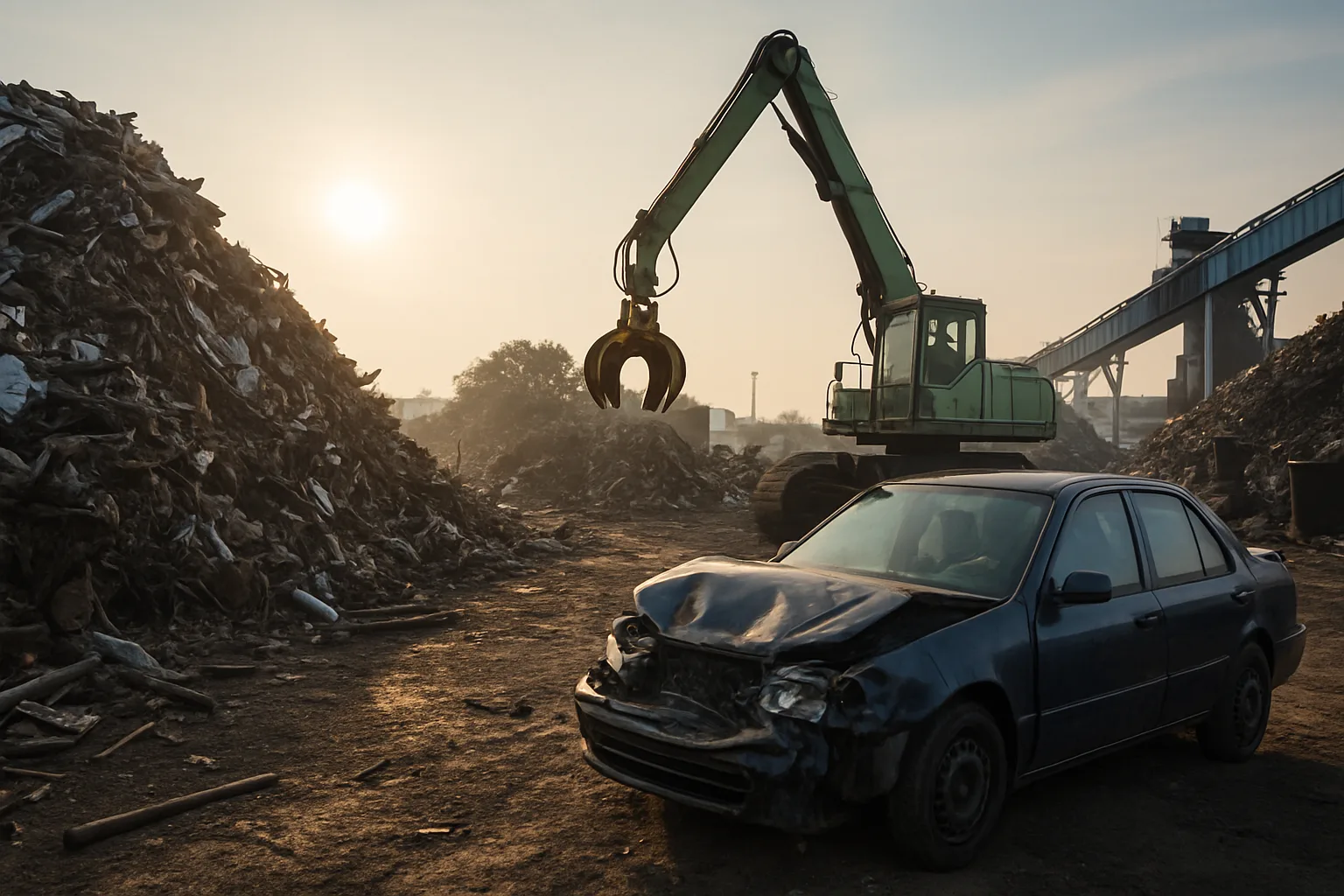
Your Flood or Fire-Damaged Car Still Has Value — Here's How to Get Paid for It
Most people assume a flood-damaged or fire-damaged vehicle is worthless. That assumption costs them money. Even a car that's been submerged in a Fraser River overflow or scorched in a garage fire holds real scrap value — and in 2026, there are more ways than ever to turn that damaged vehicle into cash without dealing with the runaround.
If you're searching for we buy junk cars Richmond, you're likely already past the point of hoping the car is fixable. Good. That's the right starting point. Let's talk about what your damaged vehicle is actually worth and how to get it out of your driveway for real money.
What Counts as a "Total Loss" in British Columbia — and Why It Matters When You Sell
In British Columbia, ICBC designates vehicles as a Salvage title once repair costs exceed a certain percentage of the vehicle's actual cash value — or when the car is deemed unsafe to rebuild. Flood damage and fire damage are two of the most common triggers for this designation. If your vehicle has been written off by ICBC, it gets branded with a salvage title, and that changes how you can sell it.
You cannot legally sell a salvage-branded vehicle as roadworthy without going through a formal inspection and rebuilder process. But here's the thing: you don't have to do any of that. You can sell it as-is — as a scrap or parts vehicle — and skip the inspection process entirely. That's exactly what scrap car buyers and salvage buyers are there for.
Understanding your title status before you sell matters because:
- It affects whether a buyer needs to register the vehicle or just scrap it
- It determines what documentation you need to transfer ownership
- It can influence how quickly a buyer makes an offer
Check your ICBC paperwork or your vehicle's registration status before you call anyone. It saves time and sets realistic expectations on both sides.
Flood Damage vs. Fire Damage — What Buyers Actually Look At
Not all damage is created equal. Buyers who specialize in scrap car removal Richmond evaluate flood and fire vehicles differently, and knowing this helps you understand why offers vary so much.
Flood-damaged vehicles often have functioning mechanical components despite the water intrusion. The engine block, transmission, catalytic converter, and alternator can all survive a flood if the car wasn't submerged for extended periods. What kills the value is corrosion over time and destroyed electronics. Act fast — the longer a flood car sits, the more the metal degrades and the less it's worth.
Fire-damaged vehicles are a different story. Interior fires often leave the drivetrain, frame, and undercarriage intact. Engine bay fires are more destructive but still leave recoverable materials — steel, aluminum, copper wiring, and catalytic converter cores (commonly called cats) all retain scrap value regardless of the damage above them.
Here's what a buyer is actually assessing on a damaged vehicle:
- Catalytic converter (cat): One of the highest-value components on any car — fire and flood rarely destroy the precious metal inside
- Engine and transmission: May be rebuildable or sold as cores to rebuilders
- Non-ferrous metals: Aluminum wheels, copper wiring harnesses, and brass fittings all have separate scrap value
- Steel weight: The body and frame — most vehicles weigh between 1,200 and 2,000 kg — contribute directly to scrap metal pricing
- Tires and rims: If undamaged, these add incremental value
Understanding this breakdown helps you push back if a buyer low-balls you. You're not just selling a hunk of rust — you're selling recoverable materials with real market value.
How Much Is a Flood or Fire-Damaged Car Actually Worth?
This is the question everyone types into Google first. And the honest answer: it depends on several variables that no website can calculate for you in real time. If you've searched how much is my junk car worth calculator, you've probably noticed those tools give you a ballpark at best.
The real factors driving your offer in 2026 include:
- Current scrap steel and non-ferrous metal prices — these fluctuate weekly based on global commodity markets
- Vehicle make, model, and year — some makes have stronger parts demand even in damaged condition
- Severity and type of damage — a surface flood in a newer SUV is very different from a fully submerged 2009 sedan
- Whether the catalytic converter is intact — cats can represent a significant portion of the total offer
- Location and accessibility — a car in a driveway in Richmond gets picked up faster and cheaper than one in a remote part of British Columbia
Rather than relying on a generic calculator, the smarter move is to get multiple offers. When you get cash for your car in Canada through a competitive process, you're more likely to see the actual market value — not just the first number someone throws at you.
Disclaimer: Metal prices and vehicle valuations fluctuate. Always check current rates before accepting an offer.
The Old Way of Selling a Damaged Car — and Why It Leaves Money Behind
Here's how most people sell a junk car: they call one buyer, accept whatever offer they get, and move on. That process feels fast, but it's not optimized. You have no idea if that offer reflects actual market conditions or just what that one buyer wanted to pay that day.
The smarter approach is to create competition. When multiple junk car buyers near me within 5 mi are bidding on the same vehicle, the price discovery is real. You're not guessing — you're watching the market tell you what your car is worth.
This is where platforms like Canada's B2B scrap recycling marketplace SMASH come in. SMASH connects sellers with vetted buyers through a competitive auction format — no subscriptions, no cold calls, no guessing. The platform handles photo documentation, inventory tracking, and auto-invoicing, so the entire transaction is transparent and documented from the start.
For individual car sellers, get a free car valuation through cash-forcars.ca and let professionals handle the connection to serious buyers — including those who specialize in flood and fire vehicles specifically.
What You Need to Sell a Flood or Fire-Damaged Vehicle in Richmond
Paperwork matters. Showing up without proper documentation can delay your sale or reduce your offer. Here's what you'll typically need for scrap car removal Richmond:
- Proof of ownership: Your BC registration or ICBC total loss documentation
- Government-issued ID: To verify you're the registered owner
- Signed transfer of ownership: Required for legal change of title in BC
- Keys (if available): Not always required for scrap sales, but helpful for buyers assessing condition
- Lien clearance: If there's an outstanding loan on the vehicle, the lienholder needs to be paid before or at the time of sale
Richmond-area yards and buyers are familiar with ICBC salvage documentation — this is a well-worn process in the Lower Mainland. If you're unsure about your specific situation, read car selling tips on our blog for guidance before you call anyone.
One practical tip: drain all fluids before pickup if possible. Environmental regulations in British Columbia require proper disposal of oils, coolants, and fuel. Responsible buyers will handle this, but doing it ahead of time can sometimes improve your offer and speed up the transaction.
Why Richmond Sellers Are Moving Fast in 2026
The Lower Mainland sees significant weather events — atmospheric river flooding, wildfire smoke seasons, and the occasional structural fire. That means Richmond residents are more likely than most to be sitting on a damaged vehicle with no clear plan. The market for these vehicles is active, and buyers are competing for quality inventory.
The longer you wait, the less your car is worth. Corrosion accelerates after flood exposure. Fire-damaged vehicles sitting outdoors deteriorate quickly in the wet Pacific climate. If you're ready to move, now is the right time to act.
SMASH operates across North America and works with professional buyers who specifically seek out cash for cars British Columbia inventory — including salvage and damaged vehicles. The platform brings real competition to the table, which means better price discovery for sellers who know how to use it. For Richmond sellers who want to move a damaged vehicle without the usual headaches, connecting with buyers through Richmond scrap metal services is the most direct path to a real offer.
You worked hard for that car. Even in its current state, it has value. Don't leave it on the table — get cash for your car in Canada through a process that's transparent, competitive, and built to get you the best outcome, not the fastest one for the buyer.
Frequently Asked Questions
Q: Can I sell a flood-damaged car in Richmond without a clean title?
Yes. If ICBC has declared your vehicle a total loss, it will carry a salvage designation — and that's fine for scrap or parts buyers. You don't need a clean title to sell a vehicle for scrap in British Columbia. You do need proof of ownership and valid ID to complete the transfer legally.
Q: Do we buy junk cars Richmond services pick up flood or fire vehicles for free?
Most reputable buyers in Richmond offer free towing or pickup as part of the transaction. If a buyer tries to deduct a large towing fee from your offer, get a second opinion. Towing costs in the Lower Mainland are generally factored into the buyer's calculation, not passed back to you.
Q: How long does it take to sell a scrap car in Richmond?
Most transactions from first contact to pickup take one to three business days in the Richmond area. Having your paperwork ready in advance speeds this up significantly. Platforms like SMASH that use a structured auction and auto-invoicing process can compress timelines even further by eliminating back-and-forth on documentation.
Q: Does the catalytic converter on a flood or fire-damaged car still have value?
Almost always, yes. Catalytic converters contain platinum, palladium, and rhodium — precious metals that survive most flood and fire damage. The cat is often one of the most valuable single components on a junk vehicle. Make sure your buyer is accounting for it in their offer, not treating it as a bonus.
Q: What if I don't know how much my junk car is worth before calling a buyer?
Get more than one offer. A single quote tells you nothing about the market — it only tells you what one buyer wants to pay. Competitive platforms and multiple quotes reveal the actual value. Check current scrap metal prices in British Columbia before you start, and remember that values shift with commodity markets.
Follow SMASH on LinkedIn for ongoing updates on scrap metal market conditions, industry news, and insights that affect what your vehicle is worth — whether it's damaged, end-of-life, or just sitting in your driveway.