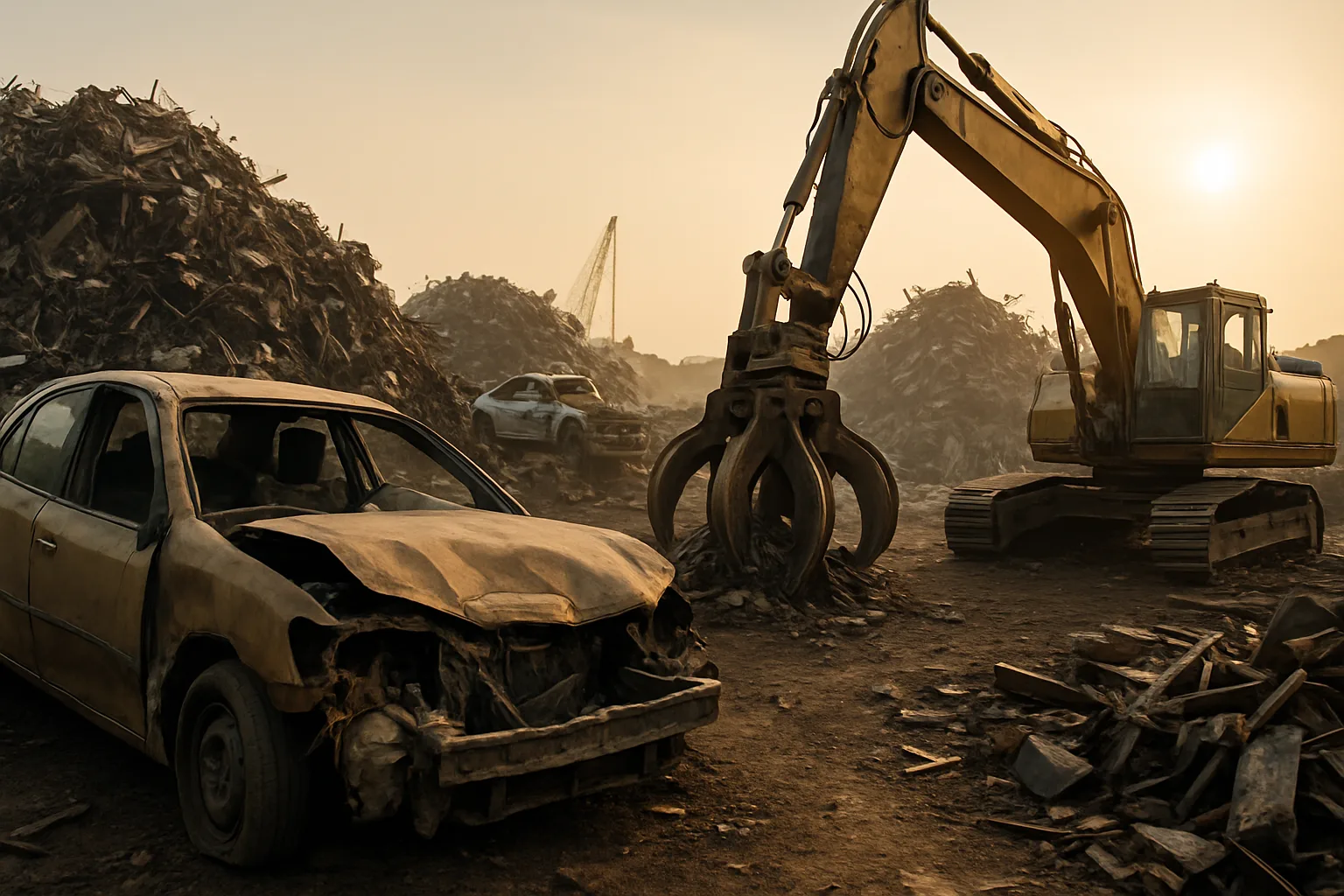
Your Flood or Fire-Damaged Car Still Has Real Value — Here's How to Get It
A flooded car sitting in your driveway after a spring thaw, or a fire-damaged vehicle the insurance company wrote off — most people assume it's worthless. That assumption costs you money. In Trois-Rivières and across Quebec, damaged vehicles still contain recoverable metals, usable parts, and scrap value that buyers actively compete for. The question isn't whether your car is worth something. The question is whether you're selling it the right way.
If you've been Googling cash for junk cars Trois-Rivières, you've already taken the right first step. This post breaks down exactly what happens to flood and fire-damaged vehicles, what they're worth in today's market, and how platforms like SMASH Recycling — where verified buyers bid on your metal help you stop leaving money on the table.
What Happens to a Flood or Fire-Damaged Vehicle?
When a vehicle sustains major water or fire damage, insurance companies typically issue a salvage title. That means the car is considered a total loss — not roadworthy, not insurable for standard use. But a salvage title doesn't mean zero value. It means the value has shifted from the vehicle as a whole to the vehicle as parts and raw material.
Here's what remains valuable after flood or fire damage:
- The steel frame and body panels — Fire doesn't destroy steel scrap value. Even heavily damaged frames yield usable scrap metal.
- Catalytic converters — Often intact after flooding. These contain platinum group metals and command strong prices in 2026's metals market.
- Non-ferrous components — Copper wiring, aluminum wheels, and radiators survive both water and moderate fire damage.
- The engine block — Depending on the severity of the damage, cast iron and aluminum engine blocks retain scrap value even if the engine itself is non-functional.
- Transmission and drivetrain components — Flooding sometimes leaves these intact and resellable as cores.
The takeaway: your damaged vehicle is not a pile of trash. It's a collection of recoverable commodities. The average passenger vehicle weighs between 1,400 and 1,800 kilograms. Even at scrap steel prices, that weight matters. When you layer in the non-ferrous metals and high-value components, a properly documented sale can return significantly more than a quick cash-for-scrap deal from a single buyer.
Why Flood and Fire Damage Don't Kill Your Payday — But How You Sell Does
The old way of selling a damaged car in Trois-Rivières — calling one wrecker, accepting whatever they offer, signing the title over for a couple hundred bucks — that model doesn't serve you. It serves the buyer. When only one buyer sees your car, you have no leverage. You're guessing what it's worth, and so are they. Except they're better at that guess than you are.
Competition changes everything. When multiple vetted buyers see the same vehicle, they bid against each other. That's basic economics. The price discovery process works in your favor instead of against you. A fire-damaged SUV with an intact catalytic converter and a solid aluminum engine block is worth more to the right buyer than to the first buyer who picks up the phone.
This is exactly the problem that SMASH was built to solve. Instead of one call, one offer, one take-it-or-leave-it number, you get verified buyers actively competing for your load. Get cash for your car in Canada the way it should work — transparently, with real competition driving the outcome.
Documenting Your Damaged Vehicle: Why It Matters for Your Sale Price
One of the biggest mistakes sellers make with damaged vehicles is skipping the documentation step. A flood-damaged car with photos, a clear description of which components are intact, and a proper VIN lookup gives buyers the confidence to bid higher. Uncertainty drives prices down. Documentation drives prices up.
Before you list your vehicle, gather the following:
- Your title or salvage title — Proof of ownership is non-negotiable. In Quebec, this means your vehicle registration documents and any insurance settlement paperwork.
- Photos of all four sides, the engine bay, the interior, and the undercarriage — Fire damage should be clearly visible. Water lines on the interior tell buyers exactly what they're dealing with.
- A description of what's intact — Catalytic converter present? Wheels original? Engine turns over? State it plainly.
- Mileage and year/make/model — Even for a scrap vehicle, this data affects how buyers price core components.
- Any insurance paperwork — If the vehicle was written off, the insurance documentation confirms the damage type and can satisfy buyers' due diligence requirements.
Platforms like SMASH support serial tracking and photo documentation directly in the listing process. That means buyers in Ontario, Alberta, or anywhere across North America can evaluate your damaged Trois-Rivières vehicle with confidence — and bid accordingly. Documented inventory gives buyers more confidence. More confident buyers bid closer to true market value.
What Damaged Cars Are Actually Selling For in 2026
Scrap metal prices fluctuate based on global commodities markets, and any specific number quoted today may not reflect what you'll see when you list. Always check current rates before making a decision. That said, here's the general landscape as of mid-2026:
- Scrap steel remains the baseline for any vehicle. Prices move with North American steel demand, and 2026 has seen moderate but steady demand from domestic manufacturing.
- Catalytic converters continue to hold strong value due to platinum, palladium, and rhodium content. Flood-damaged vehicles often have intact cats — this is one of the highest-value components you may be sitting on.
- Aluminum — wheels, engine blocks, transmission housings — trades at a meaningful premium over steel. A vehicle with significant aluminum content is worth separating and documenting individually.
- Copper wiring — Depending on the fire damage, copper from the wiring harness may still be recoverable. Stripping is typically done by the buyer, but knowing it's there affects the bid.
If you want a real-time sense of where the market is, read car selling tips and market updates on the cash-forcars.ca blog. Staying informed before you list puts you in a stronger negotiating position — even if you're letting a platform handle the actual auction process.
How to Actually Sell Your Flood or Fire-Damaged Car in Trois-Rivières
The process doesn't need to be complicated. Here's a practical step-by-step for sellers in the Trois-Rivières area who want to move a damaged vehicle efficiently and get a fair return:
- Confirm your paperwork. Make sure you have clear title. A salvage title is fine — just have it. Without proof of ownership, no legitimate buyer will complete the transaction.
- Assess what's intact. Walk around the vehicle. Is the catalytic converter still mounted? Are the wheels aluminum? Does the engine turn? Note everything — this becomes your listing description.
- Take photos. Thirty minutes with a phone camera can make a meaningful difference in your final sale price. Shoot every angle, including damage close-ups.
- Get a free valuation. Before you accept anything, get a free car valuation so you understand the baseline. Don't negotiate blind.
- List with buyers who compete. Single-buyer offers are the old way. Use a platform where multiple vetted buyers see your vehicle. Competition reveals the market — that works in your favor every time.
- Arrange pickup and transfer title. Once a sale is confirmed, coordinate pickup and complete the title transfer according to Quebec's SAAQ process for salvage vehicles. Auto-invoicing handles the paperwork trail on the buyer side.
SMASH handles the buyer side of this process — verified buyers, competitive bidding, documentation support, and auto-invoicing. You don't need to cold-call wreckers across Quebec or wonder if you left money behind. More buyers means better price discovery. Full stop.
Don't Let a Damaged Car Sit and Depreciate Further
Here's the reality nobody tells you: a flood-damaged car sitting on your property in Trois-Rivières is losing value every month. Metals corrode. Catalytic converters get stolen. Rubber seals dry out and make components harder to extract. The vehicle that was worth a reasonable sum in May is worth less in August if you do nothing.
Time is a factor. The scrap and salvage market rewards sellers who move decisively with good documentation, not sellers who wait hoping prices will spike. If your car was damaged in a spring flood or a garage fire, now is the time to act — not after another season of sitting.
If you're ready to stop watching it rust and start getting cash, the process is straightforward. Get cash for your car in Canada — a free quote is your starting point, and you're under no obligation until you accept an offer. That's how it should work.
Frequently Asked Questions
Q: Can I sell a flood-damaged car for cash in Trois-Rivières even without a working engine?
Yes. A non-running vehicle still contains steel, aluminum, copper, and potentially a valuable catalytic converter. Scrap buyers and salvage buyers are purchasing the materials and parts, not the running capability. Document what's intact and get multiple offers before accepting anything.
Q: Do I need a salvage title to sell a fire-damaged car in Quebec?
You need proof of ownership — typically your Quebec vehicle registration and any insurance settlement documentation that confirms the vehicle was written off. The SAAQ process in Quebec governs salvage title transfers. Contact SAAQ or your insurance provider if you're unsure about your paperwork status before listing.
Q: How do I find junk car buyers near me open now in Trois-Rivières?
Online platforms are the fastest route — you're not limited to buyers physically located in Trois-Rivières. SMASH connects you with vetted buyers across North America who bid on your vehicle remotely, with local pickup arranged after the sale. This gives you far more competition than calling local wreckers one by one.
Q: How long does it take to sell a damaged car through an online platform?
Timelines vary, but listing a well-documented vehicle typically generates buyer interest within days. Once a sale is confirmed, pickup coordination depends on the buyer's logistics. Having your paperwork ready before you list speeds up every stage of the process significantly.
Q: Does the condition of my catalytic converter affect the price I get for my scrap car?
Significantly. Catalytic converters contain platinum group metals that trade at meaningful premiums above basic scrap steel prices. A flood-damaged car with an intact cat is worth more than one where the cat has been removed or damaged. Always photograph and disclose the converter status in your listing — it directly affects buyer bids.
A damaged vehicle isn't the end of the road — it's a transaction waiting to happen. Whether your car was written off by a Quebec spring flood or a garage fire, getting a fair return means documentation, competition, and not settling for the first number someone throws at you. Get a free car valuation at cash-forcars.ca and find out what your damaged vehicle is actually worth in today's market.
Follow SMASH on LinkedIn for scrap metal market updates, price trend insights, and industry news that helps you sell smarter.