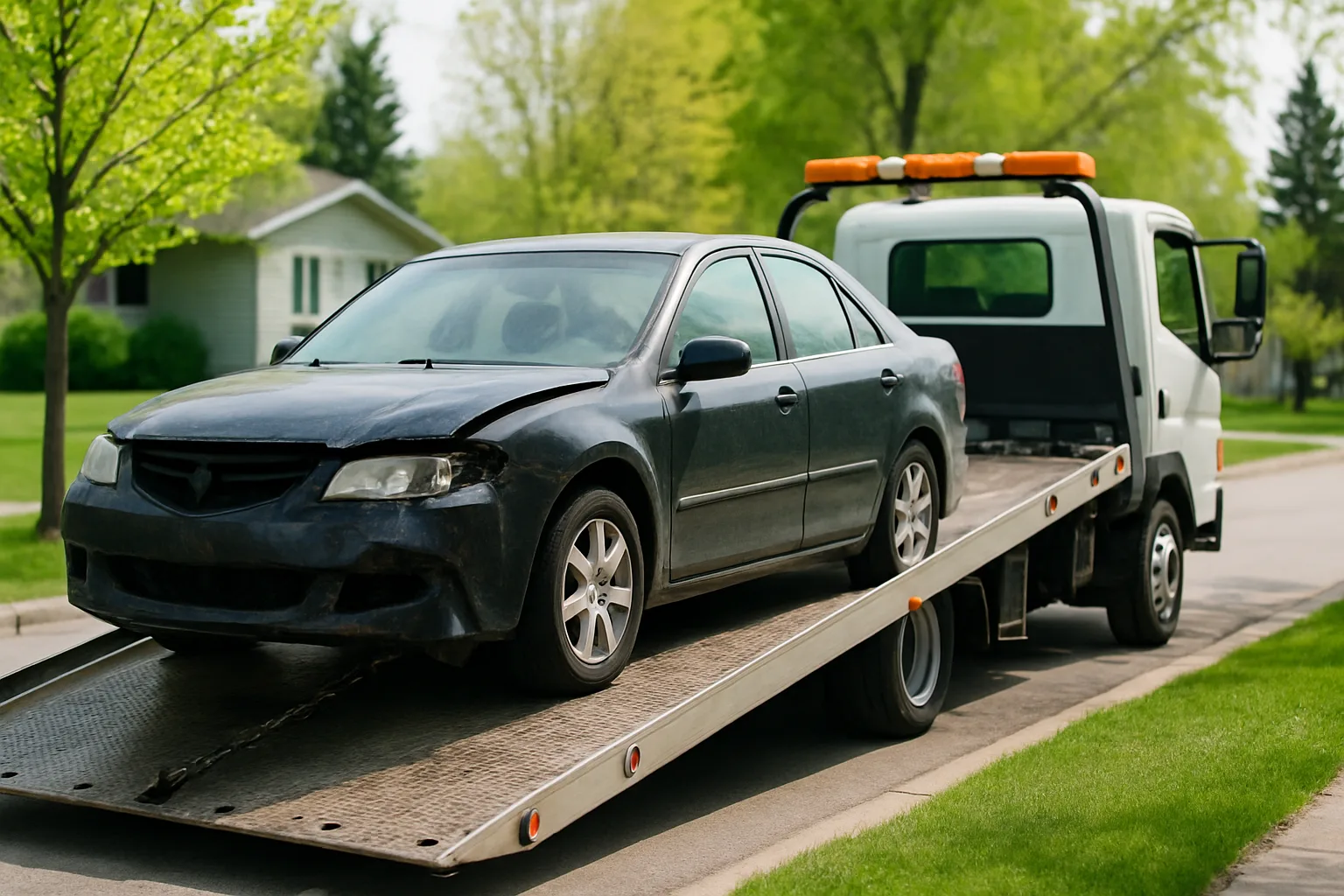
Most buyers won't touch a flood-damaged or fire-damaged car. Here's who will — and how to get real cash for it in Regina.
You're sitting on a vehicle that's been through something brutal. Maybe the 2025 spring melt pushed water into your garage and soaked the interior down to the wiring harness. Maybe a kitchen fire spread to the attached garage and left your car charred beyond recognition. Either way, the car doesn't run, no dealership wants it on their lot, and private buyers disappear the second you mention the damage. So what now?
The good news: damaged doesn't mean worthless. If you want to sell my car for cash Regina, even a flood or fire wreck has value — you just need to know where to take it and what to expect. This guide breaks it all down.
Why Flood and Fire Damage Makes Selling So Hard (And Why That's About to Change)
Flood-damaged vehicles carry hidden problems that scare off most buyers. Waterlogged electrical systems corrode from the inside out. Mold builds up in carpet and foam padding within 24 to 48 hours. Airbag control modules short-circuit. Transmissions that seem fine today can seize up weeks later. Insurance companies know this, which is why they total-loss vehicles after significant water exposure even when the car still drives.
Fire damage is even more obvious but carries its own complications. Structural steel warps under extreme heat. Aluminum components melt and deform. Wiring insulation burns away, leaving bare copper throughout the chassis. Even a "small" engine compartment fire can render a vehicle unsafe to repair economically.
The traditional path — calling a dealership, listing on a classifieds site, haggling with a private buyer — hits a wall fast with these vehicles. Dealers won't take them. Private buyers either lowball aggressively or ghost you entirely. What you actually need is a buyer who understands scrap and salvage value, not retail value. That's a completely different conversation.
What Your Damaged Car Is Actually Worth: Scrap Value vs. Salvage Value
Before you accept the first offer you get, understand the difference between scrap value and salvage value. They're not the same thing, and mixing them up costs you money.
Scrap value is the raw metal value of your vehicle. An average passenger car weighs between 1,400 and 1,800 kilograms. Steel prices fluctuate constantly, but even at modest rates, a vehicle processed for its steel content has real, measurable value. Non-ferrous components — copper wiring, aluminum trim, the catalytic converter — add to that total.
Salvage value is higher. A flood-damaged car with a solid engine block still has usable parts. A fire-damaged vehicle with an intact rear axle, undamaged wheels, or a functioning transmission can yield salvage returns above pure scrap. If your car was damaged but not completely destroyed, push for salvage-level pricing, not just metal weight.
What affects your specific offer in Regina and across Saskatchewan?
- The make, model, and year (demand for parts varies significantly)
- Extent of the damage — interior flood vs. full submersion vs. engine fire vs. total loss fire
- Whether the engine still turns over
- Current steel and non-ferrous metal prices (these fluctuate — always confirm current rates)
- Completeness of the vehicle — missing catalytic converter or battery affects value
- Your ability to produce the title or proof of ownership
Disclaimer: Metal prices change daily based on commodity markets. Any number you hear today may shift tomorrow. Always confirm current pricing before accepting an offer.
How to Sell a Flood or Fire-Damaged Car for Cash in Regina
Selling a damaged vehicle isn't as complicated as it feels from the outside. The process is faster than a private sale, and you don't need to fix a thing. Here's how it typically works:
- Gather your documents. You need proof of ownership — your vehicle registration and identification. In Saskatchewan, you'll also want to confirm your insurance status and notify SGI if the vehicle was written off. A clear title speeds things up considerably.
- Get your vehicle information ready. Year, make, model, VIN, current mileage, and an honest description of the damage. Take photos from multiple angles — interior, engine bay, undercarriage if accessible. The more documentation you have, the more confidence buyers have in their offer.
- Contact a junk car buyer or scrap car service. This is where most people go wrong — they call one buyer, take the first number, and leave money on the table. Competition between buyers is how you get a real market price. Platforms like smashrecycling.ca are built exactly for this — connecting sellers with vetted buyers who compete for your load instead of just naming a low number and waiting.
- Arrange pickup or drop-off. Most services offer free tow or pickup for scrap vehicles. If your car doesn't drive, confirm the service includes towing before you agree to anything.
- Get paid. Cash, e-transfer, or cheque depending on the service. Confirm payment method upfront.
If you want to get cash for your car in Canada without the runaround, the process above usually wraps up in one to three business days from first contact to cash in hand. Don't let anyone tell you it has to take weeks.
Why SMASH Changes the Price Discovery Game for Damaged Vehicles
Here's the problem with the old way: you call one yard, they quote you a number, and you either take it or spend your afternoon calling five more numbers one by one. You have no idea if the first offer was fair. You have no leverage. The yard knows it.
SMASH flips that dynamic. As a B2B scrap metal marketplace, SMASH puts your vehicle in front of vetted buyers who compete for it through an auction format. More buyers means better price discovery. You find out what the market actually thinks your flood-damaged Accord or fire-damaged F-150 is worth — not what one buyer decides to tell you on a Tuesday morning.
For Regina sellers specifically, this matters. Saskatchewan is a large province with a relatively smaller population of local buyers compared to major metros. Without competitive bidding, a single local buyer sets the price with zero pressure. SMASH connects you to a broader buyer network across North America, which creates real competition even when your local options feel thin.
SMASH also handles the documentation side properly — photo documentation, VIN lookup, serial tracking, and auto-invoicing. For a damaged vehicle that's been written off, having clean documentation protects both you and the buyer. That's how you avoid disputes and get paid cleanly.
You can explore Regina scrap metal services to see what's available locally and how to get connected with the right buyers for your situation.
Regina-Specific Considerations When Selling a Damaged Vehicle
Saskatchewan has specific rules around vehicle ownership transfers and write-offs that you need to get right before you sell. Here's what matters most.
If your vehicle was declared a total loss by your insurer, SGI (Saskatchewan Government Insurance) will issue a salvage title or branding. You'll need to confirm the title status before the sale. A salvage-branded title doesn't prevent you from selling for scrap or cash — buyers who deal in damaged vehicles handle this regularly — but you need to be upfront about it. Concealing a salvage brand creates legal problems for you down the line.
Regina's climate also adds context to flood damage. Spring runoff and rapid snowmelt create real flood risk for low-lying properties and garages in the region. If your vehicle was damaged during a flood event and you filed an insurance claim, your insurer may have already issued payment. In that case, the vehicle title may transfer to the insurer, and you'll need their involvement to complete a private sale. Clarify ownership before you list or call anyone.
For fire-damaged vehicles, confirm with your insurer whether the vehicle is considered "retained" (you kept it after settlement) or fully surrendered. If you retained it, you can sell the remains for scrap or salvage and keep the proceeds.
Whether you're dealing with a write-off in Regina or trying to get a free car valuation on a damaged vehicle, getting the paperwork right first saves you headaches later. Take thirty minutes to confirm ownership status before you start calling buyers.
Don't Leave Money Behind: Final Tips Before You Sell
A few things that experienced sellers know — and first-timers often miss.
- Remove personal belongings. Sounds obvious. People still find garage door openers, insurance documents, and CDs in gloveboxes after the car's been towed. Check everything including the trunk.
- Cancel your insurance. Once the car is gone, notify your provider immediately. You're paying for coverage on a vehicle you no longer own.
- Remove your license plates. In Saskatchewan, plates belong to the owner, not the vehicle. Take them before pickup.
- Don't let them lowball you on the catalytic converter. Even on a flood or fire-damaged vehicle, the cat may still be intact and contain platinum, palladium, and rhodium. Make sure the buyer's offer accounts for it or you've removed it separately.
- Get everything in writing. The offer, the pickup date, the payment method. A text confirmation works. A signed receipt is better.
If you want to read car selling tips that go deeper into maximizing your payout on any vehicle — damaged or not — there's a lot more to explore before your first call.
Selling a flood or fire-damaged car in Regina doesn't have to be a frustrating, one-offer-take-it-or-leave-it experience. Get your documents in order, understand your vehicle's actual value, and put it in front of buyers who compete. That's how you walk away with real cash for a car most people told you was worthless.
Ready to stop guessing and start getting offers? Get cash for your car in Canada — head to cash-forcars.ca, describe your vehicle, and find out what it's actually worth today.
Frequently Asked Questions
Q: Can I sell a flood-damaged car in Regina if it still runs?
Yes, and it's worth more if it does. A flood-damaged vehicle that still starts and moves under its own power commands a higher offer than one that needs to be dragged out. Be honest about the condition — buyers will inspect it — but don't undersell a running vehicle as pure scrap.
Q: Do I need a title to sell my junk car in Regina?
You need proof of ownership. In Saskatchewan, your vehicle registration and government-issued ID are typically required. If the title has been transferred to your insurer after a write-off, you'll need to work through them to complete the sale. Don't attempt to sell a vehicle you don't legally own — it creates serious liability.
Q: How long does it take to get cash for a scrap car in Regina?
Most services complete the process within one to three business days from first contact. Same-day pickup is available in many cases for vehicles already located within Regina. Payment timing depends on the buyer — confirm whether they pay on pickup or within a set number of days after.
Q: Will anyone buy a completely burned-out car?
Yes. Even a total fire loss has scrap metal value. Steel, aluminum, and any surviving components all have market value. The offer will reflect the damage, but it won't be zero. Platforms like SMASH connect sellers with buyers who specialize in exactly these kinds of vehicles and understand how to price them fairly.
Q: Is it worth getting multiple quotes before selling my damaged car in Regina?
Always. A single quote from a single buyer tells you nothing about the actual market. Getting competing offers — or using a platform that creates competition automatically — is the most reliable way to confirm you're getting a fair price. The difference between the first offer and the best offer can be significant, even on a damaged vehicle.
Follow SMASH on LinkedIn for scrap metal market updates, industry insights, and platform news: linkedin.com/company/scrap-metal-auction-sales-hub.
```