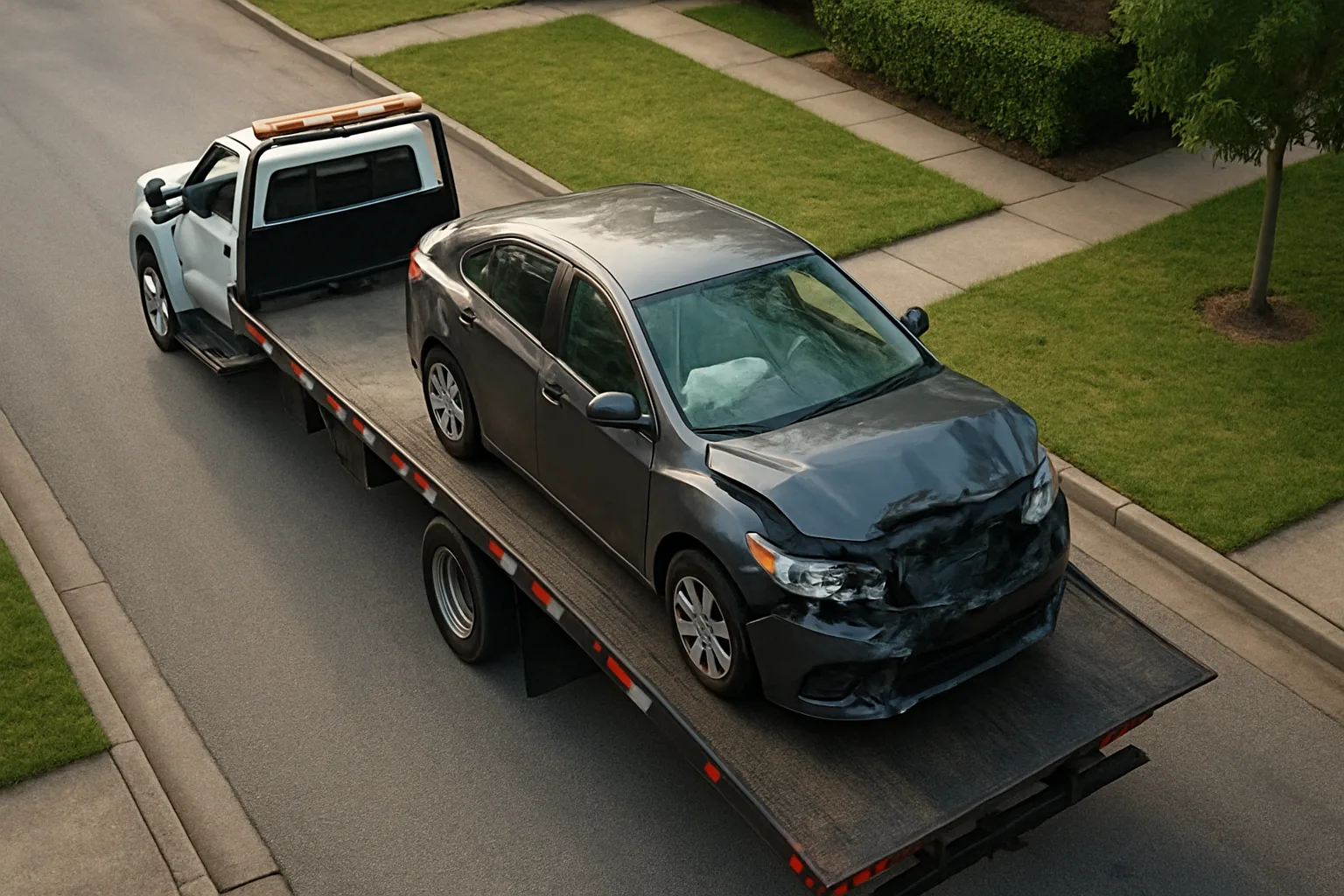
Your Accident-Damaged Car Is Worth More Than You Think — If You Know What to Do Next
A collision leaves you shaken. Then comes the second punch: the repair estimate. When the quote to fix your car exceeds what the car is actually worth, most people freeze. They park it in the driveway, let insurance sort out what it can, and wonder what to do with the wreck sitting in front of their house. If that sounds familiar, this guide is for you.
Junk car removal in Richmond is more straightforward than most accident victims realize — and the payout can be better than expected. Whether your vehicle was rear-ended on No. 3 Road or totalled on the Queensborough Bridge, you have options. Real ones. This is the complete guide to scrapping an accident-damaged car in British Columbia.
---Step One: Understand What Your Accident-Damaged Car Is Actually Worth
The insurance company's total-loss assessment and your car's actual scrap value are two different numbers. Insurers calculate actual cash value — what your car was worth on the market before the accident, minus depreciation. Scrap buyers look at something simpler: what's in the car that has resale or melt value right now.
That includes the weight of the steel body, whatever catalytic converters survived the impact, any salvageable non-ferrous metals (copper wiring, aluminum trim, lead battery), and sometimes intact mechanical components that can be pulled and resold. Even a car that looks like a write-off can carry real commodity value. Get a free car valuation before you assume the number is zero — you might be surprised.
Key factors that affect scrap car value today:
- Vehicle weight: Heavier vehicles (trucks, SUVs, full-size sedans) yield more steel tonnage and therefore more cash.
- Condition of the catalytic converter: If the cat survived the crash intact, it's often the single most valuable component on the car.
- Market metal prices: Steel, copper, and platinum group metals fluctuate weekly. Timing your sale to current rates matters.
- Make and model demand: Some vehicles have high demand for salvage parts even when the body is damaged.
- Completeness of the vehicle: Missing an engine or transmission? That affects your offer.
Disclaimer: Scrap metal and salvage prices fluctuate with global commodity markets. The figures you receive will reflect current rates at the time of sale. Always check current pricing before making decisions.
---What Happens to a Car After a Collision — and Why It Affects Your Payout
Accident damage is not all the same. A front-end collision that destroys the engine bay but leaves the rear unscathed is a very different scenario than a rollover that compromises the whole frame. Understanding what's salvageable helps you negotiate with more confidence when you get cash for your car in Canada.
Here's a breakdown of what survives different accident types and what gets written off:
- Rear-end collisions: Engine, transmission, catalytic converter, and front suspension often survive. Trunk, rear quarter panels, and bumper are usually scrap. High salvage value potential.
- Front-end collisions: Engine damage is likely but not guaranteed. Rear components — differential, exhaust, catalytic converter — may be intact and sellable.
- Side-impact crashes: Structural damage to the frame is common. Interior components, wheels, and undamaged body panels may still be worth pulling.
- Rollovers: Roof and body damage is severe, but drivetrain components underneath may survive. Catalytic converter and wheels are worth assessing.
- Flood damage (yes, this qualifies): Electrical systems are typically gone, but the steel, aluminum, and catalytic converter still hold commodity value.
The point is simple: don't assume your wrecked car is worthless before a qualified buyer looks at it. Scrap buyers assess the whole vehicle, not just the damage.
---The Paperwork You Need Before You Can Scrap a Car in British Columbia
This is where people get stuck. Scrapping a car isn't as simple as handing over the keys — especially when insurance, total-loss designations, and ICBC are involved. In British Columbia, ICBC handles most collision claims, and their process adds a layer of documentation you need to navigate correctly.
Here's what you typically need to legally scrap an accident-damaged vehicle in BC:
- Vehicle title (registration): You need to prove ownership. If ICBC has declared a total loss, they may take possession of the title. Clarify this before you sell.
- ICBC total-loss paperwork: If ICBC paid out your claim, they may retain the right to the salvage. Review your settlement documents carefully.
- Owner-retained salvage: You can sometimes buy back your totalled vehicle from ICBC and then sell it for scrap yourself. This changes the math — factor in the buyback cost against the scrap payout.
- Photo ID: Required for any cash-for-cars transaction in Canada.
- Keys or proof they are lost: Buyers need keys for towing logistics. Lost keys are usually not a dealbreaker but should be disclosed.
If your accident vehicle is still registered in your name and insurance hasn't claimed the salvage, the process is cleaner. You contact a buyer, get a quote, sign over the title, and collect your cash. Platforms like the SMASH Recycling auction platform help connect sellers with vetted buyers who understand exactly how this paperwork flows — no confusion, no chasing down signatures after the fact.
---Why Competitive Bidding Gets You More Than One Phone Call Ever Will
Here's the problem with calling a single junkyard: you get one opinion on what your car is worth, from someone who has every incentive to lowball you. There's no competition. No transparency. You either take the number or hang up and try someone else — which most people don't bother to do.
The smarter play is to let buyers compete. When multiple vetted buyers see your vehicle details — make, model, year, damage description, photos, location — they bid against each other. That competition is what reveals the real market value of your car, not a single buyer's opening offer.
This is exactly what SMASH was built for. SMASH scrap listings go out to a network of vetted buyers who actually know what an accident-damaged vehicle is worth in parts, metals, and commodity weight. Instead of guessing, you get real bids. Instead of one call to one buyer, you get market-rate competition. And there are no subscription fees — SMASH only wins when you win.
For Richmond and the broader Lower Mainland, Richmond scrap metal services connected through platforms like SMASH can dramatically change the conversation from "take it or leave it" to "here are three offers — pick the best one."
---How to Prepare Your Accident Car for Sale and Maximize Your Return
You don't need to restore the car. You just need to document it properly. Buyers who can see clear photos and accurate vehicle details bid with more confidence — and confident buyers bid higher. This applies whether you're selling a scrap car online or dealing locally in British Columbia.
Here's what to do before you list or call:
- Take photos from all angles: Show the damage honestly. Front, rear, both sides, engine bay if accessible, and the interior. Surprises after the sale create disputes.
- Note the VIN: Buyers use VIN lookups to verify ownership history, any outstanding liens, and the vehicle's full spec. Have it ready.
- List all known mechanical issues: Running or not running? Airbags deployed? Frame damage? Engine seized? Disclose everything upfront.
- Remove personal belongings: Check the glove box, under the seats, and in the trunk. You'd be surprised what people leave behind.
- Do not strip the car before selling: Removing the catalytic converter or battery before getting your quote changes the offer — and not in your favor if buyers didn't account for it. Disclose what's present.
- Confirm towing logistics: Is the car drivable? Does it roll? Is it on a slope or in a tight space? All of this affects pickup scheduling.
Organized sellers get better offers. It's that simple. You can read car selling tips to dig deeper into how documentation affects your final payout.
---What to Expect on Pickup Day for Junk Car Removal in Richmond
Once you've accepted an offer, the process moves quickly. Most junk car removal services in Richmond operate within a 24–72 hour pickup window, depending on your location and scheduling availability. Here's the typical flow:
- Confirm the appointment: The buyer or tow company will call or message to confirm a pickup window.
- Have your documents ready: Title, ID, and any ICBC paperwork you were asked to bring.
- Be present for the handoff: You need to sign over the vehicle title at the time of pickup. In some cases, a notarized transfer is required.
- Collect payment: Cash or e-transfer are the most common payment methods. Confirm this before pickup day so there are no surprises.
- Get a receipt: Ask for written confirmation that the vehicle has been transferred. This protects you from future liability if the car is linked to any violations after the sale.
The whole process — from first quote to cash in hand — can happen in under a week for most accident vehicles in British Columbia. If your buyer is making it complicated, that's a signal to find another one.
---Frequently Asked Questions
Q: Can I sell a car for scrap if ICBC already paid out my total-loss claim?
It depends on whether ICBC retained the salvage rights as part of your settlement. Review your claim documents carefully. In some cases, you can buy back the salvage from ICBC and then sell it independently — compare the buyback cost against your scrap quote to see if it's worth it.
Q: How much is my accident-damaged car worth for scrap in Richmond?
Scrap value depends on the vehicle's weight, the condition of high-value components like the catalytic converter, and current commodity metal prices. Getting multiple quotes through a competitive platform gives you a more accurate picture than a single yard's estimate. Prices fluctuate — always check current market rates before committing to a sale.
Q: Do I need the car to be running to get junk car removal in Richmond?
No. Most scrap car buyers and removal services in Richmond will tow non-running, damaged, or fully wrecked vehicles. Disclose the condition clearly when you request a quote so the buyer can arrange the right tow equipment.
Q: What documents do I need to sell a scrap car in British Columbia?
You typically need the vehicle's registration (title), a valid photo ID, and any ICBC documentation related to a total-loss or salvage designation. If the car has an outstanding lien, that needs to be resolved or disclosed before transfer.
Q: Is it better to sell to a junkyard directly or use an online platform to sell scrap metal?
Calling one junkyard gives you one offer with no competitive pressure. Using a platform like SMASH puts your vehicle in front of multiple vetted buyers who bid against each other — which is how you find out what your car is actually worth on today's market, not what one buyer is willing to pay.
---Dealing with an accident-damaged car is stressful enough on its own. The selling process doesn't have to be. Whether your vehicle is sitting in a Richmond driveway waiting for a decision or you just got your ICBC total-loss paperwork, your next step is straightforward: get a real quote from real buyers who compete for your vehicle. That's how you find out what your car is worth — not what one person on the phone wants to pay you for it.
If you're ready to move forward, get cash for your car in Canada by starting with a free quote at cash-forcars.ca. No obligation, no pressure — just a clear number so you can make a smart decision.
Stay ahead of scrap metal market trends and industry news by following SMASH on LinkedIn. It's where yard operators and sellers track what's moving in the market week to week.